Spritual
Spritual
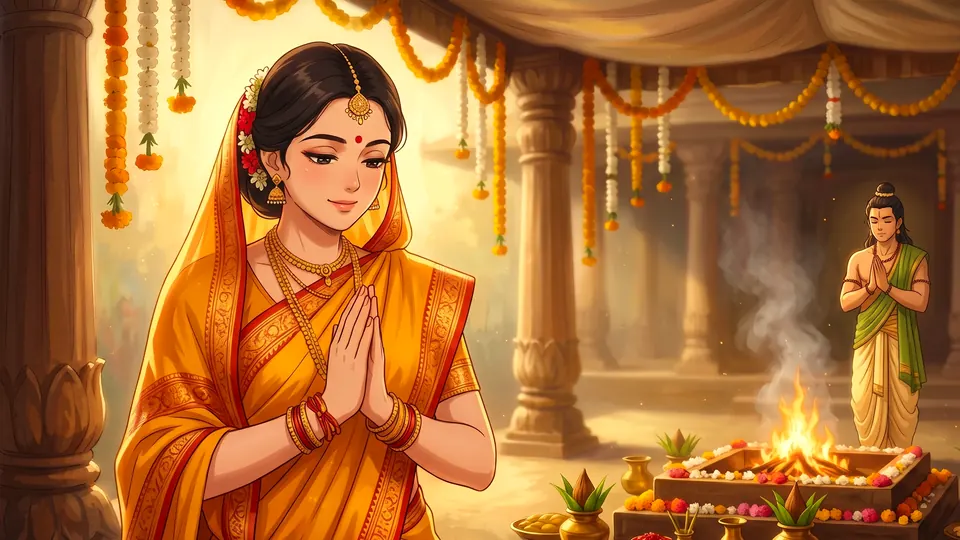
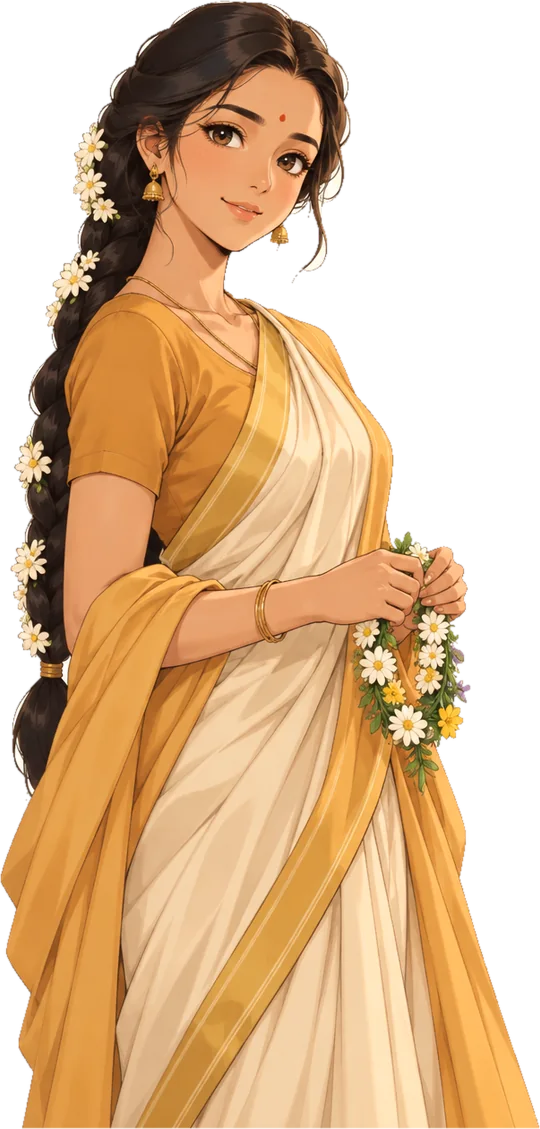
Urmila, in a turmeric-yellow sari with a red border and red and white flowers in her hair, stands with palms joined and eyes lowered at the foot of the wedding fire in Mithila’s garlanded pavilion, while Lakshmana in green approaches beyond the altar.

Ramayana

Urmila

उर्मिला

Yashasvini · Priyadarshana

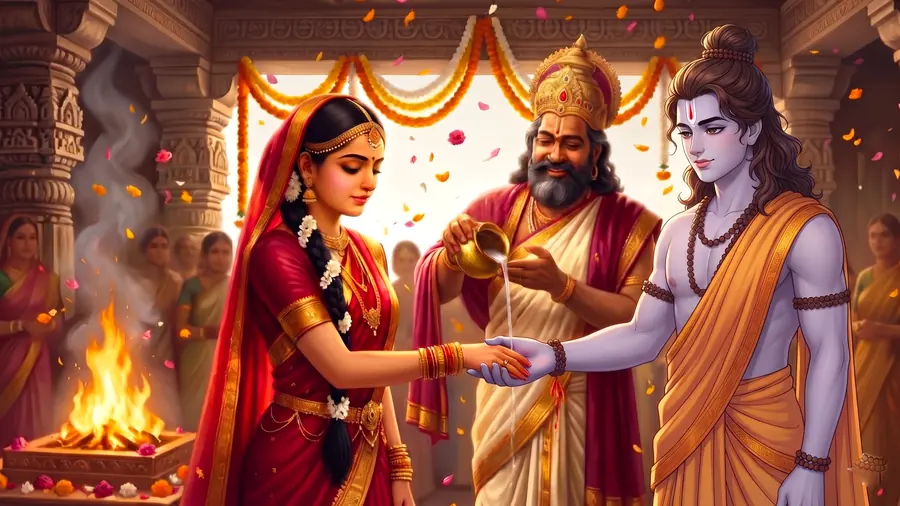
Urmila, Janaka’s daughter, is remembered for the fourteen years she spent apart from Lakshmana while he served Rama in the forest. Her father gave her with Sita, saying it three times; bright as flame, she circled the fire with Lakshmana.

Read more

In exile Sita spoke of her: my younger sister, virtuous, lovely to behold. Valmiki is silent on her waiting; Maithili Sharan Gupt wrote Saket chiefly so she would not stay poetry’s neglected one.

  • 1 story
  • 9 scenes
  • 9 min read

Stories with Urmila

RamayanaBala Kanda

Sita Ram Vivah: Four brides, one fire

Messengers reach Ayodhya behind spent horses: Rama has won Sita. Days later, in Mithila, four princes take four hands, and the sky rains flowers.
  • 9 min
  • Respect
  • Hospitality

Names

Urmila. Also known as: Yashasvini, Priyadarshana.

Where this comes from

What this page about Urmila was checked against: each point, and where it is found.
  1. Second daughter named after Sita; given to Lakshmana; the gift affirmed three times: Valmiki Ramayana, Bala Kanda 1.71.20-22 (sītāṃ rāmāya… ūrmilāṃ lakṣmaṇāya; dvitīyām ūrmilām; trir vadāmi / trir dadāmi). Sources of the story “Sita Ram Vivah”
  2. At the foot of the altar with the other brides, bright as flames: 1.73.15 (Janaka says “my daughters”, plural, of all the brides). Sources of the story “Sita Ram Vivah”
  3. Janaka calls Lakshmana to accept Urmila and take her hand: 1.73.30-31. The couples circle the fire: 1.73.35-39. Sources of the story “Sita Ram Vivah”
  4. Called yaśasvinī (illustrious) when the queens of Ayodhya receive the brides: 1.77.11-12. Sources of the story “Sita Ram Vivah”
  5. “Yashasvini” is the epithet of 1.77.11; “Lakshmana-patni” (wife of Lakshmana) is a plain description, not a quoted epithet. Sources of the story “Sita Ram Vivah”
  6. The title “Priyadarshana” and “my younger sister”: in the forest, telling Anasuya of her wedding, Sita says her father himself gave “my younger sister, the virtuous Urmila, lovely to behold” (mama anujā sādhvī ūrmilā priyadarśanā) to Lakshmana as wife. Valmiki Ramayana, Ayodhya Kanda 2.118.53 (critical edition 2.110.51); Anasuya’s response follows at 2.111.1 (CE)
  7. For the title ‘Yashasvini’: the queens of Ayodhya receive ‘Urmila, the illustrious’ (ūrmilāṃ ca yaśasvinīm). Valmiki Ramayana, Bala Kanda 1.77.11 (1.77.12 in the IIT Kanpur text)
  8. The exile is for fourteen years (nava pañca ca varṣāṇi; caturdaśa varṣāṇi). Valmiki Ramayana, Ayodhya Kanda 2.11.26 and 2.40.12
  9. Lakshmana asks to go as Rama’s attendant (anucara): to walk ahead with his bow, fetch roots and fruit, and do everything while Rama wakes or sleeps. Valmiki Ramayana, Ayodhya Kanda 2.31.22-25
  10. Only Rama, Lakshmana and Sita mount the chariot and leave Ayodhya (‘the three, Sita the third’, sītātṛtīyān); Urmila is not among them, so she stays behind. Valmiki Ramayana, Ayodhya Kanda 2.40.13-17
  11. Valmiki is silent on her waiting: in a full-text search of the critical edition (all seven kandas), Janaka’s daughter Urmila is named only at the betrothal and wedding (CE 1.70.21-22, 1.71.3, 1.72.18; vulgate 1.71-1.73), the homecoming (CE 1.76.9; vulgate 1.77.12) and in Sita’s words to Anasuya (CE 2.110.51; vulgate 2.118.53); CE 1.32.12 is a different Urmila, mother of the gandharvi Somada. Nothing is said of her parting from Lakshmana or of the fourteen years. Valmiki Ramayana, critical edition e-text, GRETIL (searched for ‘ūrmil’)
  12. Urmila is remembered for her fourteen years apart from Lakshmana: Mahavir Prasad Dwivedi’s essay laments that Valmiki and Tulsidas give no word to her parting and calls her giving up her husband to Rama and Sita, soon after her wedding, a self-sacrifice (ātmotsarga) through fourteen years of separation. Mahavir Prasad Dwivedi, Rasajna Ranjan, essay 8, ‘Kaviyon ki Urmila-vishayak udasinata’ (public domain)
  13. Maithili Sharan Gupt wrote Saket mainly so that Urmila would not remain ‘kavya ki upekshita’ (poetry’s neglected one); two whole cantos (9 and 10) are given to her separation. Ramchandra Shukla, Hindi Sahitya ka Itihas, Adhunik Kaal, Kavya Khand, Prakaran 2 ‘Nai Dhara’, section on Maithili Sharan Gupt (public domain)
  14. Stayed in Ayodhya: Valmiki does not say where she spent the fourteen years. She is received into Ayodhya with the other brides (1.77.12) and is not among the three who leave the city by chariot (2.40.16, sītātṛtīyān); Shukla notes that Saket, named for Ayodhya, describes chiefly what happens in Ayodhya and gives two whole cantos (9 and 10) to her separation, and Dwivedi pictures her in the royal palace as Lakshmana leaves for fourteen years. Valmiki Ramayana, Bala Kanda 1.77.12 and Ayodhya Kanda 2.40.16 (IIT Kanpur numbering); Ramchandra Shukla, Hindi Sahitya ka Itihas, Adhunik Kaal, Kavya Khand, Prakaran 2, on Saket; Mahavir Prasad Dwivedi, Rasajna Ranjan, essay 8
About these sources
  • The later, regional tradition of Urmila sleeping through the fourteen years of exile is not in these chapters, and the retelling does not tell it.

Reading comfort

Text size
Colour

Colour waits while Night Lamp is on.

Motion

Light mode keeps the paintings still, with one slow drift and no depth effect. Easier on older phones and batteries.

Night Lamp

Warm amber text on near-black. Paintings fade slowly and hold still.

Rama turned to his teacher and asked for the knowledge of withdrawal.

Saved on this device.