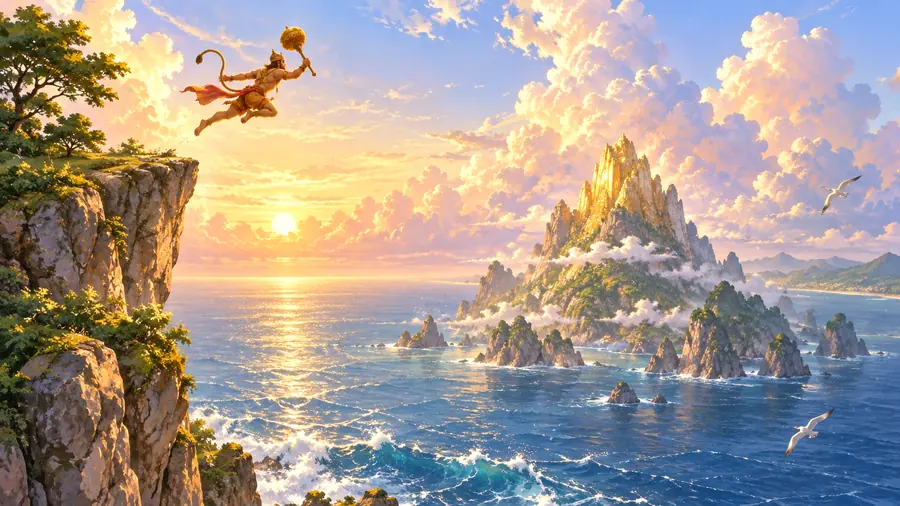
 Hanuman leaps from a cliff top out over a sunlit ocean toward a distant rocky island ringed with clouds, with sea birds wheeling below.
RamcharitmanasGoswami Tulsidas
सुंदरकांड
Hanuman crosses the sea, finds Sita, burns Lanka, and Vibhishana comes to Rama
- Dohas 1–60
- 16 episodes
- 1The leap
- 2At the gates of Lanka
- 3A friend in Lanka
- 4In the Ashoka grove
- 5The ring
- 6Bound by the Brahma weapon
- 7Before Ravana
- 8Lanka burns
- 9The token, and the return
- 10Hanuman before Rama
- 11The army reaches the sea
- 12Vibhishana’s counsel
- 13Toward refuge
- 14Received
- 15The spies, and Lakshmana’s letter
- 16Rama and the ocean
Episode summaries are short retellings to help you find your place; the verses are the text.
Shloka
शान्तं शाश्वतमप्रमेयमनघं निर्वाणशान्तिप्रदंśāntaṃ śāśvatamaprameyamanaghaṃ nirvāṇaśāntipradaṃ
ब्रह्माशम्भुफणीन्द्रसेव्यमनिशं वेदान्तवेद्यं विभुम्।brahmāśambhuphaṇīndrasevyamaniśaṃ vedāntavedyaṃ vibhum /
रामाख्यं जगदीश्वरं सुरगुरुं मायामनुष्यं हरिंrāmākhyaṃ jagadīśvaraṃ suraguruṃ māyāmanuṣyaṃ hariṃ
वन्देऽहं करुणाकरं रघुवरं भूपालचूड़ामणिम्।।1।।vande'haṃ karuṇākaraṃ raghuvaraṃ bhūpālacūṛāmaṇim //
Meaning I bow to Rama, the lord of the world, the best of the Raghus and the crown jewel of kings. He is peaceful, eternal, beyond all measure and free of sin; he gives the peace of liberation. Brahma, Shambhu and the lord of serpents serve him without pause. He is known through Vedanta and pervades everything. He is the teacher of the gods, Hari who through his maya appears as a man, and a mine of compassion.
Shloka
नान्या स्पृहा रघुपते हृदयेऽस्मदीयेnānyā spr̥hā raghupate hr̥daye'smadīye
सत्यं वदामि च भवानखिलान्तरात्मा।satyaṃ vadāmi ca bhavānakhilāntarātmā /
भक्तिं प्रयच्छ रघुपुङ्गव निर्भरां मेbhaktiṃ prayaccha raghupuṅgava nirbharāṃ me
कामादिदोषरहितं कुरु मानसं च।।2।।kāmādidoṣarahitaṃ kuru mānasaṃ ca //
Meaning O Raghupati, there is no other longing in my heart. I speak the truth, and you, the inner self of every being, know it. O finest of the Raghus, grant me full and overflowing devotion, and make my mind free of desire and the other faults.
Shloka
अतुलितबलधामं हेमशैलाभदेहंatulitabaladhāmaṃ hemaśailābhadehaṃ
दनुजवनकृशानुं ज्ञानिनामग्रगण्यम्।danujavanakr̥śānuṃ jñānināmagragaṇyam /
सकलगुणनिधानं वानराणामधीशंsakalaguṇanidhānaṃ vānarāṇāmadhīśaṃ
रघुपतिप्रियभक्तं वातजातं नमामि।।3।।raghupatipriyabhaktaṃ vātajātaṃ namāmi //
Meaning I bow to the son of the Wind. He is the home of matchless strength, and his body shines like a mountain of gold. He is a fire to the forest of demons and the foremost of the wise. He holds every virtue, leads the monkeys, and is the beloved devotee of Raghupati.
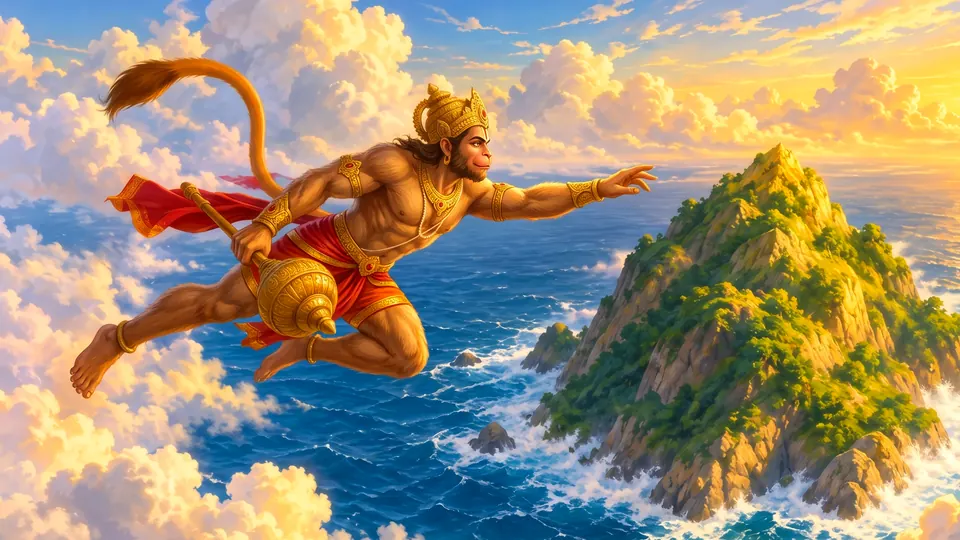 High above the open ocean, Hanuman flies onward with his gold mace in one hand, raising his other palm in respectful greeting to the green mountain Mainaka rising from the foaming waves below.
Episode 1 of 16 · Dohas 1–2
The leap
Moved by Jambavan’s words, Hanuman climbs a mountain by the sea and leaps for Lanka. Mainaka rises from the water to offer him rest; Hanuman touches it, bows, and says there is no rest for him until Rama’s work is done. The gods send Surasa, mother of serpents, to test him. He grows, she grows; then he becomes tiny, passes through her mouth and out again, and she blesses him.
जामवंत के बचन सुहाए। सुनि हनुमंत हृदय अति भाए।।jāmavaṃta ke bacana suhāe / suni hanumaṃta hr̥daya ati bhāe //
तब लगि मोहि परिखेहु तुम्ह भाई। सहि दुख कंद मूल फल खाई।।taba lagi mohi parikhehu tumha bhāī / sahi dukha kaṃda mūla phala khāī //
जब लगि आवौं सीतहि देखी। होइहि काजु मोहि हरष बिसेषी।।jaba lagi āvauṃ sītahi dekhī / hoihi kāju mohi haraṣa biseṣī //
यह कहि नाइ सबन्हि कहुँ माथा। चलेउ हरषि हियँ धरि रघुनाथा।।yaha kahi nāi sabanhi kahũ māthā / caleu haraṣi hiyã dhari raghunāthā //
सिंधु तीर एक भूधर सुंदर। कौतुक कूदि चढ़ेउ ता ऊपर।।siṃdhu tīra eka bhūdhara suṃdara / kautuka kūdi caṛheu tā ūpara //
बार बार रघुबीर सँभारी। तरकेउ पवनतनय बल भारी।।bāra bāra raghubīra sãbhārī / tarakeu pavanatanaya bala bhārī //
जेहिं गिरि चरन देइ हनुमंता। चलेउ सो गा पाताल तुरंता।।jehiṃ giri carana dei hanumaṃtā / caleu so gā pātāla turaṃtā //
जिमि अमोघ रघुपति कर बाना। एही भाँति चलेउ हनुमाना।।jimi amogha raghupati kara bānā / ehī bhā̃ti caleu hanumānā //
जलनिधि रघुपति दूत बिचारी। तैं मैनाक होहि श्रमहारी।।jalanidhi raghupati dūta bicārī / taiṃ maināka hohi śramahārī //
Doha
हनूमान तेहि परसा कर पुनि कीन्ह प्रनाम।hanūmāna tehi parasā kara puni kīnha pranāma /
राम काजु कीन्हें बिनु मोहि कहाँ बिश्राम।।1।।rāma kāju kīnheṃ binu mohi kahā̃ biśrāma //
Meaning Jambavan's words were pleasing, and Hanuman's heart delighted in them. Brothers, he said, wait for me, enduring hardship on roots and fruit, until I return having seen Sita; the task will succeed, and I feel great joy. Bowing to all, holding Raghunatha in his heart, he set out gladly. He leapt in play onto a fine mountain by the shore and, remembering Raghubir again and again, the mighty son of the Wind sprang up; the mountain under his feet sank at once into the underworld. Hanuman sped like Raghupati's unfailing arrow. The ocean, knowing him Raghupati's messenger, told Mainak to ease his weariness. Hanuman touched the mountain, bowed, and said: until Rama's work is done, how can I rest?
जात पवनसुत देवन्ह देखा। जानैं कहुँ बल बुद्धि बिसेषा।।jāta pavanasuta devanha dekhā / jānaiṃ kahũ bala buddhi biseṣā //
सुरसा नाम अहिन्ह कै माता। पठइन्हि आइ कही तेहिं बाता।।surasā nāma ahinha kai mātā / paṭhainhi āi kahī tehiṃ bātā //
आजु सुरन्ह मोहि दीन्ह अहारा। सुनत बचन कह पवनकुमारा।।āju suranha mohi dīnha ahārā / sunata bacana kaha pavanakumārā //
राम काजु करि फिरि मैं आवौं। सीता कइ सुधि प्रभुहि सुनावौं।।rāma kāju kari phiri maiṃ āvauṃ / sītā kai sudhi prabhuhi sunāvauṃ //
तब तव बदन पैठिहउँ आई। सत्य कहउँ मोहि जान दे माई।।taba tava badana paiṭhihaũ āī / satya kahaũ mohi jāna de māī //
कबनेहुँ जतन देइ नहिं जाना। ग्रससि न मोहि कहेउ हनुमाना।।kabanehũ jatana dei nahiṃ jānā / grasasi na mohi kaheu hanumānā //
जोजन भरि तेहिं बदनु पसारा। कपि तनु कीन्ह दुगुन बिस्तारा।।jojana bhari tehiṃ badanu pasārā / kapi tanu kīnha duguna bistārā //
सोरह जोजन मुख तेहिं ठयऊ। तुरत पवनसुत बत्तिस भयऊ।।soraha jojana mukha tehiṃ ṭhayaū / turata pavanasuta battisa bhayaū //
जस जस सुरसा बदनु बढ़ावा। तासु दून कपि रूप देखावा।।jasa jasa surasā badanu baṛhāvā / tāsu dūna kapi rūpa dekhāvā //
सत जोजन तेहिं आनन कीन्हा। अति लघु रूप पवनसुत लीन्हा।।sata jojana tehiṃ ānana kīnhā / ati laghu rūpa pavanasuta līnhā //
बदन पइठि पुनि बाहेर आवा। मागा बिदा ताहि सिरु नावा।।badana paiṭhi puni bāhera āvā / māgā bidā tāhi siru nāvā //
मोहि सुरन्ह जेहि लागि पठावा। बुधि बल मरमु तोर मै पावा।।mohi suranha jehi lāgi paṭhāvā / budhi bala maramu tora mai pāvā //
Doha
राम काजु सबु करिहहु तुम्ह बल बुद्धि निधान।rāma kāju sabu karihahu tumha bala buddhi nidhāna /
आसिष देह गई सो हरषि चलेउ हनुमान।।2।।āsiṣa deha gaī so haraṣi caleu hanumāna //
Meaning The gods saw the Wind-son going and, to test his strength and wisdom, sent Surasa, mother of serpents. The gods gave me today's meal, she said. Hanuman said: let me do Rama's work and bring the Lord Sita's news; then I will enter your mouth. Truly, mother, let me go. She refused; he said: then swallow me. She opened her mouth a yojana; he doubled. At sixteen he became thirty-two; however wide she grew, he grew twice that. At a hundred he turned tiny, went in, came out, bowed and asked leave. She said: as the gods wished, I have tested your wisdom and strength. You will do all Rama's work. Blessing him, she left; Hanuman went on gladly.
 At night before Lanka’s towering golden gate, Hanuman stands with one hand raised in salutation and his mace lowered, while the city’s armoured guardian, a tall rakshasi woman, steps aside and gestures for him to pass toward the lamp-lit streets.
Episode 2 of 16 · Dohas 3–4
At the gates of Lanka
A demoness in the sea who seizes birds by their shadows catches Hanuman’s; he slays her and reaches the far shore. From a hill he sees Lanka, a city of gold walls and countless guards. Taking a form as small as a mosquito and remembering Rama, he goes in at night. Lankini, the city’s guardian, stops him; one blow brings her down, and she recalls Brahma’s word that this would mark the end of the demons, and blesses his errand.
निसिचरि एक सिंधु महुँ रहई। करि माया नभु के खग गहई।।nisicari eka siṃdhu mahũ rahaī / kari māyā nabhu ke khaga gahaī //
जीव जंतु जे गगन उड़ाहीं। जल बिलोकि तिन्ह कै परिछाहीं।।jīva jaṃtu je gagana uṛāhīṃ / jala biloki tinha kai parichāhīṃ //
गहइ छाहँ सक सो न उड़ाई। एहि बिधि सदा गगनचर खाई।।gahai chāhã saka so na uṛāī / ehi bidhi sadā gaganacara khāī //
सोइ छल हनूमान कहँ कीन्हा। तासु कपटु कपि तुरतहिं चीन्हा।।soi chala hanūmāna kahã kīnhā / tāsu kapaṭu kapi turatahiṃ cīnhā //
ताहि मारि मारुतसुत बीरा। बारिधि पार गयउ मतिधीरा।।tāhi māri mārutasuta bīrā / bāridhi pāra gayau matidhīrā //
तहाँ जाइ देखी बन सोभा। गुंजत चंचरीक मधु लोभा।।tahā̃ jāi dekhī bana sobhā / guṃjata caṃcarīka madhu lobhā //
नाना तरु फल फूल सुहाए। खग मृग बृंद देखि मन भाए।।nānā taru phala phūla suhāe / khaga mr̥ga br̥ṃda dekhi mana bhāe //
सैल बिसाल देखि एक आगें। ता पर धाइ चढेउ भय त्यागें।।saila bisāla dekhi eka āgeṃ / tā para dhāi caḍheu bhaya tyāgeṃ //
उमा न कछु कपि कै अधिकाई। प्रभु प्रताप जो कालहि खाई।।umā na kachu kapi kai adhikāī / prabhu pratāpa jo kālahi khāī //
गिरि पर चढि लंका तेहिं देखी। कहि न जाइ अति दुर्ग बिसेषी।।giri para caḍhi laṃkā tehiṃ dekhī / kahi na jāi ati durga biseṣī //
अति उतंग जलनिधि चहु पासा। कनक कोट कर परम प्रकासा।।ati utaṃga jalanidhi cahu pāsā / kanaka koṭa kara parama prakāsā //
Chhand
कनक कोट बिचित्र मनि कृत सुंदरायतना घना।kanaka koṭa bicitra mani kr̥ta suṃdarāyatanā ghanā /
चउहट्ट हट्ट सुबट्ट बीथीं चारु पुर बहु बिधि बना।।cauhaṭṭa haṭṭa subaṭṭa bīthīṃ cāru pura bahu bidhi banā //
गज बाजि खच्चर निकर पदचर रथ बरूथिन्ह को गनै।।gaja bāji khaccara nikara padacara ratha barūthinha ko ganai //
बहुरूप निसिचर जूथ अतिबल सेन बरनत नहिं बनै।।bahurūpa nisicara jūtha atibala sena baranata nahiṃ banai //
बन बाग उपबन बाटिका सर कूप बापीं सोहहीं।bana bāga upabana bāṭikā sara kūpa bāpīṃ sohahīṃ /
नर नाग सुर गंधर्ब कन्या रूप मुनि मन मोहहीं।।nara nāga sura gaṃdharba kanyā rūpa muni mana mohahīṃ //
कहुँ माल देह बिसाल सैल समान अतिबल गर्जहीं।kahũ māla deha bisāla saila samāna atibala garjahīṃ /
नाना अखारेन्ह भिरहिं बहु बिधि एक एकन्ह तर्जहीं।।nānā akhārenha bhirahiṃ bahu bidhi eka ekanha tarjahīṃ //
करि जतन भट कोटिन्ह बिकट तन नगर चहुँ दिसि रच्छहीं।kari jatana bhaṭa koṭinha bikaṭa tana nagara cahũ disi racchahīṃ /
कहुँ महिष मानषु धेनु खर अज खल निसाचर भच्छहीं।।kahũ mahiṣa mānaṣu dhenu khara aja khala nisācara bhacchahīṃ //
एहि लागि तुलसीदास इन्ह की कथा कछु एक है कही।ehi lāgi tulasīdāsa inha kī kathā kachu eka hai kahī /
रघुबीर सर तीरथ सरीरन्हि त्यागि गति पैहहिं सही।।raghubīra sara tīratha sarīranhi tyāgi gati paihahiṃ sahī //
Doha
पुर रखवारे देखि बहु कपि मन कीन्ह बिचार।pura rakhavāre dekhi bahu kapi mana kīnha bicāra /
अति लघु रूप धरौं निसि नगर करौं पइसार।।3।।ati laghu rūpa dharauṃ nisi nagara karauṃ paisāra //
Meaning A sea-demoness ate flying creatures, seizing their shadows on the water. She tried this on Hanuman; he saw through it, killed her, crossed the ocean. He saw lovely woods, humming bees, fruiting trees, birds and beasts, and fearlessly climbed a great mountain. Uma, says Shiva, it is not the monkey's might but the Lord's glory, which devours Death. From the peak he saw Lanka: a towering sea-girt fortress, jewelled golden ramparts, markets, streets, countless elephants, horses, chariots, mighty demon troops of many forms, gardens, pools, maidens enchanting sages, mountain-like wrestlers, guards, demons devouring cattle and men. Tulsidas tells of them because, slain by Raghubir's arrows, they will reach the true goal. Seeing the guards, he resolved to enter tiny, by night.
मसक समान रूप कपि धरी। लंकहि चलेउ सुमिरि नरहरी।।masaka samāna rūpa kapi dharī / laṃkahi caleu sumiri naraharī //
नाम लंकिनी एक निसिचरी। सो कह चलेसि मोहि निंदरी।।nāma laṃkinī eka nisicarī / so kaha calesi mohi niṃdarī //
जानेहि नहीं मरमु सठ मोरा। मोर अहार जहाँ लगि चोरा।।jānehi nahīṃ maramu saṭha morā / mora ahāra jahā̃ lagi corā //
मुठिका एक महा कपि हनी। रुधिर बमत धरनीं ढनमनी।।muṭhikā eka mahā kapi hanī / rudhira bamata dharanīṃ ḍhanamanī //
पुनि संभारि उठि सो लंका। जोरि पानि कर बिनय संसका।।puni saṃbhāri uṭhi so laṃkā / jori pāni kara binaya saṃsakā //
जब रावनहि ब्रह्म बर दीन्हा। चलत बिरंचि कहा मोहि चीन्हा।।jaba rāvanahi brahma bara dīnhā / calata biraṃci kahā mohi cīnhā //
बिकल होसि तैं कपि कें मारे। तब जानेसु निसिचर संघारे।।bikala hosi taiṃ kapi keṃ māre / taba jānesu nisicara saṃghāre //
तात मोर अति पुन्य बहूता। देखेउँ नयन राम कर दूता।।tāta mora ati punya bahūtā / dekheũ nayana rāma kara dūtā //
Doha
तात स्वर्ग अपबर्ग सुख धरिअ तुला एक अंग।tāta svarga apabarga sukha dharia tulā eka aṃga /
तूल न ताहि सकल मिलि जो सुख लव सतसंग।।4।।tūla na tāhi sakala mili jo sukha lava satasaṃga //
Meaning Taking a mosquito-small form and remembering the Lord as man-lion, Hanuman set out for Lanka. A demoness, Lankini, said: you pass ignoring me? Fool, don't you know my secret? Every thief here is my food. The great monkey struck her once with his fist; she reeled to the ground, vomiting blood. Recovering, she joined her palms and pleaded in fear: when Brahma gave Ravana his boon, he left me a sign: when a monkey's blow distresses you, know the demons' end has come. Dear one, my merit is great: I have seen Rama's messenger with my own eyes. Heaven and liberation together on one pan of the scale cannot equal a moment's joy among the good.
 Before dawn in a courtyard of Lanka, beside a tulsi plant, Vibhishana greets an elderly brahmin visitor with joined palms; the visitor, Hanuman in disguise, raises a hand in blessing.
Episode 3 of 16 · Dohas 5–7
A friend in Lanka
Searching palace after palace, Hanuman finds a house marked with Rama’s weapons and a tulsi plant, and hears its master wake chanting Rama’s name. It is Vibhishana, Ravana’s brother. Hanuman, disguised as a brahmin, speaks with him; they tell each other who they are, and Vibhishana says he lives among the demons like a tongue among teeth. Hanuman assures him of Rama’s love for his devotees.
प्रबिसि नगर कीजे सब काजा। हृदयँ राखि कौसलपुर राजा।।prabisi nagara kīje saba kājā / hr̥dayã rākhi kausalapura rājā //
गरल सुधा रिपु करहिं मिताई। गोपद सिंधु अनल सितलाई।।garala sudhā ripu karahiṃ mitāī / gopada siṃdhu anala sitalāī //
गरुड़ सुमेरु रेनू सम ताही। राम कृपा करि चितवा जाही।।garuṛa sumeru renū sama tāhī / rāma kr̥pā kari citavā jāhī //
अति लघु रूप धरेउ हनुमाना। पैठा नगर सुमिरि भगवाना।।ati laghu rūpa dhareu hanumānā / paiṭhā nagara sumiri bhagavānā //
मंदिर मंदिर प्रति करि सोधा। देखे जहँ तहँ अगनित जोधा।।maṃdira maṃdira prati kari sodhā / dekhe jahã tahã aganita jodhā //
गयउ दसानन मंदिर माहीं। अति बिचित्र कहि जात सो नाहीं।।gayau dasānana maṃdira māhīṃ / ati bicitra kahi jāta so nāhīṃ //
सयन किए देखा कपि तेही। मंदिर महुँ न दीखि बैदेही।।sayana kie dekhā kapi tehī / maṃdira mahũ na dīkhi baidehī //
भवन एक पुनि दीख सुहावा। हरि मंदिर तहँ भिन्न बनावा।।bhavana eka puni dīkha suhāvā / hari maṃdira tahã bhinna banāvā //
Doha
रामायुध अंकित गृह सोभा बरनि न जाइ।rāmāyudha aṃkita gr̥ha sobhā barani na jāi /
नव तुलसिका बृंद तहँ देखि हरषि कपिराइ।।5।।nava tulasikā br̥ṃda tahã dekhi haraṣi kapirāi //
Meaning Lankini said: enter the city and do all your work, keeping the king of Kosalpur in your heart. Kakbhushundi then tells Garuda: for the one on whom Rama looks with grace, poison turns to nectar, enemies become friends, the ocean shrinks to a cow's hoofprint and fire grows cool; Garuda, even Mount Sumeru becomes like a speck of dust. Hanuman took a very small form and entered the city, remembering the Lord. He searched every mansion and saw countless warriors everywhere. He went into Ravana's palace, wondrous beyond words, and saw him asleep, but Vaidehi was not there. Then he saw a lovely house with a separate temple to Hari, marked with Rama's weapons, its beauty beyond telling. Seeing fresh clusters of tulsi there, the monkey chief was glad.
लंका निसिचर निकर निवासा। इहाँ कहाँ सज्जन कर बासा।।laṃkā nisicara nikara nivāsā / ihā̃ kahā̃ sajjana kara bāsā //
मन महुँ तरक करै कपि लागा। तेहीं समय बिभीषनु जागा।।mana mahũ taraka karai kapi lāgā / tehīṃ samaya bibhīṣanu jāgā //
राम राम तेहिं सुमिरन कीन्हा। हृदयँ हरष कपि सज्जन चीन्हा।।rāma rāma tehiṃ sumirana kīnhā / hr̥dayã haraṣa kapi sajjana cīnhā //
एहि सन हठि करिहउँ पहिचानी। साधु ते होइ न कारज हानी।।ehi sana haṭhi karihaũ pahicānī / sādhu te hoi na kāraja hānī //
बिप्र रुप धरि बचन सुनाए। सुनत बिभीषण उठि तहँ आए।।bipra rupa dhari bacana sunāe / sunata bibhīṣaṇa uṭhi tahã āe //
करि प्रनाम पूँछी कुसलाई। बिप्र कहहु निज कथा बुझाई।।kari pranāma pū̃chī kusalāī / bipra kahahu nija kathā bujhāī //
की तुम्ह हरि दासन्ह महँ कोई। मोरें हृदय प्रीति अति होई।।kī tumha hari dāsanha mahã koī / moreṃ hr̥daya prīti ati hoī //
की तुम्ह रामु दीन अनुरागी। आयहु मोहि करन बड़भागी।।kī tumha rāmu dīna anurāgī / āyahu mohi karana baṛabhāgī //
Doha
तब हनुमंत कही सब राम कथा निज नाम।taba hanumaṃta kahī saba rāma kathā nija nāma /
सुनत जुगल तन पुलक मन मगन सुमिरि गुन ग्राम।।6।।sunata jugala tana pulaka mana magana sumiri guna grāma //
Meaning Lanka is home to hordes of demons, Hanuman reasoned; how could a good person live here? Just then Vibhishana woke and repeated, Rama, Rama. Glad at heart, Hanuman knew him for a good man and resolved to make his acquaintance, for no harm comes to the work from a holy person. In a brahmin's form he spoke, and Vibhishana rose, came, bowed and asked after him: brahmin, tell me your story. Are you one of Hari's servants, for great love rises in my heart? Or are you Rama himself, lover of the humble, come to make me fortunate? Then Hanuman told him all of Rama's story and his own name. Both thrilled with joy, minds immersed in Rama's virtues.
सुनहु पवनसुत रहनि हमारी। जिमि दसनन्हि महुँ जीभ बिचारी।।sunahu pavanasuta rahani hamārī / jimi dasananhi mahũ jībha bicārī //
तात कबहुँ मोहि जानि अनाथा। करिहहिं कृपा भानुकुल नाथा।।tāta kabahũ mohi jāni anāthā / karihahiṃ kr̥pā bhānukula nāthā //
तामस तनु कछु साधन नाहीं। प्रीति न पद सरोज मन माहीं।।tāmasa tanu kachu sādhana nāhīṃ / prīti na pada saroja mana māhīṃ //
अब मोहि भा भरोस हनुमंता। बिनु हरिकृपा मिलहिं नहिं संता।।aba mohi bhā bharosa hanumaṃtā / binu harikr̥pā milahiṃ nahiṃ saṃtā //
जौ रघुबीर अनुग्रह कीन्हा। तौ तुम्ह मोहि दरसु हठि दीन्हा।।jau raghubīra anugraha kīnhā / tau tumha mohi darasu haṭhi dīnhā //
सुनहु बिभीषन प्रभु कै रीती। करहिं सदा सेवक पर प्रीती।।sunahu bibhīṣana prabhu kai rītī / karahiṃ sadā sevaka para prītī //
कहहु कवन मैं परम कुलीना। कपि चंचल सबहीं बिधि हीना।।kahahu kavana maiṃ parama kulīnā / kapi caṃcala sabahīṃ bidhi hīnā //
प्रात लेइ जो नाम हमारा। तेहि दिन ताहि न मिलै अहारा।।prāta lei jo nāma hamārā / tehi dina tāhi na milai ahārā //
Doha
अस मैं अधम सखा सुनु मोहू पर रघुबीर।asa maiṃ adhama sakhā sunu mohū para raghubīra /
कीन्ही कृपा सुमिरि गुन भरे बिलोचन नीर।।7।।kīnhī kr̥pā sumiri guna bhare bilocana nīra //
Meaning Vibhishana said: son of the Wind, I live here like a poor tongue among the teeth. Dear one, will the Sun dynasty's lord ever see me as helpless and show grace? My nature is dark; I have no spiritual practice, no love for his lotus feet. Yet now I have hope, Hanuman, for without Hari's grace no one meets saints; by Raghubir's favor you have come to meet me. Hanuman replied: Vibhishana, the Lord always loves his servants. What noble birth have I? A restless monkey, lowly in every way; whoever says our name at dawn goes hungry that day. Yet, friend, Raghubir has shown grace even to me. He recalled those virtues, and his eyes filled with tears.
 In the Ashoka grove, Ravana in a gold crown and red royal robes stands with his hand outstretched before Sita, who sits beneath a flowering tree with eyes lowered, a single blade of grass on the ground between them, while Hanuman watches hidden in the branches above.
Episode 4 of 16 · Dohas 8–11
In the Ashoka grove
Following Vibhishana’s directions, Hanuman reaches the Ashoka grove and sees Sita, thin with grief, her eyes on her feet and her mind on Rama. Hidden in the leaves he watches Ravana arrive and threaten her. Holding a blade of grass between them, Sita compares him to a firefly and Rama to the sun. Ravana raises his sword; Mandodari restrains him, and he gives Sita a month. Then the demoness Trijata tells the others her dream of Lanka’s fall.
जानतहूँ अस स्वामि बिसारी। फिरहिं ते काहे न होहिं दुखारी।।jānatahū̃ asa svāmi bisārī / phirahiṃ te kāhe na hohiṃ dukhārī //
एहि बिधि कहत राम गुन ग्रामा। पावा अनिर्बाच्य बिश्रामा।।ehi bidhi kahata rāma guna grāmā / pāvā anirbācya biśrāmā //
पुनि सब कथा बिभीषन कही। जेहि बिधि जनकसुता तहँ रही।।puni saba kathā bibhīṣana kahī / jehi bidhi janakasutā tahã rahī //
तब हनुमंत कहा सुनु भ्राता। देखी चहउँ जानकी माता।।taba hanumaṃta kahā sunu bhrātā / dekhī cahaũ jānakī mātā //
जुगुति बिभीषन सकल सुनाई। चलेउ पवनसुत बिदा कराई।।juguti bibhīṣana sakala sunāī / caleu pavanasuta bidā karāī //
करि सोइ रूप गयउ पुनि तहवाँ। बन असोक सीता रह जहवाँ।।kari soi rūpa gayau puni tahavā̃ / bana asoka sītā raha jahavā̃ //
देखि मनहि महुँ कीन्ह प्रनामा। बैठेहिं बीति जात निसि जामा।।dekhi manahi mahũ kīnha pranāmā / baiṭhehiṃ bīti jāta nisi jāmā //
कृस तन सीस जटा एक बेनी। जपति हृदयँ रघुपति गुन श्रेनी।।kr̥sa tana sīsa jaṭā eka benī / japati hr̥dayã raghupati guna śrenī //
Doha
निज पद नयन दिएँ मन राम पद कमल लीन।nija pada nayana diẽ mana rāma pada kamala līna /
परम दुखी भा पवनसुत देखि जानकी दीन।।8।।parama dukhī bhā pavanasuta dekhi jānakī dīna //
Meaning Hanuman went on: those who know such a master and still forget him and wander, how can they escape sorrow? Speaking thus of Rama's virtues, he found a peace beyond words. Then Vibhishana told him how Janaka's daughter was living there. Hanuman said: brother, I wish to see Mother Janaki. Vibhishana explained every means, and the son of the Wind took leave. Taking that same small form, he went to the Ashoka grove where Sita stayed, and on seeing her bowed in his heart. She sits as the watches of the night slip by, her body thin, her hair a single matted braid, repeating Raghupati's virtues within. Her eyes rest on her own feet, her mind on Rama's lotus feet. Seeing Janaki so forlorn, the Wind's son grieved deeply.
तरु पल्लव महुँ रहा लुकाई। करइ बिचार करौं का भाई।।taru pallava mahũ rahā lukāī / karai bicāra karauṃ kā bhāī //
तेहि अवसर रावनु तहँ आवा। संग नारि बहु किएँ बनावा।।tehi avasara rāvanu tahã āvā / saṃga nāri bahu kiẽ banāvā //
बहु बिधि खल सीतहि समुझावा। साम दान भय भेद देखावा।।bahu bidhi khala sītahi samujhāvā / sāma dāna bhaya bheda dekhāvā //
कह रावनु सुनु सुमुखि सयानी। मंदोदरी आदि सब रानी।।kaha rāvanu sunu sumukhi sayānī / maṃdodarī ādi saba rānī //
तव अनुचरीं करउँ पन मोरा। एक बार बिलोकु मम ओरा।।tava anucarīṃ karaũ pana morā / eka bāra biloku mama orā //
तृन धरि ओट कहति बैदेही। सुमिरि अवधपति परम सनेही।।tr̥na dhari oṭa kahati baidehī / sumiri avadhapati parama sanehī //
सुनु दसमुख खद्योत प्रकासा। कबहुँ कि नलिनी करइ बिकासा।।sunu dasamukha khadyota prakāsā / kabahũ ki nalinī karai bikāsā //
अस मन समुझु कहति जानकी। खल सुधि नहिं रघुबीर बान की।।asa mana samujhu kahati jānakī / khala sudhi nahiṃ raghubīra bāna kī //
सठ सूने हरि आनेहि मोहि। अधम निलज्ज लाज नहिं तोही।।saṭha sūne hari ānehi mohi / adhama nilajja lāja nahiṃ tohī //
Doha
आपुहि सुनि खद्योत सम रामहि भानु समान।āpuhi suni khadyota sama rāmahi bhānu samāna /
परुष बचन सुनि काढ़ि असि बोला अति खिसिआन।।9।।paruṣa bacana suni kāṛhi asi bolā ati khisiāna //
Meaning Hidden in the leaves, Hanuman pondered what to do. Then Ravana came with many adorned women. The wicked one coaxed Sita with conciliation, gifts, threats and division: 'Fair, wise one, I vow Mandodari and all my queens will be your maids, if you look at me once.' Screened by a blade of grass, remembering her beloved lord of Avadh, Vaidehi said: 'Ten-faced one, does a lotus open to a firefly's glow? Consider it. Wretch, you know nothing of Raghubir's arrows. Fool, you stole me when I was alone. Vile, shameless one, have you no shame?' Hearing himself likened to a firefly and Rama to the sun, stung by her harsh words, he drew his sword and spoke in fury.
सीता तैं मम कृत अपमाना। कटिहउँ तव सिर कठिन कृपाना।।sītā taiṃ mama kr̥ta apamānā / kaṭihaũ tava sira kaṭhina kr̥pānā //
नाहिं त सपदि मानु मम बानी। सुमुखि होति न त जीवन हानी।।nāhiṃ ta sapadi mānu mama bānī / sumukhi hoti na ta jīvana hānī //
स्याम सरोज दाम सम सुंदर। प्रभु भुज करि कर सम दसकंधर।।syāma saroja dāma sama suṃdara / prabhu bhuja kari kara sama dasakaṃdhara //
सो भुज कंठ कि तव असि घोरा। सुनु सठ अस प्रवान पन मोरा।।so bhuja kaṃṭha ki tava asi ghorā / sunu saṭha asa pravāna pana morā //
चंद्रहास हरु मम परितापं। रघुपति बिरह अनल संजातं।।caṃdrahāsa haru mama paritāpaṃ / raghupati biraha anala saṃjātaṃ //
सीतल निसित बहसि बर धारा। कह सीता हरु मम दुख भारा।।sītala nisita bahasi bara dhārā / kaha sītā haru mama dukha bhārā //
सुनत बचन पुनि मारन धावा। मयतनयाँ कहि नीति बुझावा।।sunata bacana puni mārana dhāvā / mayatanayā̃ kahi nīti bujhāvā //
कहेसि सकल निसिचरिन्ह बोलाई। सीतहि बहु बिधि त्रासहु जाई।।kahesi sakala nisicarinha bolāī / sītahi bahu bidhi trāsahu jāī //
मास दिवस महुँ कहा न माना। तौ मैं मारबि काढ़ि कृपाना।।māsa divasa mahũ kahā na mānā / tau maiṃ mārabi kāṛhi kr̥pānā //
Doha
भवन गयउ दसकंधर इहाँ पिसाचिनि बृंद।bhavana gayau dasakaṃdhara ihā̃ pisācini br̥ṃda /
सीतहि त्रास देखावहि धरहिं रूप बहु मंद।।10।।sītahi trāsa dekhāvahi dharahiṃ rūpa bahu maṃda //
Meaning 'Sita, you insulted me; my hard sword will take your head. Obey now, fair one, or die.' Sita replied: 'Dashakandhar, my lord's arm is lovely as a garland of dark lotuses, strong as an elephant's trunk. That arm or your dreadful sword shall circle my neck; hear, fool, this is my vow. Chandrahasa, cool and keen-edged, take away my anguish, born of the fire of separation from Raghupati.' He rushed again to kill her, but Maya's daughter calmed him with counsel. He told the demonesses, 'Terrify Sita in every way. If she does not yield within a month, I will draw my sword and kill her.' He went to his palace, and the demonesses, in hideous forms, frightened Sita.
त्रिजटा नाम राच्छसी एका। राम चरन रति निपुन बिबेका।।trijaṭā nāma rācchasī ekā / rāma carana rati nipuna bibekā //
सबन्हौ बोलि सुनाएसि सपना। सीतहि सेइ करहु हित अपना।।sabanhau boli sunāesi sapanā / sītahi sei karahu hita apanā //
सपनें बानर लंका जारी। जातुधान सेना सब मारी।।sapaneṃ bānara laṃkā jārī / jātudhāna senā saba mārī //
खर आरूढ़ नगन दससीसा। मुंडित सिर खंडित भुज बीसा।।khara ārūṛha nagana dasasīsā / muṃḍita sira khaṃḍita bhuja bīsā //
एहि बिधि सो दच्छिन दिसि जाई। लंका मनहुँ बिभीषन पाई।।ehi bidhi so dacchina disi jāī / laṃkā manahũ bibhīṣana pāī //
नगर फिरी रघुबीर दोहाई। तब प्रभु सीता बोलि पठाई।।nagara phirī raghubīra dohāī / taba prabhu sītā boli paṭhāī //
यह सपना में कहउँ पुकारी। होइहि सत्य गएँ दिन चारी।।yaha sapanā meṃ kahaũ pukārī / hoihi satya gaẽ dina cārī //
तासु बचन सुनि ते सब डरीं। जनकसुता के चरनन्हि परीं।।tāsu bacana suni te saba ḍarīṃ / janakasutā ke carananhi parīṃ //
Doha
जहँ तहँ गईं सकल तब सीता कर मन सोच।jahã tahã gaīṃ sakala taba sītā kara mana soca /
मास दिवस बीतें मोहि मारिहि निसिचर पोच।।11।।māsa divasa bīteṃ mohi mārihi nisicara poca //
Meaning One demoness, Trijata, loved Rama's feet and was wise. She gathered the others, told her dream, and urged them to serve Sita for their own good. In the dream a monkey burned Lanka and slew the demon army. The Ten-headed one, naked on a donkey, heads shaven, twenty arms cut off, went south, and Vibhishana seemed to gain Lanka. Raghubir's proclamation rang through the city, and the Lord sent for Sita. 'I proclaim it: this dream will come true in a few days.' Afraid, they fell at the feet of Janaka's daughter, then scattered. Sita worried: when the month ends, the vile demon will kill me.
 Beneath a flowering ashoka tree in Lanka, tearful Sita holds up Rama’s glowing gold ring as Hanuman kneels before her with palms joined.
Episode 5 of 16 · Dohas 12–17
The ring
Alone and longing for an end to her pain, Sita asks for fire. Hanuman lets Rama’s ring fall before her. She knows it at once, and as he sings Rama’s story she asks the singer to show himself. He gives her Rama’s message of his own grief in separation. When she wonders how small monkeys could face the demons, Hanuman shows her his true, mountain-like form; reassured, she blesses him, and he asks leave to eat the fruit of the grove.
त्रिजटा सन बोली कर जोरी। मातु बिपति संगिनि तैं मोरी।।trijaṭā sana bolī kara jorī / mātu bipati saṃgini taiṃ morī //
तजौं देह करु बेगि उपाई। दुसहु बिरहु अब नहिं सहि जाई।।tajauṃ deha karu begi upāī / dusahu birahu aba nahiṃ sahi jāī //
आनि काठ रचु चिता बनाई। मातु अनल पुनि देहि लगाई।।āni kāṭha racu citā banāī / mātu anala puni dehi lagāī //
सत्य करहि मम प्रीति सयानी। सुनै को श्रवन सूल सम बानी।।satya karahi mama prīti sayānī / sunai ko śravana sūla sama bānī //
सुनत बचन पद गहि समुझाएसि। प्रभु प्रताप बल सुजसु सुनाएसि।।sunata bacana pada gahi samujhāesi / prabhu pratāpa bala sujasu sunāesi //
निसि न अनल मिल सुनु सुकुमारी। अस कहि सो निज भवन सिधारी।।nisi na anala mila sunu sukumārī / asa kahi so nija bhavana sidhārī //
कह सीता बिधि भा प्रतिकूला। मिलहि न पावक मिटिहि न सूला।।kaha sītā bidhi bhā pratikūlā / milahi na pāvaka miṭihi na sūlā //
देखिअत प्रगट गगन अंगारा। अवनि न आवत एकउ तारा।।dekhiata pragaṭa gagana aṃgārā / avani na āvata ekau tārā //
पावकमय ससि स्त्रवत न आगी। मानहुँ मोहि जानि हतभागी।।pāvakamaya sasi stravata na āgī / mānahũ mohi jāni hatabhāgī //
सुनहि बिनय मम बिटप असोका। सत्य नाम करु हरु मम सोका।।sunahi binaya mama biṭapa asokā / satya nāma karu haru mama sokā //
नूतन किसलय अनल समाना। देहि अगिनि जनि करहि निदाना।।nūtana kisalaya anala samānā / dehi agini jani karahi nidānā //
देखि परम बिरहाकुल सीता। सो छन कपिहि कलप सम बीता।।dekhi parama birahākula sītā / so chana kapihi kalapa sama bītā //
Soratha
कपि करि हृदयँ बिचार दीन्हि मुद्रिका डारी तब।kapi kari hr̥dayã bicāra dīnhi mudrikā ḍārī taba /
जनु असोक अंगार दीन्हि हरषि उठि कर गहेउ।।12।।janu asoka aṃgāra dīnhi haraṣi uṭhi kara gaheu //
Meaning Hands folded, Sita begged Trijata, her companion in trouble: 'Mother, help me die; separation is unbearable. Build a pyre, light it; prove my love true. Who can bear words like spears?' Trijata clasped her feet, told of the Lord's glory, said no fire is found at night, and left. Sita said: 'Fate is against me: no fire, no end of pain. Embers glow in the sky, yet no star falls; the fiery moon drips no fire, knowing me ill-fated. Ashoka, make your name true, end my sorrow; your new leaves are flame, give me fire.' Seeing her, Hanuman felt that moment an age. He dropped the ring; she rose and gladly took it, as if the Ashoka gave an ember.
तब देखी मुद्रिका मनोहर। राम नाम अंकित अति सुंदर।।taba dekhī mudrikā manohara / rāma nāma aṃkita ati suṃdara //
चकित चितव मुदरी पहिचानी। हरष बिषाद हृदयँ अकुलानी।।cakita citava mudarī pahicānī / haraṣa biṣāda hr̥dayã akulānī //
जीति को सकइ अजय रघुराई। माया तें असि रचि नहिं जाई।।jīti ko sakai ajaya raghurāī / māyā teṃ asi raci nahiṃ jāī //
सीता मन बिचार कर नाना। मधुर बचन बोलेउ हनुमाना।।sītā mana bicāra kara nānā / madhura bacana boleu hanumānā //
रामचंद्र गुन बरनैं लागा। सुनतहिं सीता कर दुख भागा।।rāmacaṃdra guna baranaiṃ lāgā / sunatahiṃ sītā kara dukha bhāgā //
लागीं सुनैं श्रवन मन लाई। आदिहु तें सब कथा सुनाई।।lāgīṃ sunaiṃ śravana mana lāī / ādihu teṃ saba kathā sunāī //
श्रवनामृत जेहिं कथा सुहाई। कहि सो प्रगट होति किन भाई।।śravanāmr̥ta jehiṃ kathā suhāī / kahi so pragaṭa hoti kina bhāī //
तब हनुमंत निकट चलि गयऊ। फिरि बैंठीं मन बिसमय भयऊ।।taba hanumaṃta nikaṭa cali gayaū / phiri baiṃṭhīṃ mana bisamaya bhayaū //
राम दूत मैं मातु जानकी। सत्य सपथ करुनानिधान की।।rāma dūta maiṃ mātu jānakī / satya sapatha karunānidhāna kī //
यह मुद्रिका मातु मैं आनी। दीन्हि राम तुम्ह कहँ सहिदानी।।yaha mudrikā mātu maiṃ ānī / dīnhi rāma tumha kahã sahidānī //
नर बानरहि संग कहु कैसें। कहि कथा भइ संगति जैसें।।nara bānarahi saṃga kahu kaiseṃ / kahi kathā bhai saṃgati jaiseṃ //
Doha
कपि के बचन सप्रेम सुनि उपजा मन बिस्वास।।kapi ke bacana saprema suni upajā mana bisvāsa //
जाना मन क्रम बचन यह कृपासिंधु कर दास।।13।।jānā mana krama bacana yaha kr̥pāsiṃdhu kara dāsa //
Meaning She saw the lovely ring engraved with Rama's name and, startled, knew it, torn between joy and sorrow: who could defeat invincible Raghurai, yet no illusion could make such a ring. As she wondered, Hanuman sweetly began praising Ramachandra, and her grief fled. She listened intently as he told the whole story. 'Brother, you who told this nectar-sweet tale, why not show yourself?' Hanuman came near; amazed, she turned away. 'Mother Janaki, I am Rama's messenger; I swear by the ocean of compassion. I brought this ring, Rama's token for you.' 'How did man and monkey meet?' He told her. Hearing his loving words, she trusted him as the merciful Lord's servant in thought, word and deed.
हरिजन जानि प्रीति अति गाढ़ी। सजल नयन पुलकावलि बाढ़ी।।harijana jāni prīti ati gāṛhī / sajala nayana pulakāvali bāṛhī //
बूड़त बिरह जलधि हनुमाना। भयउ तात मों कहुँ जलजाना।।būṛata biraha jaladhi hanumānā / bhayau tāta moṃ kahũ jalajānā //
अब कहु कुसल जाउँ बलिहारी। अनुज सहित सुख भवन खरारी।।aba kahu kusala jāũ balihārī / anuja sahita sukha bhavana kharārī //
कोमलचित कृपाल रघुराई। कपि केहि हेतु धरी निठुराई।।komalacita kr̥pāla raghurāī / kapi kehi hetu dharī niṭhurāī //
सहज बानि सेवक सुख दायक। कबहुँक सुरति करत रघुनायक।।sahaja bāni sevaka sukha dāyaka / kabahũka surati karata raghunāyaka //
कबहुँ नयन मम सीतल ताता। होइहहि निरखि स्याम मृदु गाता।।kabahũ nayana mama sītala tātā / hoihahi nirakhi syāma mr̥du gātā //
बचनु न आव नयन भरे बारी। अहह नाथ हौं निपट बिसारी।।bacanu na āva nayana bhare bārī / ahaha nātha hauṃ nipaṭa bisārī //
देखि परम बिरहाकुल सीता। बोला कपि मृदु बचन बिनीता।।dekhi parama birahākula sītā / bolā kapi mr̥du bacana binītā //
मातु कुसल प्रभु अनुज समेता। तव दुख दुखी सुकृपा निकेता।।mātu kusala prabhu anuja sametā / tava dukha dukhī sukr̥pā niketā //
जनि जननी मानहु जियँ ऊना। तुम्ह ते प्रेमु राम कें दूना।।jani jananī mānahu jiyã ūnā / tumha te premu rāma keṃ dūnā //
Doha
रघुपति कर संदेसु अब सुनु जननी धरि धीर।raghupati kara saṃdesu aba sunu jananī dhari dhīra /
अस कहि कपि गद गद भयउ भरे बिलोचन नीर।।14।।asa kahi kapi gada gada bhayau bhare bilocana nīra //
Meaning Knowing him Hari's devotee, Sita filled with love; her eyes brimmed, her body thrilled. 'Hanuman, I was drowning in a sea of separation; you became my ship. Tell me, are Khara's slayer and his brother well? Raghurai is gentle and kind; why so hard now? Does Raghunayak, who delights his servants, ever remember me? Will my eyes ever be soothed by his dark, gentle form?' Words failed, tears welled: 'Ah, lord, you have utterly forgotten me.' Seeing her so stricken, the monkey said humbly: 'Mother, the gracious Lord and his brother are well, but he grieves at your grief. Do not think his love less; Rama's love is twice yours. Take heart; hear Raghupati's message.' His voice choked, eyes filling.
कहेउ राम बियोग तव सीता। मो कहुँ सकल भए बिपरीता।।kaheu rāma biyoga tava sītā / mo kahũ sakala bhae biparītā //
नव तरु किसलय मनहुँ कृसानू। कालनिसा सम निसि ससि भानू।।nava taru kisalaya manahũ kr̥sānū / kālanisā sama nisi sasi bhānū //
कुबलय बिपिन कुंत बन सरिसा। बारिद तपत तेल जनु बरिसा।।kubalaya bipina kuṃta bana sarisā / bārida tapata tela janu barisā //
जे हित रहे करत तेइ पीरा। उरग स्वास सम त्रिबिध समीरा।।je hita rahe karata tei pīrā / uraga svāsa sama tribidha samīrā //
कहेहू तें कछु दुख घटि होई। काहि कहौं यह जान न कोई।।kahehū teṃ kachu dukha ghaṭi hoī / kāhi kahauṃ yaha jāna na koī //
तत्व प्रेम कर मम अरु तोरा। जानत प्रिया एकु मनु मोरा।।tatva prema kara mama aru torā / jānata priyā eku manu morā //
सो मनु सदा रहत तोहि पाहीं। जानु प्रीति रसु एतेनहि माहीं।।so manu sadā rahata tohi pāhīṃ / jānu prīti rasu etenahi māhīṃ //
प्रभु संदेसु सुनत बैदेही। मगन प्रेम तन सुधि नहिं तेही।।prabhu saṃdesu sunata baidehī / magana prema tana sudhi nahiṃ tehī //
कह कपि हृदयँ धीर धरु माता। सुमिरु राम सेवक सुखदाता।।kaha kapi hr̥dayã dhīra dharu mātā / sumiru rāma sevaka sukhadātā //
उर आनहु रघुपति प्रभुताई। सुनि मम बचन तजहु कदराई।।ura ānahu raghupati prabhutāī / suni mama bacana tajahu kadarāī //
Doha
निसिचर निकर पतंग सम रघुपति बान कृसानु।nisicara nikara pataṃga sama raghupati bāna kr̥sānu /
जननी हृदयँ धीर धरु जरे निसाचर जानु।।15।।jananī hr̥dayã dhīra dharu jare nisācara jānu //
Meaning Rama said: 'Sita, apart from you all things turn against me. New leaves seem fire, night the night of doom, the moon burns like the sun. Lotus groves are thickets of spears; clouds seem to rain hot oil. What soothed now hurts; the cool, fragrant breeze is a serpent's breath. Telling grief eases it, but whom can I tell? No one knows. Beloved, only my mind knows the truth of our love, and it stays always with you; know my love's essence from this.' Vaidehi, lost in love, forgot her body. Hanuman said: 'Take heart, mother; remember Rama, who delights his servants, recall Raghupati's power, and cast off fear. Demons are moths, Raghupati's arrows fire. Count them burned.'
जौं रघुबीर होति सुधि पाई। करते नहिं बिलंबु रघुराई।।jauṃ raghubīra hoti sudhi pāī / karate nahiṃ bilaṃbu raghurāī //
रामबान रबि उएँ जानकी। तम बरूथ कहँ जातुधान की।।rāmabāna rabi uẽ jānakī / tama barūtha kahã jātudhāna kī //
अबहिं मातु मैं जाउँ लवाई। प्रभु आयसु नहिं राम दोहाई।।abahiṃ mātu maiṃ jāũ lavāī / prabhu āyasu nahiṃ rāma dohāī //
कछुक दिवस जननी धरु धीरा। कपिन्ह सहित अइहहिं रघुबीरा।।kachuka divasa jananī dharu dhīrā / kapinha sahita aihahiṃ raghubīrā //
निसिचर मारि तोहि लै जैहहिं। तिहुँ पुर नारदादि जसु गैहहिं।।nisicara māri tohi lai jaihahiṃ / tihũ pura nāradādi jasu gaihahiṃ //
हैं सुत कपि सब तुम्हहि समाना। जातुधान अति भट बलवाना।।haiṃ suta kapi saba tumhahi samānā / jātudhāna ati bhaṭa balavānā //
मोरें हृदय परम संदेहा। सुनि कपि प्रगट कीन्ह निज देहा।।moreṃ hr̥daya parama saṃdehā / suni kapi pragaṭa kīnha nija dehā //
कनक भूधराकार सरीरा। समर भयंकर अतिबल बीरा।।kanaka bhūdharākāra sarīrā / samara bhayaṃkara atibala bīrā //
सीता मन भरोस तब भयऊ। पुनि लघु रूप पवनसुत लयऊ।।sītā mana bharosa taba bhayaū / puni laghu rūpa pavanasuta layaū //
Doha
सुनु माता साखामृग नहिं बल बुद्धि बिसाल।sunu mātā sākhāmr̥ga nahiṃ bala buddhi bisāla /
प्रभु प्रताप तें गरुड़हि खाइ परम लघु ब्याल।।16।।prabhu pratāpa teṃ garuṛahi khāi parama laghu byāla //
Meaning 'Had Raghubir known, Raghurai would not have delayed. Janaki, when the sun of Rama's arrows rises, where will the demon darkness be? I would take you now, mother, but by Rama, I lack the Lord's command. Be patient a few days; Raghubir will come with the monkeys, slay the demons and take you away, and Narada and others will sing his fame in three worlds.' Sita said: 'Son, are all monkeys like you? The demons are mighty; I doubt greatly.' Hanuman revealed his body, vast as a golden mountain, fearsome in battle, hugely strong. Sita took heart; the Wind's son shrank again. 'Mother, monkeys lack great strength or wit, but by the Lord's power a tiny snake can eat Garuda.'
मन संतोष सुनत कपि बानी। भगति प्रताप तेज बल सानी।।mana saṃtoṣa sunata kapi bānī / bhagati pratāpa teja bala sānī //
आसिष दीन्हि रामप्रिय जाना। होहु तात बल सील निधाना।।āsiṣa dīnhi rāmapriya jānā / hohu tāta bala sīla nidhānā //
अजर अमर गुननिधि सुत होहू। करहुँ बहुत रघुनायक छोहू।।ajara amara gunanidhi suta hohū / karahũ bahuta raghunāyaka chohū //
करहुँ कृपा प्रभु अस सुनि काना। निर्भर प्रेम मगन हनुमाना।।karahũ kr̥pā prabhu asa suni kānā / nirbhara prema magana hanumānā //
बार बार नाएसि पद सीसा। बोला बचन जोरि कर कीसा।।bāra bāra nāesi pada sīsā / bolā bacana jori kara kīsā //
अब कृतकृत्य भयउँ मैं माता। आसिष तव अमोघ बिख्याता।।aba kr̥takr̥tya bhayaũ maiṃ mātā / āsiṣa tava amogha bikhyātā //
सुनहु मातु मोहि अतिसय भूखा। लागि देखि सुंदर फल रूखा।।sunahu mātu mohi atisaya bhūkhā / lāgi dekhi suṃdara phala rūkhā //
सुनु सुत करहिं बिपिन रखवारी। परम सुभट रजनीचर भारी।।sunu suta karahiṃ bipina rakhavārī / parama subhaṭa rajanīcara bhārī //
तिन्ह कर भय माता मोहि नाहीं। जौं तुम्ह सुख मानहु मन माहीं।।tinha kara bhaya mātā mohi nāhīṃ / jauṃ tumha sukha mānahu mana māhīṃ //
Doha
देखि बुद्धि बल निपुन कपि कहेउ जानकीं जाहु।dekhi buddhi bala nipuna kapi kaheu jānakīṃ jāhu /
रघुपति चरन हृदयँ धरि तात मधुर फल खाहु।।17।।raghupati carana hr̥dayã dhari tāta madhura phala khāhu //
Meaning Hanuman's words, full of devotion, glory, radiance and strength, contented Sita. Knowing him dear to Rama, she blessed him: "Child, be a treasury of strength and virtue, ageless, deathless, rich in goodness; may Raghunayaka love you greatly." Hearing "may the Lord be gracious," Hanuman was lost in love. Bowing at her feet again and again, palms joined, he said: "Mother, now I am fulfilled; your blessing is famed as unfailing. Seeing the lovely fruit on these trees, I feel very hungry." "Son, mighty night-roaming warriors guard this grove." "Mother, I fear them not, if you are glad at heart." Seeing his wisdom and strength, Janaki said: "Go, child; keep Raghupati's feet in your heart and eat the sweet fruit."
 In the broken Ashoka grove, Hanuman stands calm with head bowed as glowing golden cords of the Brahma weapon coil around him, while Meghanada lowers his bow.
Episode 6 of 16 · Dohas 18–20
Bound by the Brahma weapon
Hanuman eats the fruit and tears up the trees; the guards who attack him are overthrown, and Ravana’s son Akshaya is killed. Ravana sends Meghanada. When nothing else holds Hanuman, Meghanada looses the Brahma weapon, and Hanuman lets it bind him out of respect for it. Tied in serpent nooses, he is brought into Ravana’s court, where the demons crowd in to watch.
चलेउ नाइ सिरु पैठेउ बागा। फल खाएसि तरु तोरैं लागा।।caleu nāi siru paiṭheu bāgā / phala khāesi taru toraiṃ lāgā //
रहे तहाँ बहु भट रखवारे। कछु मारेसि कछु जाइ पुकारे।।rahe tahā̃ bahu bhaṭa rakhavāre / kachu māresi kachu jāi pukāre //
नाथ एक आवा कपि भारी। तेहिं असोक बाटिका उजारी।।nātha eka āvā kapi bhārī / tehiṃ asoka bāṭikā ujārī //
खाएसि फल अरु बिटप उपारे। रच्छक मर्दि मर्दि महि डारे।।khāesi phala aru biṭapa upāre / racchaka mardi mardi mahi ḍāre //
सुनि रावन पठए भट नाना। तिन्हहि देखि गर्जेउ हनुमाना।।suni rāvana paṭhae bhaṭa nānā / tinhahi dekhi garjeu hanumānā //
सब रजनीचर कपि संघारे। गए पुकारत कछु अधमारे।।saba rajanīcara kapi saṃghāre / gae pukārata kachu adhamāre //
पुनि पठयउ तेहिं अच्छकुमारा। चला संग लै सुभट अपारा।।puni paṭhayau tehiṃ acchakumārā / calā saṃga lai subhaṭa apārā //
आवत देखि बिटप गहि तर्जा। ताहि निपाति महाधुनि गर्जा।।āvata dekhi biṭapa gahi tarjā / tāhi nipāti mahādhuni garjā //
Doha
कछु मारेसि कछु मर्देसि कछु मिलएसि धरि धूरि।kachu māresi kachu mardesi kachu milaesi dhari dhūri /
कछु पुनि जाइ पुकारे प्रभु मर्कट बल भूरि।।18।।kachu puni jāi pukāre prabhu markaṭa bala bhūri //
Meaning Bowing, Hanuman entered the garden, ate the fruit and began breaking trees. Of the many guards there, he killed some; others ran crying: "Lord, a huge monkey has come and laid waste the Ashoka grove. He ate the fruit, uprooted trees, and crushed the guards to the ground." Hearing this, Ravana sent many warriors; seeing them, Hanuman roared and slew every night-roamer, while some fled half dead, crying out. Then Ravana sent Akshakumara with countless warriors. Seeing him come, Hanuman seized a tree, challenged him, struck him down and gave a mighty roar. Some he killed, some he crushed, some he seized and ground into the dust; others again ran crying, "Lord, the monkey's strength is immense."
सुनि सुत बध लंकेस रिसाना। पठएसि मेघनाद बलवाना।।suni suta badha laṃkesa risānā / paṭhaesi meghanāda balavānā //
मारसि जनि सुत बांधेसु ताही। देखिअ कपिहि कहाँ कर आही।।mārasi jani suta bāṃdhesu tāhī / dekhia kapihi kahā̃ kara āhī //
चला इंद्रजित अतुलित जोधा। बंधु निधन सुनि उपजा क्रोधा।।calā iṃdrajita atulita jodhā / baṃdhu nidhana suni upajā krodhā //
कपि देखा दारुन भट आवा। कटकटाइ गर्जा अरु धावा।।kapi dekhā dāruna bhaṭa āvā / kaṭakaṭāi garjā aru dhāvā //
अति बिसाल तरु एक उपारा। बिरथ कीन्ह लंकेस कुमारा।।ati bisāla taru eka upārā / biratha kīnha laṃkesa kumārā //
रहे महाभट ताके संगा। गहि गहि कपि मर्दइ निज अंगा।।rahe mahābhaṭa tāke saṃgā / gahi gahi kapi mardai nija aṃgā //
तिन्हहि निपाति ताहि सन बाजा। भिरे जुगल मानहुँ गजराजा।tinhahi nipāti tāhi sana bājā / bhire jugala mānahũ gajarājā /
मुठिका मारि चढ़ा तरु जाई। ताहि एक छन मुरुछा आई।।muṭhikā māri caṛhā taru jāī / tāhi eka chana muruchā āī //
उठि बहोरि कीन्हिसि बहु माया। जीति न जाइ प्रभंजन जाया।।uṭhi bahori kīnhisi bahu māyā / jīti na jāi prabhaṃjana jāyā //
Doha
ब्रह्म अस्त्र तेहिं साँधा कपि मन कीन्ह बिचार।brahma astra tehiṃ sā̃dhā kapi mana kīnha bicāra /
जौं न ब्रह्मसर मानउँ महिमा मिटइ अपार।।19।।jauṃ na brahmasara mānaũ mahimā miṭai apāra //
Meaning At his son's death Ravana raged and sent mighty Meghanada: "Son, do not kill him; bind him. Let us see where he is from." Matchless Indrajit went, enraged at his brother's death. Seeing the fierce warrior, Hanuman gnashed his teeth, roared and charged. With a huge uprooted tree he left the prince chariotless, and crushed his warriors one by one against himself. Having felled them, he closed with Meghanada; they clashed like lordly elephants. Hanuman punched him and climbed a tree; Meghanada fainted for a moment. Rising, he worked many illusions, but could not beat the Wind's son. He fitted the Brahma weapon; Hanuman thought: "If I do not honour Brahma's arrow, its boundless glory will be lost."
ब्रह्मबान कपि कहुँ तेहि मारा। परतिहुँ बार कटकु संघारा।।brahmabāna kapi kahũ tehi mārā / paratihũ bāra kaṭaku saṃghārā //
तेहि देखा कपि मुरुछित भयऊ। नागपास बाँधेसि लै गयऊ।।tehi dekhā kapi muruchita bhayaū / nāgapāsa bā̃dhesi lai gayaū //
जासु नाम जपि सुनहु भवानी। भव बंधन काटहिं नर ग्यानी।।jāsu nāma japi sunahu bhavānī / bhava baṃdhana kāṭahiṃ nara gyānī //
तासु दूत कि बंध तरु आवा। प्रभु कारज लगि कपिहिं बँधावा।।tāsu dūta ki baṃdha taru āvā / prabhu kāraja lagi kapihiṃ bãdhāvā //
कपि बंधन सुनि निसिचर धाए। कौतुक लागि सभाँ सब आए।।kapi baṃdhana suni nisicara dhāe / kautuka lāgi sabhā̃ saba āe //
दसमुख सभा दीखि कपि जाई। कहि न जाइ कछु अति प्रभुताई।।dasamukha sabhā dīkhi kapi jāī / kahi na jāi kachu ati prabhutāī //
कर जोरें सुर दिसिप बिनीता। भृकुटि बिलोकत सकल सभीता।।kara joreṃ sura disipa binītā / bhr̥kuṭi bilokata sakala sabhītā //
देखि प्रताप न कपि मन संका। जिमि अहिगन महुँ गरुड़ असंका।।dekhi pratāpa na kapi mana saṃkā / jimi ahigana mahũ garuṛa asaṃkā //
Doha
कपिहि बिलोकि दसानन बिहसा कहि दुर्बाद।kapihi biloki dasānana bihasā kahi durbāda /
सुत बध सुरति कीन्हि पुनि उपजा हृदयँ बिषाद।।20।।suta badha surati kīnhi puni upajā hr̥dayã biṣāda //
Meaning Meghanada struck Hanuman with Brahma's arrow; even falling, Hanuman destroyed a host of soldiers. Seeing him faint, Meghanada bound him in a serpent noose and carried him off. "Listen, Bhavani," says Shiva: "the wise cut the bonds of worldly life by chanting his name; could his messenger be bound? For his Lord's work the monkey let himself be bound." Hearing he was bound, the night-roamers ran to court to watch. Hanuman saw Dashamukha's court, splendid beyond words: gods and direction-guardians stood humbly with joined palms, fearfully watching his brows. Seeing such might, Hanuman felt no fear, as Garuda fears nothing among snakes. Dashanan laughed and spoke abuse; then, remembering his son's death, he grieved.
 In Lanka’s golden throne hall, Hanuman stands bound but unafraid before Ravana, who leans forward from his high throne as the court looks on.
Episode 7 of 16 · Dohas 21–23
Before Ravana
Ravana demands to know by whose strength Hanuman wrecked the grove. Hanuman answers that it was by the strength of the one who sustains the worlds, and counsels Ravana, with humility and good sense, to give up his pride, hold Rama’s feet in his heart, and return Sita.
कह लंकेस कवन तैं कीसा। केहिं के बल घालेहि बन खीसा।।kaha laṃkesa kavana taiṃ kīsā / kehiṃ ke bala ghālehi bana khīsā //
की धौं श्रवन सुनेहि नहिं मोही। देखउँ अति असंक सठ तोही।।kī dhauṃ śravana sunehi nahiṃ mohī / dekhaũ ati asaṃka saṭha tohī //
मारे निसिचर केहिं अपराधा। कहु सठ तोहि न प्रान कइ बाधा।।māre nisicara kehiṃ aparādhā / kahu saṭha tohi na prāna kai bādhā //
सुन रावन ब्रह्मांड निकाया। पाइ जासु बल बिरचित माया।।suna rāvana brahmāṃḍa nikāyā / pāi jāsu bala biracita māyā //
जाकें बल बिरंचि हरि ईसा। पालत सृजत हरत दससीसा।jākeṃ bala biraṃci hari īsā / pālata sr̥jata harata dasasīsā /
जा बल सीस धरत सहसानन। अंडकोस समेत गिरि कानन।।jā bala sīsa dharata sahasānana / aṃḍakosa sameta giri kānana //
धरइ जो बिबिध देह सुरत्राता। तुम्ह ते सठन्ह सिखावनु दाता।dharai jo bibidha deha suratrātā / tumha te saṭhanha sikhāvanu dātā /
हर कोदंड कठिन जेहि भंजा। तेहि समेत नृप दल मद गंजा।।hara kodaṃḍa kaṭhina jehi bhaṃjā / tehi sameta nr̥pa dala mada gaṃjā //
खर दूषन त्रिसिरा अरु बाली। बधे सकल अतुलित बलसाली।।khara dūṣana trisirā aru bālī / badhe sakala atulita balasālī //
Doha
जाके बल लवलेस तें जितेहु चराचर झारि।jāke bala lavalesa teṃ jitehu carācara jhāri /
तासु दूत मैं जा करि हरि आनेहु प्रिय नारि।।21।।tāsu dūta maiṃ jā kari hari ānehu priya nāri //
Meaning Ravana said, "Who are you, monkey? On whose strength did you wreck my grove? Not heard of me? You seem fearless, fool. For what offence did you kill my night-roamers? Do you not fear death?" Hanuman said: "Hear, Ravana: he by whose strength Maya shapes countless worlds; by whose strength, ten-headed one, Brahma, Hari and Isha sustain, create, destroy; by whose strength the thousand-headed one bears the universe, mountains and forests; who, guardian of gods, takes forms, teaching fools like you; who broke Shiva's hard bow, crushing the kings' pride; who slew Khara, Dushana, Trishira and Vali, all matchless in strength; by a speck of whose strength you conquered creation, whose beloved wife you stole — I am his messenger."
जानउँ मैं तुम्हारि प्रभुताई। सहसबाहु सन परी लराई।।jānaũ maiṃ tumhāri prabhutāī / sahasabāhu sana parī larāī //
समर बालि सन करि जसु पावा। सुनि कपि बचन बिहसि बिहरावा।।samara bāli sana kari jasu pāvā / suni kapi bacana bihasi biharāvā //
खायउँ फल प्रभु लागी भूँखा। कपि सुभाव तें तोरेउँ रूखा।।khāyaũ phala prabhu lāgī bhū̃khā / kapi subhāva teṃ toreũ rūkhā //
सब कें देह परम प्रिय स्वामी। मारहिं मोहि कुमारग गामी।।saba keṃ deha parama priya svāmī / mārahiṃ mohi kumāraga gāmī //
जिन्ह मोहि मारा ते मैं मारे। तेहि पर बाँधेउ तनयँ तुम्हारे।।jinha mohi mārā te maiṃ māre / tehi para bā̃dheu tanayã tumhāre //
मोहि न कछु बाँधे कइ लाजा। कीन्ह चहउँ निज प्रभु कर काजा।।mohi na kachu bā̃dhe kai lājā / kīnha cahaũ nija prabhu kara kājā //
बिनती करउँ जोरि कर रावन। सुनहु मान तजि मोर सिखावन।।binatī karaũ jori kara rāvana / sunahu māna taji mora sikhāvana //
देखहु तुम्ह निज कुलहि बिचारी। भ्रम तजि भजहु भगत भय हारी।।dekhahu tumha nija kulahi bicārī / bhrama taji bhajahu bhagata bhaya hārī //
जाकें डर अति काल डेराई। जो सुर असुर चराचर खाई।।jākeṃ ḍara ati kāla ḍerāī / jo sura asura carācara khāī //
तासों बयरु कबहुँ नहिं कीजै। मोरे कहें जानकी दीजै।।tāsoṃ bayaru kabahũ nahiṃ kījai / more kaheṃ jānakī dījai //
Doha
प्रनतपाल रघुनायक करुना सिंधु खरारि।pranatapāla raghunāyaka karunā siṃdhu kharāri /
गएँ सरन प्रभु राखिहैं तव अपराध बिसारि।।22।।gaẽ sarana prabhu rākhihaiṃ tava aparādha bisāri //
Meaning Hanuman mocked him: "I know your greatness: you fought Sahasrabahu, and what fame you won against Vali!" (He had lost to both.) Ravana laughed it off. Hanuman went on: "Master, I was hungry, so I ate fruit; I broke trees, as monkeys will. All hold their bodies dear: when the wicked beat me, I struck back. Then your son bound me. Bonds don't shame me; I seek only my Lord's work. Palms joined, Ravana, I beg: drop pride, heed me. Consider your lineage, leave delusion, worship the remover of devotees' fear. Never oppose him whom even Death fears, devourer of gods, demons and all creation. At my word, return Janaki. Raghunayaka, Khara's foe, ocean of compassion, protector of the humble, will forget your offence and shelter you if you seek refuge."
राम चरन पंकज उर धरहू। लंका अचल राज तुम्ह करहू।।rāma carana paṃkaja ura dharahū / laṃkā acala rāja tumha karahū //
रिषि पुलिस्त जसु बिमल मंयका। तेहि ससि महुँ जनि होहु कलंका।।riṣi pulista jasu bimala maṃyakā / tehi sasi mahũ jani hohu kalaṃkā //
राम नाम बिनु गिरा न सोहा। देखु बिचारि त्यागि मद मोहा।।rāma nāma binu girā na sohā / dekhu bicāri tyāgi mada mohā //
बसन हीन नहिं सोह सुरारी। सब भूषण भूषित बर नारी।।basana hīna nahiṃ soha surārī / saba bhūṣaṇa bhūṣita bara nārī //
राम बिमुख संपति प्रभुताई। जाइ रही पाई बिनु पाई।।rāma bimukha saṃpati prabhutāī / jāi rahī pāī binu pāī //
सजल मूल जिन्ह सरितन्ह नाहीं। बरषि गए पुनि तबहिं सुखाहीं।।sajala mūla jinha saritanha nāhīṃ / baraṣi gae puni tabahiṃ sukhāhīṃ //
सुनु दसकंठ कहउँ पन रोपी। बिमुख राम त्राता नहिं कोपी।।sunu dasakaṃṭha kahaũ pana ropī / bimukha rāma trātā nahiṃ kopī //
संकर सहस बिष्नु अज तोही। सकहिं न राखि राम कर द्रोही।।saṃkara sahasa biṣnu aja tohī / sakahiṃ na rākhi rāma kara drohī //
Doha
मोहमूल बहु सूल प्रद त्यागहु तम अभिमान।mohamūla bahu sūla prada tyāgahu tama abhimāna /
भजहु राम रघुनायक कृपा सिंधु भगवान।।23।।bhajahu rāma raghunāyaka kr̥pā siṃdhu bhagavāna //
Meaning "Hold Rama's lotus feet in your heart and rule Lanka secure. The sage Pulastya's fame is a spotless moon; do not be the stain on it. Speech without Rama's name lacks beauty; drop pride and delusion and reflect. O foe of gods, a fully adorned woman lacks grace unclothed. Wealth and power turned from Rama vanish, or, staying, are as if never gained. Rivers with no spring at their source dry up once the rains pass. I vow, ten-necked one: none can save one who turns from Rama; not a thousand Shankaras, Vishnus and Brahmas can protect you, Rama's enemy. Give up pride's darkness, rooted in delusion and painful, and worship Rama, Raghunayaka, the Lord, ocean of grace."
 At night Hanuman leaps between the rooftops of Lanka with his burning tail streaming behind him, as the golden city catches fire and one house with a tulsi plant stands untouched.
Episode 8 of 16 · Dohas 24–26
Lanka burns
Ravana orders Hanuman’s death; Vibhishana reminds him that an envoy must not be killed. So they decide to burn the monkey’s tail. Oiled cloth is wound around it as the tail grows and grows; once it is lit, Hanuman slips his bonds, leaps from roof to roof, and sets Lanka ablaze, sparing only Vibhishana’s house. Then he quenches his tail in the sea.
जदपि कहि कपि अति हित बानी। भगति बिबेक बिरति नय सानी।।jadapi kahi kapi ati hita bānī / bhagati bibeka birati naya sānī //
बोला बिहसि महा अभिमानी। मिला हमहि कपि गुर बड़ ग्यानी।।bolā bihasi mahā abhimānī / milā hamahi kapi gura baṛa gyānī //
मृत्यु निकट आई खल तोही। लागेसि अधम सिखावन मोही।।mr̥tyu nikaṭa āī khala tohī / lāgesi adhama sikhāvana mohī //
उलटा होइहि कह हनुमाना। मतिभ्रम तोर प्रगट मैं जाना।।ulaṭā hoihi kaha hanumānā / matibhrama tora pragaṭa maiṃ jānā //
सुनि कपि बचन बहुत खिसिआना। बेगि न हरहुँ मूढ़ कर प्राना।।suni kapi bacana bahuta khisiānā / begi na harahũ mūṛha kara prānā //
सुनत निसाचर मारन धाए। सचिवन्ह सहित बिभीषनु आए।sunata nisācara mārana dhāe / sacivanha sahita bibhīṣanu āe /
नाइ सीस करि बिनय बहूता। नीति बिरोध न मारिअ दूता।।nāi sīsa kari binaya bahūtā / nīti birodha na māria dūtā //
आन दंड कछु करिअ गोसाँई। सबहीं कहा मंत्र भल भाई।।āna daṃḍa kachu karia gosā̃ī / sabahīṃ kahā maṃtra bhala bhāī //
सुनत बिहसि बोला दसकंधर। अंग भंग करि पठइअ बंदर।।sunata bihasi bolā dasakaṃdhara / aṃga bhaṃga kari paṭhaia baṃdara //
Doha
कपि कें ममता पूँछ पर सबहि कहउँ समुझाइ।kapi keṃ mamatā pū̃cha para sabahi kahaũ samujhāi /
तेल बोरि पट बाँधि पुनि पावक देहु लगाइ।।24।।tela bori paṭa bā̃dhi puni pāvaka dehu lagāi //
Meaning Though Hanuman spoke for Ravana's good, words full of devotion, discernment, detachment and wisdom, the proud king laughed: "So a monkey has become my wise guru! Your death is near, wretch, that you dare teach me." Hanuman said, "It will be the reverse; I see plainly your mind is deluded." Stung, Ravana cried, "Quick, take this fool's life!" The night-roamers rushed to kill him. Then Vibhishana came with the ministers, bowed and pleaded: "Killing an envoy is against right conduct; master, choose another punishment." All said, "Brother, good counsel." Dashakandhar laughed: "Then maim the monkey and send him back. I tell you all, a monkey loves his tail: wrap it in oil-soaked cloth and set it alight."
पूँछहीन बानर तहँ जाइहि। तब सठ निज नाथहि लइ आइहि।।pū̃chahīna bānara tahã jāihi / taba saṭha nija nāthahi lai āihi //
जिन्ह कै कीन्हसि बहुत बड़ाई। देखेउँ मैं तिन्ह कै प्रभुताई।।jinha kai kīnhasi bahuta baṛāī / dekheũ maiṃ tinha kai prabhutāī //
बचन सुनत कपि मन मुसुकाना। भइ सहाय सारद मैं जाना।।bacana sunata kapi mana musukānā / bhai sahāya sārada maiṃ jānā //
जातुधान सुनि रावन बचना। लागे रचैं मूढ़ सोइ रचना।।jātudhāna suni rāvana bacanā / lāge racaiṃ mūṛha soi racanā //
रहा न नगर बसन घृत तेला। बाढ़ी पूँछ कीन्ह कपि खेला।।rahā na nagara basana ghr̥ta telā / bāṛhī pū̃cha kīnha kapi khelā //
कौतुक कहँ आए पुरबासी। मारहिं चरन करहिं बहु हाँसी।।kautuka kahã āe purabāsī / mārahiṃ carana karahiṃ bahu hā̃sī //
बाजहिं ढोल देहिं सब तारी। नगर फेरि पुनि पूँछ प्रजारी।।bājahiṃ ḍhola dehiṃ saba tārī / nagara pheri puni pū̃cha prajārī //
पावक जरत देखि हनुमंता। भयउ परम लघु रुप तुरंता।।pāvaka jarata dekhi hanumaṃtā / bhayau parama laghu rupa turaṃtā //
निबुकि चढ़ेउ कपि कनक अटारीं। भई सभीत निसाचर नारीं।।nibuki caṛheu kapi kanaka aṭārīṃ / bhaī sabhīta nisācara nārīṃ //
Doha
हरि प्रेरित तेहि अवसर चले मरुत उनचास।hari prerita tehi avasara cale maruta unacāsa /
अट्टहास करि गर्ज़ा कपि बढ़ि लाग अकास।।25।।aṭṭahāsa kari garzā kapi baṛhi lāga akāsa //
Meaning Ravana says: the tailless monkey will go back and the fool will bring his master; I shall see the might of those he praised. Hearing this, Hanuman smiles inwardly, knowing Sharada has come to his aid. The foolish rakshasas obey. No cloth, ghee or oil is left in the city, as the monkey playfully grows his tail. Townsfolk come to watch, kick him and laugh; drums beat, all clap, and after parading him through the city they set the tail alight. Seeing the fire, Hanuman instantly turns tiny, slips free and climbs the golden mansions, terrifying the demon women. Then, sent by Hari, the forty-nine winds blow; the monkey laughs aloud, roars, and grows to touch the sky.
देह बिसाल परम हरुआई। मंदिर तें मंदिर चढ़ धाई।।deha bisāla parama haruāī / maṃdira teṃ maṃdira caṛha dhāī //
जरइ नगर भा लोग बिहाला। झपट लपट बहु कोटि कराला।।jarai nagara bhā loga bihālā / jhapaṭa lapaṭa bahu koṭi karālā //
तात मातु हा सुनिअ पुकारा। एहि अवसर को हमहि उबारा।।tāta mātu hā sunia pukārā / ehi avasara ko hamahi ubārā //
हम जो कहा यह कपि नहिं होई। बानर रूप धरें सुर कोई।।hama jo kahā yaha kapi nahiṃ hoī / bānara rūpa dhareṃ sura koī //
साधु अवग्या कर फलु ऐसा। जरइ नगर अनाथ कर जैसा।।sādhu avagyā kara phalu aisā / jarai nagara anātha kara jaisā //
जारा नगरु निमिष एक माहीं। एक बिभीषन कर गृह नाहीं।।jārā nagaru nimiṣa eka māhīṃ / eka bibhīṣana kara gr̥ha nāhīṃ //
ता कर दूत अनल जेहिं सिरिजा। जरा न सो तेहि कारन गिरिजा।।tā kara dūta anala jehiṃ sirijā / jarā na so tehi kārana girijā //
उलटि पलटि लंका सब जारी। कूदि परा पुनि सिंधु मझारी।।ulaṭi palaṭi laṃkā saba jārī / kūdi parā puni siṃdhu majhārī //
Doha
पूँछ बुझाइ खोइ श्रम धरि लघु रूप बहोरि।pū̃cha bujhāi khoi śrama dhari laghu rūpa bahori /
जनकसुता के आगें ठाढ़ भयउ कर जोरि।।26।।janakasutā ke āgeṃ ṭhāṛha bhayau kara jori //
Meaning Hanuman's body is huge yet utterly light, and he races from mansion to mansion. The city burns; its people are frantic amid countless fierce flames. They cry, 'Father! Mother! Who will save us now? We said he was no monkey but a god in monkey form. This is the fruit of insulting a holy man: the city burns as if it had no protector.' In an instant he burns the city; only Vibhishana's house is spared. (Shiva says to Girija: he is the messenger of the one who created fire, so he was not burned.) Turning this way and that, he burns all Lanka and leaps into the sea. He puts out his tail, sheds his weariness, takes his small form again and stands before Janaki with folded hands.
 Standing beneath a flowering ashoka tree, Sita places a small jewelled ornament, her token for Rama, into the cupped hands of Hanuman, who kneels and bows before her with his mace on the ground beside him.
Episode 9 of 16 · Dohas 27–29
The token, and the return
Hanuman asks Sita for a token like the one Rama gave him, and she gives him her crest-jewel with a message for Rama. With a roar he leaps back across the sea. The waiting vanaras rejoice; they feast on the honey and fruit of Sugriva’s Madhuban, and its guards run to complain that the prince is laying it waste. Sugriva understands at once that the search has succeeded, and they all go to Rama.
मातु मोहि दीजे कछु चीन्हा। जैसें रघुनायक मोहि दीन्हा।।mātu mohi dīje kachu cīnhā / jaiseṃ raghunāyaka mohi dīnhā //
चूड़ामनि उतारि तब दयऊ। हरष समेत पवनसुत लयऊ।।cūṛāmani utāri taba dayaū / haraṣa sameta pavanasuta layaū //
कहेहु तात अस मोर प्रनामा। सब प्रकार प्रभु पूरनकामा।।kahehu tāta asa mora pranāmā / saba prakāra prabhu pūranakāmā //
दीन दयाल बिरिदु संभारी। हरहु नाथ मम संकट भारी।।dīna dayāla biridu saṃbhārī / harahu nātha mama saṃkaṭa bhārī //
तात सक्रसुत कथा सुनाएहु। बान प्रताप प्रभुहि समुझाएहु।।tāta sakrasuta kathā sunāehu / bāna pratāpa prabhuhi samujhāehu //
मास दिवस महुँ नाथु न आवा। तौ पुनि मोहि जिअत नहिं पावा।।māsa divasa mahũ nāthu na āvā / tau puni mohi jiata nahiṃ pāvā //
कहु कपि केहि बिधि राखौं प्राना। तुम्हहू तात कहत अब जाना।।kahu kapi kehi bidhi rākhauṃ prānā / tumhahū tāta kahata aba jānā //
तोहि देखि सीतलि भइ छाती। पुनि मो कहुँ सोइ दिनु सो राती।।tohi dekhi sītali bhai chātī / puni mo kahũ soi dinu so rātī //
Doha
जनकसुतहि समुझाइ करि बहु बिधि धीरजु दीन्ह।janakasutahi samujhāi kari bahu bidhi dhīraju dīnha /
चरन कमल सिरु नाइ कपि गवनु राम पहिं कीन्ह।।27।।carana kamala siru nāi kapi gavanu rāma pahiṃ kīnha //
Meaning Hanuman asks, 'Mother, give me some token, as Raghunayaka gave me one.' Sita takes off her crest-jewel and gives it, and the Wind's son receives it with joy. Sita says, 'Dear one, give him my salutation and say: Lord, you lack nothing, yet remember your vow of mercy to the helpless and end my heavy trouble. Tell him the story of Indra's son and remind him of his arrow's power. If he does not come within a month, he will not find me alive. Tell me, monkey, how can I keep my life? Now you too speak of leaving. Seeing you, my heart grew cool; now the same days and nights return.' Hanuman comforts Janaki in many ways, bows at her lotus feet and sets out for Rama.
चलत महाधुनि गर्जेसि भारी। गर्भ स्त्रवहिं सुनि निसिचर नारी।।calata mahādhuni garjesi bhārī / garbha stravahiṃ suni nisicara nārī //
नाघि सिंधु एहि पारहि आवा। सबद किलकिला कपिन्ह सुनावा।।nāghi siṃdhu ehi pārahi āvā / sabada kilakilā kapinha sunāvā //
हरषे सब बिलोकि हनुमाना। नूतन जन्म कपिन्ह तब जाना।।haraṣe saba biloki hanumānā / nūtana janma kapinha taba jānā //
मुख प्रसन्न तन तेज बिराजा। कीन्हेसि रामचन्द्र कर काजा।।mukha prasanna tana teja birājā / kīnhesi rāmacandra kara kājā //
मिले सकल अति भए सुखारी। तलफत मीन पाव जिमि बारी।।mile sakala ati bhae sukhārī / talaphata mīna pāva jimi bārī //
चले हरषि रघुनायक पासा। पूँछत कहत नवल इतिहासा।।cale haraṣi raghunāyaka pāsā / pū̃chata kahata navala itihāsā //
तब मधुबन भीतर सब आए। अंगद संमत मधु फल खाए।।taba madhubana bhītara saba āe / aṃgada saṃmata madhu phala khāe //
रखवारे जब बरजन लागे। मुष्टि प्रहार हनत सब भागे।।rakhavāre jaba barajana lāge / muṣṭi prahāra hanata saba bhāge //
Doha
जाइ पुकारे ते सब बन उजार जुबराज।jāi pukāre te saba bana ujāra jubarāja /
सुनि सुग्रीव हरष कपि करि आए प्रभु काज।।28।।suni sugrīva haraṣa kapi kari āe prabhu kāja //
Meaning Setting out, he roars so mightily that, hearing it, the demon women miscarry. Crossing the sea to this shore, he sounds his cry of joy for the monkeys. Seeing Hanuman, all rejoice as if born anew. His face glad and body glowing, he has done Ramachandra's work. They meet him overjoyed, like a writhing fish finding water, and head happily toward Raghunayaka, asking and telling the fresh story. Then they enter Madhuvan and, with Angad's consent, eat its honey and fruit. When the guards object, they are struck with fists and flee. They go and cry out that the prince is laying the garden waste. Hearing this, Sugriva rejoices: the monkeys have returned with the Lord's work done.
जौं न होति सीता सुधि पाई। मधुबन के फल सकहिं कि खाई।।jauṃ na hoti sītā sudhi pāī / madhubana ke phala sakahiṃ ki khāī //
एहि बिधि मन बिचार कर राजा। आइ गए कपि सहित समाजा।।ehi bidhi mana bicāra kara rājā / āi gae kapi sahita samājā //
आइ सबन्हि नावा पद सीसा। मिलेउ सबन्हि अति प्रेम कपीसा।।āi sabanhi nāvā pada sīsā / mileu sabanhi ati prema kapīsā //
पूँछी कुसल कुसल पद देखी। राम कृपाँ भा काजु बिसेषी।।pū̃chī kusala kusala pada dekhī / rāma kr̥pā̃ bhā kāju biseṣī //
नाथ काजु कीन्हेउ हनुमाना। राखे सकल कपिन्ह के प्राना।।nātha kāju kīnheu hanumānā / rākhe sakala kapinha ke prānā //
सुनि सुग्रीव बहुरि तेहि मिलेऊ। कपिन्ह सहित रघुपति पहिं चलेऊ।suni sugrīva bahuri tehi mileū / kapinha sahita raghupati pahiṃ caleū /
राम कपिन्ह जब आवत देखा। किएँ काजु मन हरष बिसेषा।।rāma kapinha jaba āvata dekhā / kiẽ kāju mana haraṣa biseṣā //
फटिक सिला बैठे द्वौ भाई। परे सकल कपि चरनन्हि जाई।।phaṭika silā baiṭhe dvau bhāī / pare sakala kapi carananhi jāī //
Doha
प्रीति सहित सब भेटे रघुपति करुना पुंज।prīti sahita saba bheṭe raghupati karunā puṃja /
पूँछी कुसल नाथ अब कुसल देखि पद कंज।।29।।pū̃chī kusala nātha aba kusala dekhi pada kaṃja //
Meaning The king reflects: lacking news of Sita, would they dare eat Madhuvan's fruit? Then the monkeys arrive in company and bow at his feet, and the monkey-king meets each with great love. Asked how they fare, they say that seeing his feet all is well; by Rama's grace the task is specially done. 'Lord, Hanuman did it and saved every monkey's life.' Hearing this, Sugriva embraces Hanuman again and goes with the monkeys to Raghupati. Seeing them come, Rama rejoices that the work is done. The two brothers sit on a crystal rock, and the monkeys fall at their feet. Compassionate Raghupati lovingly embraces all and asks after them; they say that now, seeing his lotus feet, all is well.
 On a mountain ledge, Rama gazes down at Sita’s crest-jewel resting in his open palm as Hanuman kneels before him with joined palms, with Lakshmana, Sugriva and Jambavan standing by.
Episode 10 of 16 · Dohas 30–34
Hanuman before Rama
Jambavan tells Rama of Hanuman’s deeds. Hanuman gives Rama the crest-jewel and Sita’s words: his name guards her day and night. Rama’s eyes fill with tears; he tells Hanuman he can never repay him, and Hanuman falls at his feet, asking only for devotion. Then Rama orders the march, and Sugriva calls the leaders of the troops.
जामवंत कह सुनु रघुराया। जा पर नाथ करहु तुम्ह दाया।।jāmavaṃta kaha sunu raghurāyā / jā para nātha karahu tumha dāyā //
ताहि सदा सुभ कुसल निरंतर। सुर नर मुनि प्रसन्न ता ऊपर।।tāhi sadā subha kusala niraṃtara / sura nara muni prasanna tā ūpara //
सोइ बिजई बिनई गुन सागर। तासु सुजसु त्रेलोक उजागर।।soi bijaī binaī guna sāgara / tāsu sujasu treloka ujāgara //
प्रभु कीं कृपा भयउ सबु काजू। जन्म हमार सुफल भा आजू।।prabhu kīṃ kr̥pā bhayau sabu kājū / janma hamāra suphala bhā ājū //
नाथ पवनसुत कीन्हि जो करनी। सहसहुँ मुख न जाइ सो बरनी।।nātha pavanasuta kīnhi jo karanī / sahasahũ mukha na jāi so baranī //
पवनतनय के चरित सुहाए। जामवंत रघुपतिहि सुनाए।।pavanatanaya ke carita suhāe / jāmavaṃta raghupatihi sunāe //
सुनत कृपानिधि मन अति भाए। पुनि हनुमान हरषि हियँ लाए।।sunata kr̥pānidhi mana ati bhāe / puni hanumāna haraṣi hiyã lāe //
कहहु तात केहि भाँति जानकी। रहति करति रच्छा स्वप्रान की।।kahahu tāta kehi bhā̃ti jānakī / rahati karati racchā svaprāna kī //
Doha
नाम पाहरु दिवस निसि ध्यान तुम्हार कपाट।nāma pāharu divasa nisi dhyāna tumhāra kapāṭa /
लोचन निज पद जंत्रित जाहिं प्रान केहिं बाट।।30।।locana nija pada jaṃtrita jāhiṃ prāna kehiṃ bāṭa //
Meaning Jambavan says: 'Listen, Raghuraya. One on whom you are kind always fares well; gods, men and sages are pleased with him. He is victorious, humble, an ocean of virtues, famed across the three worlds. By your grace the task is done and our birth fulfilled today. Lord, Pavanasuta's deeds cannot be told even with a thousand mouths.' He then recounts the Wind's son's fine deeds to Raghupati. The Treasury of Mercy, deeply pleased, joyfully embraces Hanuman again. 'Tell me, dear one, how does Janaki live and guard her life?' Hanuman replies: your name keeps watch day and night, meditation on you is the door, her eyes fixed on her feet the lock; by what path could her life escape?
चलत मोहि चूड़ामनि दीन्ही। रघुपति हृदयँ लाइ सोइ लीन्ही।।calata mohi cūṛāmani dīnhī / raghupati hr̥dayã lāi soi līnhī //
नाथ जुगल लोचन भरि बारी। बचन कहे कछु जनककुमारी।।nātha jugala locana bhari bārī / bacana kahe kachu janakakumārī //
अनुज समेत गहेहु प्रभु चरना। दीन बंधु प्रनतारति हरना।।anuja sameta gahehu prabhu caranā / dīna baṃdhu pranatārati haranā //
मन क्रम बचन चरन अनुरागी। केहि अपराध नाथ हौं त्यागी।।mana krama bacana carana anurāgī / kehi aparādha nātha hauṃ tyāgī //
अवगुन एक मोर मैं माना। बिछुरत प्रान न कीन्ह पयाना।।avaguna eka mora maiṃ mānā / bichurata prāna na kīnha payānā //
नाथ सो नयनन्हि को अपराधा। निसरत प्रान करिहिं हठि बाधा।।nātha so nayananhi ko aparādhā / nisarata prāna karihiṃ haṭhi bādhā //
बिरह अगिनि तनु तूल समीरा। स्वास जरइ छन माहिं सरीरा।।biraha agini tanu tūla samīrā / svāsa jarai chana māhiṃ sarīrā //
नयन स्त्रवहि जलु निज हित लागी। जरैं न पाव देह बिरहागी।nayana stravahi jalu nija hita lāgī / jaraiṃ na pāva deha birahāgī /
सीता के अति बिपति बिसाला। बिनहिं कहें भलि दीनदयाला।।sītā ke ati bipati bisālā / binahiṃ kaheṃ bhali dīnadayālā //
Doha
निमिष निमिष करुनानिधि जाहिं कलप सम बीति।nimiṣa nimiṣa karunānidhi jāhiṃ kalapa sama bīti /
बेगि चलिय प्रभु आनिअ भुज बल खल दल जीति।।31।।begi caliya prabhu ānia bhuja bala khala dala jīti //
Meaning Hanuman says, 'As I left, she gave me this crest-jewel.' Raghupati holds it to his heart. 'Lord, in tears, Janaki said: Clasp the feet of the Lord and his brother and say, Friend of the lowly, healer of those who bow, I love your feet in thought, word and deed; for what fault have you left me? I admit one fault: my life stayed when we parted. My eyes are to blame, barring its way. Separation is fire, my body cotton, my breath the wind; I would burn in a moment, but my eyes, weeping for their own sake, keep the fire off.' Hanuman adds, 'Kind Lord, her suffering is best untold; each moment is an age. Come soon, conquer the wicked by your might and bring her back.'
सुनि सीता दुख प्रभु सुख अयना। भरि आए जल राजिव नयना।।suni sītā dukha prabhu sukha ayanā / bhari āe jala rājiva nayanā //
बचन काँय मन मम गति जाही। सपनेहुँ बूझिअ बिपति कि ताही।।bacana kā̃ya mana mama gati jāhī / sapanehũ būjhia bipati ki tāhī //
कह हनुमंत बिपति प्रभु सोई। जब तव सुमिरन भजन न होई।।kaha hanumaṃta bipati prabhu soī / jaba tava sumirana bhajana na hoī //
केतिक बात प्रभु जातुधान की। रिपुहि जीति आनिबी जानकी।।ketika bāta prabhu jātudhāna kī / ripuhi jīti ānibī jānakī //
सुनु कपि तोहि समान उपकारी। नहिं कोउ सुर नर मुनि तनुधारी।।sunu kapi tohi samāna upakārī / nahiṃ kou sura nara muni tanudhārī //
प्रति उपकार करौं का तोरा। सनमुख होइ न सकत मन मोरा।।prati upakāra karauṃ kā torā / sanamukha hoi na sakata mana morā //
सुनु सुत उरिन मैं नाहीं। देखेउँ करि बिचार मन माहीं।।sunu suta urina maiṃ nāhīṃ / dekheũ kari bicāra mana māhīṃ //
पुनि पुनि कपिहि चितव सुरत्राता। लोचन नीर पुलक अति गाता।।puni puni kapihi citava suratrātā / locana nīra pulaka ati gātā //
Doha
सुनि प्रभु बचन बिलोकि मुख गात हरषि हनुमंत।suni prabhu bacana biloki mukha gāta haraṣi hanumaṃta /
चरन परेउ प्रेमाकुल त्राहि त्राहि भगवंत।।32।।carana pareu premākula trāhi trāhi bhagavaṃta //
Meaning Hearing of Sita's sorrow, the Lord, home of joy, fills his lotus eyes with tears. He asks, 'Can one whose only refuge is me, in word, body and mind, meet trouble even in a dream?' Hanuman says, 'Lord, the only trouble is failing to remember and worship you. What is a rakshasa to you? You will win and bring Janaki back.' Rama says, 'Listen, monkey: no god, man or sage has done me such good. How can I repay you? My heart cannot face you. Son, on reflection, I remain in your debt.' Again and again the protector of the gods gazes at him, eyes wet, body thrilling. Hearing this and seeing the Lord's face, Hanuman, overjoyed and overcome with love, falls at his feet: 'Save me, save me, Bhagavan!'
बार बार प्रभु चहइ उठावा। प्रेम मगन तेहि उठब न भावा।।bāra bāra prabhu cahai uṭhāvā / prema magana tehi uṭhaba na bhāvā //
प्रभु कर पंकज कपि कें सीसा। सुमिरि सो दसा मगन गौरीसा।।prabhu kara paṃkaja kapi keṃ sīsā / sumiri so dasā magana gaurīsā //
सावधान मन करि पुनि संकर। लागे कहन कथा अति सुंदर।।sāvadhāna mana kari puni saṃkara / lāge kahana kathā ati suṃdara //
कपि उठाइ प्रभु हृदयँ लगावा। कर गहि परम निकट बैठावा।।kapi uṭhāi prabhu hr̥dayã lagāvā / kara gahi parama nikaṭa baiṭhāvā //
कहु कपि रावन पालित लंका। केहि बिधि दहेउ दुर्ग अति बंका।।kahu kapi rāvana pālita laṃkā / kehi bidhi daheu durga ati baṃkā //
प्रभु प्रसन्न जाना हनुमाना। बोला बचन बिगत अभिमाना।।prabhu prasanna jānā hanumānā / bolā bacana bigata abhimānā //
साखामृग के बड़ि मनुसाई। साखा तें साखा पर जाई।।sākhāmr̥ga ke baṛi manusāī / sākhā teṃ sākhā para jāī //
नाघि सिंधु हाटकपुर जारा। निसिचर गन बिधि बिपिन उजारा।nāghi siṃdhu hāṭakapura jārā / nisicara gana bidhi bipina ujārā /
सो सब तव प्रताप रघुराई। नाथ न कछू मोरि प्रभुताई।।so saba tava pratāpa raghurāī / nātha na kachū mori prabhutāī //
Doha
ता कहुँ प्रभु कछु अगम नहिं जा पर तुम्ह अनुकुल।tā kahũ prabhu kachu agama nahiṃ jā para tumha anukula /
तब प्रभावँ बड़वानलहिं जारि सकइ खलु तूल।।33।।taba prabhāvã baṛavānalahiṃ jāri sakai khalu tūla //
Meaning Again and again the Lord tried to raise Hanuman, but, lost in love, he would not rise. Recalling that moment, the Lord's lotus hand on the monkey's head, Shiva was overcome; then, steadying himself, he continued the beautiful story. The Lord lifted Hanuman, embraced him, took his hand and seated him close. 'How did you burn Lanka, guarded by Ravana, with its formidable fort?' Seeing the Lord pleased, Hanuman answered without pride: 'A monkey's great feat is leaping from branch to branch. Crossing the sea, burning the golden city, slaying demons, ravaging the grove: all this is your glory, Raghurai, not my power. Nothing is beyond one you favour; by your power cotton could burn the ocean's fire.'
नाथ भगति अति सुखदायनी। देहु कृपा करि अनपायनी।।nātha bhagati ati sukhadāyanī / dehu kr̥pā kari anapāyanī //
सुनि प्रभु परम सरल कपि बानी। एवमस्तु तब कहेउ भवानी।।suni prabhu parama sarala kapi bānī / evamastu taba kaheu bhavānī //
उमा राम सुभाउ जेहिं जाना। ताहि भजनु तजि भाव न आना।।umā rāma subhāu jehiṃ jānā / tāhi bhajanu taji bhāva na ānā //
यह संवाद जासु उर आवा। रघुपति चरन भगति सोइ पावा।।yaha saṃvāda jāsu ura āvā / raghupati carana bhagati soi pāvā //
सुनि प्रभु बचन कहहिं कपिबृंदा। जय जय जय कृपाल सुखकंदा।।suni prabhu bacana kahahiṃ kapibr̥ṃdā / jaya jaya jaya kr̥pāla sukhakaṃdā //
तब रघुपति कपिपतिहि बोलावा। कहा चलैं कर करहु बनावा।।taba raghupati kapipatihi bolāvā / kahā calaiṃ kara karahu banāvā //
अब बिलंबु केहि कारन कीजे। तुरत कपिन्ह कहुँ आयसु दीजे।।aba bilaṃbu kehi kārana kīje / turata kapinha kahũ āyasu dīje //
कौतुक देखि सुमन बहु बरषी। नभ तें भवन चले सुर हरषी।।kautuka dekhi sumana bahu baraṣī / nabha teṃ bhavana cale sura haraṣī //
Doha
कपिपति बेगि बोलाए आए जूथप जूथ।kapipati begi bolāe āe jūthapa jūtha /
नाना बरन अतुल बल बानर भालु बरूथ।।34।।nānā barana atula bala bānara bhālu barūtha //
Meaning 'Lord,' said Hanuman, 'graciously grant me devotion that is deeply joyful and unfailing.' Hearing these utterly simple words, the Lord said, 'So be it', Shiva tells Bhavani. Uma, whoever knows Rama's nature wants nothing but to worship him; whoever takes this dialogue to heart gains devotion to Raghupati's feet. Hearing the Lord's words, the monkeys cried, 'Victory, victory to the merciful one, the source of joy!' Then Raghupati called the monkey king: 'Prepare to march. Why delay? Give the monkeys their orders at once.' Seeing this wonder, the gods showered flowers from the sky and went home rejoicing. The monkey king quickly summoned the leaders, who came with their troops: monkeys and bears of many colours and boundless strength.
 At sunset a vast host of vanaras and bears makes camp along the seashore while Rama and Lakshmana, with Hanuman behind them, look out from a rocky rise across the endless ocean.
Episode 11 of 16 · Dohas 35–37
The army reaches the sea
Bears and vanaras march with Rama under good omens and camp on the shore. In Lanka, fear has spread since the burning. Mandodari begs Ravana to send Sita back before Rama’s arrows fall on the demons like serpents on frogs; Ravana laughs, and his ministers flatter him.
प्रभु पद पंकज नावहिं सीसा। गरजहिं भालु महाबल कीसा।।prabhu pada paṃkaja nāvahiṃ sīsā / garajahiṃ bhālu mahābala kīsā //
देखी राम सकल कपि सेना। चितइ कृपा करि राजिव नैना।।dekhī rāma sakala kapi senā / citai kr̥pā kari rājiva nainā //
राम कृपा बल पाइ कपिंदा। भए पच्छजुत मनहुँ गिरिंदा।।rāma kr̥pā bala pāi kapiṃdā / bhae pacchajuta manahũ giriṃdā //
हरषि राम तब कीन्ह पयाना। सगुन भए सुंदर सुभ नाना।।haraṣi rāma taba kīnha payānā / saguna bhae suṃdara subha nānā //
जासु सकल मंगलमय कीती। तासु पयान सगुन यह नीती।।jāsu sakala maṃgalamaya kītī / tāsu payāna saguna yaha nītī //
प्रभु पयान जाना बैदेहीं। फरकि बाम अँग जनु कहि देहीं।।prabhu payāna jānā baidehīṃ / pharaki bāma ãga janu kahi dehīṃ //
जोइ जोइ सगुन जानकिहि होई। असगुन भयउ रावनहि सोई।।joi joi saguna jānakihi hoī / asaguna bhayau rāvanahi soī //
चला कटकु को बरनैं पारा। गर्जहि बानर भालु अपारा।।calā kaṭaku ko baranaiṃ pārā / garjahi bānara bhālu apārā //
नख आयुध गिरि पादपधारी। चले गगन महि इच्छाचारी।।nakha āyudha giri pādapadhārī / cale gagana mahi icchācārī //
केहरिनाद भालु कपि करहीं। डगमगाहिं दिग्गज चिक्करहीं।।keharināda bhālu kapi karahīṃ / ḍagamagāhiṃ diggaja cikkarahīṃ //
Chhand
चिक्करहिं दिग्गज डोल महि गिरि लोल सागर खरभरे।cikkarahiṃ diggaja ḍola mahi giri lola sāgara kharabhare /
मन हरष सभ गंधर्ब सुर मुनि नाग किन्नर दुख टरे।।mana haraṣa sabha gaṃdharba sura muni nāga kinnara dukha ṭare //
कटकटहिं मर्कट बिकट भट बहु कोटि कोटिन्ह धावहीं।kaṭakaṭahiṃ markaṭa bikaṭa bhaṭa bahu koṭi koṭinha dhāvahīṃ /
जय राम प्रबल प्रताप कोसलनाथ गुन गन गावहीं।।1।।jaya rāma prabala pratāpa kosalanātha guna gana gāvahīṃ //
सहि सक न भार उदार अहिपति बार बारहिं मोहई।sahi saka na bhāra udāra ahipati bāra bārahiṃ mohaī /
गह दसन पुनि पुनि कमठ पृष्ट कठोर सो किमि सोहई।।gaha dasana puni puni kamaṭha pr̥ṣṭa kaṭhora so kimi sohaī //
रघुबीर रुचिर प्रयान प्रस्थिति जानि परम सुहावनी।raghubīra rucira prayāna prasthiti jāni parama suhāvanī /
जनु कमठ खर्पर सर्पराज सो लिखत अबिचल पावनी।।2।।janu kamaṭha kharpara sarparāja so likhata abicala pāvanī //
Doha
एहि बिधि जाइ कृपानिधि उतरे सागर तीर।ehi bidhi jāi kr̥pānidhi utare sāgara tīra /
जहँ तहँ लागे खान फल भालु बिपुल कपि बीर।।35।।jahã tahã lāge khāna phala bhālu bipula kapi bīra //
Meaning The mighty bears and monkeys bowed at the Lord's feet and roared. Under Rama's gracious lotus gaze, the chiefs became like winged mountains. He set out joyfully amid fine omens, befitting one of all-auspicious fame. Vaidehi knew it by her throbbing left side; each good omen for Janaki was ill for Ravana. The host, clawed, bearing mountains and trees, roamed sky and land, roaring like lions. Quarter-elephants trumpeted, earth shook, mountains swayed, seas churned; gods, sages, gandharvas, nagas and kinnaras rejoiced. Crores of fierce monkeys rushed on, hailing Kosala's lord. Fainting under the weight, the serpent king bit the tortoise's shell, as if engraving the march there. So the merciful Lord reached the shore; the army fell to eating fruit.
उहाँ निसाचर रहहिं ससंका। जब ते जारि गयउ कपि लंका।।uhā̃ nisācara rahahiṃ sasaṃkā / jaba te jāri gayau kapi laṃkā //
निज निज गृहँ सब करहिं बिचारा। नहिं निसिचर कुल केर उबारा।।nija nija gr̥hã saba karahiṃ bicārā / nahiṃ nisicara kula kera ubārā //
जासु दूत बल बरनि न जाई। तेहि आएँ पुर कवन भलाई।।jāsu dūta bala barani na jāī / tehi āẽ pura kavana bhalāī //
दूतन्हि सन सुनि पुरजन बानी। मंदोदरी अधिक अकुलानी।।dūtanhi sana suni purajana bānī / maṃdodarī adhika akulānī //
रहसि जोरि कर पति पग लागी। बोली बचन नीति रस पागी।।rahasi jori kara pati paga lāgī / bolī bacana nīti rasa pāgī //
कंत करष हरि सन परिहरहू। मोर कहा अति हित हियँ धरहु।।kaṃta karaṣa hari sana pariharahū / mora kahā ati hita hiyã dharahu //
समुझत जासु दूत कइ करनी। स्त्रवहीं गर्भ रजनीचर धरनी।।samujhata jāsu dūta kai karanī / stravahīṃ garbha rajanīcara dharanī //
तासु नारि निज सचिव बोलाई। पठवहु कंत जो चहहु भलाई।।tāsu nāri nija saciva bolāī / paṭhavahu kaṃta jo cahahu bhalāī //
तब कुल कमल बिपिन दुखदाई। सीता सीत निसा सम आई।।taba kula kamala bipina dukhadāī / sītā sīta nisā sama āī //
सुनहु नाथ सीता बिनु दीन्हें। हित न तुम्हार संभु अज कीन्हें।।sunahu nātha sītā binu dīnheṃ / hita na tumhāra saṃbhu aja kīnheṃ //
Doha
राम बान अहि गन सरिस निकर निसाचर भेक।rāma bāna ahi gana sarisa nikara nisācara bheka /
जब लगि ग्रसत न तब लगि जतनु करहु तजि टेक।।36।।jaba lagi grasata na taba lagi jatanu karahu taji ṭeka //
Meaning Since the monkey burned Lanka, demons lived in dread, each reasoning at home: there is no saving our race; if the messenger's might is beyond words, what good for the city when his master comes? Hearing this from her messengers, Mandodari grew deeply troubled. In private, hands folded, she touched her husband's feet and counselled: 'Give up quarrelling with Hari; heed my words, for your good. Recalling his messenger's deeds, demon wives miscarry; if you want good, send his wife back through your minister. Sita has come to your clan's lotus grove like a winter night; without returning her, even Shambhu and Brahma cannot help. Rama's arrows are serpents, the demons frogs; before they swallow, drop stubbornness and act.'
श्रवन सुनी सठ ता करि बानी। बिहसा जगत बिदित अभिमानी।।śravana sunī saṭha tā kari bānī / bihasā jagata bidita abhimānī //
सभय सुभाउ नारि कर साचा। मंगल महुँ भय मन अति काचा।।sabhaya subhāu nāri kara sācā / maṃgala mahũ bhaya mana ati kācā //
जौं आवइ मर्कट कटकाई। जिअहिं बिचारे निसिचर खाई।।jauṃ āvai markaṭa kaṭakāī / jiahiṃ bicāre nisicara khāī //
कंपहिं लोकप जाकी त्रासा। तासु नारि सभीत बड़ि हासा।।kaṃpahiṃ lokapa jākī trāsā / tāsu nāri sabhīta baṛi hāsā //
अस कहि बिहसि ताहि उर लाई। चलेउ सभाँ ममता अधिकाई।।asa kahi bihasi tāhi ura lāī / caleu sabhā̃ mamatā adhikāī //
मंदोदरी हृदयँ कर चिंता। भयउ कंत पर बिधि बिपरीता।।maṃdodarī hr̥dayã kara ciṃtā / bhayau kaṃta para bidhi biparītā //
बैठेउ सभाँ खबरि असि पाई। सिंधु पार सेना सब आई।।baiṭheu sabhā̃ khabari asi pāī / siṃdhu pāra senā saba āī //
बूझेसि सचिव उचित मत कहहू। ते सब हँसे मष्ट करि रहहू।।būjhesi saciva ucita mata kahahū / te saba hãse maṣṭa kari rahahū //
जितेहु सुरासुर तब श्रम नाहीं। नर बानर केहि लेखे माही।।jitehu surāsura taba śrama nāhīṃ / nara bānara kehi lekhe māhī //
Doha
सचिव बैद गुर तीनि जौं प्रिय बोलहिं भय आस।saciva baida gura tīni jauṃ priya bolahiṃ bhaya āsa /
राज धर्म तन तीनि कर होइ बेगिहीं नास।।37।।rāja dharma tana tīni kara hoi begihīṃ nāsa //
Meaning Hearing her, the fool, world-famous for his pride, laughed: 'A woman is truly fearful by nature; even in good times she fears, her mind is so weak. Should the monkey army come, the poor demons will live by eating it. The world's guardians tremble at me, yet my wife is afraid: what a joke!' Laughing, he embraced her and went to the assembly, swelling with attachment. Mandodari feared fate had turned against her husband. There he learned the whole army had crossed the sea. Asked for fitting counsel, the ministers laughed: 'Rest easy. You conquered gods and demons effortlessly; what are men and monkeys?' When minister, physician and guru flatter from fear or hope, kingdom, dharma and body soon perish.
 In Lanka’s throne hall, Vibhishana stands with joined palms counselling Ravana, who turns away in anger on his throne, while the aged minister Malyavan stands beside Vibhishana in agreement.
Episode 12 of 16 · Dohas 38–41
Vibhishana’s counsel
Vibhishana comes to the court and counsels Ravana: lust, anger, pride and greed are roads to hell; Rama is no mere king of men; return Sita. The old minister Malyavan agrees. Ravana, furious, kicks his brother, and Vibhishana leaves Lanka for Rama.
सोइ रावन कहुँ बनि सहाई। अस्तुति करहिं सुनाइ सुनाई।।soi rāvana kahũ bani sahāī / astuti karahiṃ sunāi sunāī //
अवसर जानि बिभीषनु आवा। भ्राता चरन सीसु तेहिं नावा।।avasara jāni bibhīṣanu āvā / bhrātā carana sīsu tehiṃ nāvā //
पुनि सिरु नाइ बैठ निज आसन। बोला बचन पाइ अनुसासन।।puni siru nāi baiṭha nija āsana / bolā bacana pāi anusāsana //
जौ कृपाल पूँछिहु मोहि बाता। मति अनुरुप कहउँ हित ताता।।jau kr̥pāla pū̃chihu mohi bātā / mati anurupa kahaũ hita tātā //
जो आपन चाहै कल्याना। सुजसु सुमति सुभ गति सुख नाना।।jo āpana cāhai kalyānā / sujasu sumati subha gati sukha nānā //
सो परनारि लिलार गोसाईं। तजउ चउथि के चंद कि नाई।।so paranāri lilāra gosāīṃ / tajau cauthi ke caṃda ki nāī //
चौदह भुवन एक पति होई। भूतद्रोह तिष्टइ नहिं सोई।।caudaha bhuvana eka pati hoī / bhūtadroha tiṣṭai nahiṃ soī //
गुन सागर नागर नर जोऊ। अलप लोभ भल कहइ न कोऊ।।guna sāgara nāgara nara joū / alapa lobha bhala kahai na koū //
Doha
काम क्रोध मद लोभ सब नाथ नरक के पंथ।kāma krodha mada lobha saba nātha naraka ke paṃtha /
सब परिहरि रघुबीरहि भजहु भजहिं जेहि संत।।38।।saba parihari raghubīrahi bhajahu bhajahiṃ jehi saṃta //
Meaning That very thing was happening with Ravana: his ministers praised him to his face. Seeing his moment, Vibhishana came, bowed at his brother's feet, bowed again and took his seat. Given leave, he spoke: 'Gracious brother, since you ask, I will say what is for your good, as I understand it. My lord, whoever wants welfare, good name, good sense, a good end and many joys must turn from another man's wife's forehead, as people avoid the fourth-night moon. Even the sole lord of the fourteen worlds cannot last if he harms living beings. No one calls good a man of virtue and wit who is even slightly greedy. Lust, anger, pride and greed are roads to hell, my lord. Give them up and worship Raghubira, whom the saints worship.'
तात राम नहिं नर भूपाला। भुवनेस्वर कालहु कर काला।।tāta rāma nahiṃ nara bhūpālā / bhuvanesvara kālahu kara kālā //
ब्रह्म अनामय अज भगवंता। ब्यापक अजित अनादि अनंता।।brahma anāmaya aja bhagavaṃtā / byāpaka ajita anādi anaṃtā //
गो द्विज धेनु देव हितकारी। कृपासिंधु मानुष तनुधारी।।go dvija dhenu deva hitakārī / kr̥pāsiṃdhu mānuṣa tanudhārī //
जन रंजन भंजन खल ब्राता। बेद धर्म रच्छक सुनु भ्राता।।jana raṃjana bhaṃjana khala brātā / beda dharma racchaka sunu bhrātā //
ताहि बयरु तजि नाइअ माथा। प्रनतारति भंजन रघुनाथा।।tāhi bayaru taji nāia māthā / pranatārati bhaṃjana raghunāthā //
देहु नाथ प्रभु कहुँ बैदेही। भजहु राम बिनु हेतु सनेही।।dehu nātha prabhu kahũ baidehī / bhajahu rāma binu hetu sanehī //
सरन गएँ प्रभु ताहु न त्यागा। बिस्व द्रोह कृत अघ जेहि लागा।।sarana gaẽ prabhu tāhu na tyāgā / bisva droha kr̥ta agha jehi lāgā //
जासु नाम त्रय ताप नसावन। सोइ प्रभु प्रगट समुझु जियँ रावन।।jāsu nāma traya tāpa nasāvana / soi prabhu pragaṭa samujhu jiyã rāvana //
Doha
बार बार पद लागउँ बिनय करउँ दससीस।bāra bāra pada lāgaũ binaya karaũ dasasīsa /
परिहरि मान मोह मद भजहु कोसलाधीस।।39(क)।।parihari māna moha mada bhajahu kosalādhīsa //
Meaning 'Brother, Rama is no human king. He is lord of the worlds, death even of Death; Brahman, untainted, unborn, the Lord, all-pervading, unconquered, beginningless, endless. Friend of earth, the twice-born, cows and gods, this ocean of mercy has taken a human body. He delights his people, crushes the wicked, guards Veda and dharma. Drop enmity and bow to Raghunatha, who ends the pain of the suppliant. Return Vaidehi to the Lord and worship Rama, who loves without cause. He forsakes no refugee, even one guilty of harming the world. Ravana, know that the Lord whose name destroys the three sufferings has appeared. Dashashisa, I fall at your feet again and again: give up pride, delusion and arrogance; worship Kosala's lord.'
Doha
मुनि पुलस्ति निज सिष्य सन कहि पठई यह बात।muni pulasti nija siṣya sana kahi paṭhaī yaha bāta /
तुरत सो मैं प्रभु सन कही पाइ सुअवसरु तात।।39(ख)।।turata so maiṃ prabhu sana kahī pāi suavasaru tāta //
Meaning Vibhishana then tells Ravana where this counsel came from. The sage Pulastya had sent this very message by way of his own disciple. 'Dear brother,' Vibhishana says, 'as soon as I found a good opportunity, I told it to you, my lord, at once.' So the words he has just spoken were the message the sage had sent, which he delivered when the moment came.
माल्यवंत अति सचिव सयाना। तासु बचन सुनि अति सुख माना।।mālyavaṃta ati saciva sayānā / tāsu bacana suni ati sukha mānā //
तात अनुज तव नीति बिभूषन। सो उर धरहु जो कहत बिभीषन।।tāta anuja tava nīti bibhūṣana / so ura dharahu jo kahata bibhīṣana //
रिपु उतकरष कहत सठ दोऊ। दूरि न करहु इहाँ हइ कोऊ।।ripu utakaraṣa kahata saṭha doū / dūri na karahu ihā̃ hai koū //
माल्यवंत गृह गयउ बहोरी। कहइ बिभीषनु पुनि कर जोरी।।mālyavaṃta gr̥ha gayau bahorī / kahai bibhīṣanu puni kara jorī //
सुमति कुमति सब कें उर रहहीं। नाथ पुरान निगम अस कहहीं।।sumati kumati saba keṃ ura rahahīṃ / nātha purāna nigama asa kahahīṃ //
जहाँ सुमति तहँ संपति नाना। जहाँ कुमति तहँ बिपति निदाना।।jahā̃ sumati tahã saṃpati nānā / jahā̃ kumati tahã bipati nidānā //
तव उर कुमति बसी बिपरीता। हित अनहित मानहु रिपु प्रीता।।tava ura kumati basī biparītā / hita anahita mānahu ripu prītā //
कालराति निसिचर कुल केरी। तेहि सीता पर प्रीति घनेरी।।kālarāti nisicara kula kerī / tehi sītā para prīti ghanerī //
Doha
तात चरन गहि मागउँ राखहु मोर दुलार।tāta carana gahi māgaũ rākhahu mora dulāra /
सीत देहु राम कहुँ अहित न होइ तुम्हार।।40।।sīta dehu rāma kahũ ahita na hoi tumhāra //
Meaning Wise Malyavan, the minister, was delighted by Vibhishana's words: "Son, your brother is an ornament of right conduct; heed what Vibhishana says." Ravana retorted, "Both fools praise the enemy. Will no one here remove them?" Malyavan went home. Vibhishana, hands joined, spoke again: "Lord, Puranas and Vedas say good and ill sense dwell in every heart. Good sense brings every wealth; ill sense ends in ruin. A perverse ill sense has settled in you: you take well-wishers for foes and love the enemy. Sita, doom's night for the demon race, is the one you so desire. Brother, I clasp your feet and beg: honour my love, return Sita to Rama, and no harm will come to you."
बुध पुरान श्रुति संमत बानी। कही बिभीषन नीति बखानी।।budha purāna śruti saṃmata bānī / kahī bibhīṣana nīti bakhānī //
सुनत दसानन उठा रिसाई। खल तोहि निकट मुत्यु अब आई।।sunata dasānana uṭhā risāī / khala tohi nikaṭa mutyu aba āī //
जिअसि सदा सठ मोर जिआवा। रिपु कर पच्छ मूढ़ तोहि भावा।।jiasi sadā saṭha mora jiāvā / ripu kara paccha mūṛha tohi bhāvā //
कहसि न खल अस को जग माहीं। भुज बल जाहि जिता मैं नाही।।kahasi na khala asa ko jaga māhīṃ / bhuja bala jāhi jitā maiṃ nāhī //
मम पुर बसि तपसिन्ह पर प्रीती। सठ मिलु जाइ तिन्हहि कहु नीती।।mama pura basi tapasinha para prītī / saṭha milu jāi tinhahi kahu nītī //
अस कहि कीन्हेसि चरन प्रहारा। अनुज गहे पद बारहिं बारा।।asa kahi kīnhesi carana prahārā / anuja gahe pada bārahiṃ bārā //
उमा संत कइ इहइ बड़ाई। मंद करत जो करइ भलाई।।umā saṃta kai ihai baṛāī / maṃda karata jo karai bhalāī //
तुम्ह पितु सरिस भलेहिं मोहि मारा। रामु भजें हित नाथ तुम्हारा।।tumha pitu sarisa bhalehiṃ mohi mārā / rāmu bhajeṃ hita nātha tumhārā //
सचिव संग लै नभ पथ गयऊ। सबहि सुनाइ कहत अस भयऊ।।saciva saṃga lai nabha patha gayaū / sabahi sunāi kahata asa bhayaū //
Doha
रामु सत्यसंकल्प प्रभु सभा कालबस तोरि।rāmu satyasaṃkalpa prabhu sabhā kālabasa tori /
मै रघुबीर सरन अब जाउँ देहु जनि खोरि।।41।।mai raghubīra sarana aba jāũ dehu jani khori //
Meaning Vibhishana spoke counsel agreeing with the wise, the Puranas and the Vedas. Dashanan rose in fury: "Wretch, death is near! Fool, you live by my favour yet side with the enemy. Who in the world has my arm not conquered? You live in my city but love ascetics; go join them and preach to them." He kicked him, yet his brother clasped his feet again and again. (Shiva says to Uma: a saint's greatness is doing good to one who harms him.) Vibhishana said, "You are like a father; striking me was right. But, Lord, your good lies in worshipping Rama." Rising skyward with his ministers, he declared: "Rama is the Lord, true in resolve; your court is in death's grip. I go to Raghubir's refuge. Do not blame me."
 On the seashore, Vibhishana approaches the vanara camp with joined palms and bowed head; Sugriva looks back doubtfully at Rama, who raises an open hand in welcome and protection.
Episode 13 of 16 · Dohas 42–45
Toward refuge
On the way Vibhishana longs to see the feet that Bharata worshipped through his sandals. When he reaches the shore, Sugriva suspects a spy. Rama answers with his vow: whoever comes to him for refuge, he will not turn away. The vanaras bring Vibhishana before him.
अस कहि चला बिभीषनु जबहीं। आयूहीन भए सब तबहीं।।asa kahi calā bibhīṣanu jabahīṃ / āyūhīna bhae saba tabahīṃ //
साधु अवग्या तुरत भवानी। कर कल्यान अखिल कै हानी।।sādhu avagyā turata bhavānī / kara kalyāna akhila kai hānī //
रावन जबहिं बिभीषन त्यागा। भयउ बिभव बिनु तबहिं अभागा।।rāvana jabahiṃ bibhīṣana tyāgā / bhayau bibhava binu tabahiṃ abhāgā //
चलेउ हरषि रघुनायक पाहीं। करत मनोरथ बहु मन माहीं।।caleu haraṣi raghunāyaka pāhīṃ / karata manoratha bahu mana māhīṃ //
देखिहउँ जाइ चरन जलजाता। अरुन मृदुल सेवक सुखदाता।।dekhihaũ jāi carana jalajātā / aruna mr̥dula sevaka sukhadātā //
जे पद परसि तरी रिषिनारी। दंडक कानन पावनकारी।।je pada parasi tarī riṣinārī / daṃḍaka kānana pāvanakārī //
जे पद जनकसुताँ उर लाए। कपट कुरंग संग धर धाए।।je pada janakasutā̃ ura lāe / kapaṭa kuraṃga saṃga dhara dhāe //
हर उर सर सरोज पद जेई। अहोभाग्य मै देखिहउँ तेई।।hara ura sara saroja pada jeī / ahobhāgya mai dekhihaũ teī //
Doha
जिन्ह पायन्ह के पादुकन्हि भरतु रहे मन लाइ।jinha pāyanha ke pādukanhi bharatu rahe mana lāi /
ते पद आजु बिलोकिहउँ इन्ह नयनन्हि अब जाइ।।42।।te pada āju bilokihaũ inha nayananhi aba jāi //
Meaning As Vibhishana left, every demon there became doomed, their span of life cut short. (Shiva says to Bhavani: slighting a saint at once destroys all one's good.) The moment Ravana cast Vibhishana out, the luckless king lost his glory. Vibhishana went joyfully towards Raghunayaka, his heart full of hopes: "I shall see those lotus feet, rosy and tender, the joy of servants; whose touch saved the sage's wife, that made the Dandaka forest holy; that Janaki held to her heart, that ran after the false deer; the lotuses in the lake of Shiva's heart. How fortunate I am to see them! Those feet whose sandals hold Bharata's whole heart, I go now to see with these very eyes."
एहि बिधि करत सप्रेम बिचारा। आयउ सपदि सिंधु एहिं पारा।।ehi bidhi karata saprema bicārā / āyau sapadi siṃdhu ehiṃ pārā //
कपिन्ह बिभीषनु आवत देखा। जाना कोउ रिपु दूत बिसेषा।।kapinha bibhīṣanu āvata dekhā / jānā kou ripu dūta biseṣā //
ताहि राखि कपीस पहिं आए। समाचार सब ताहि सुनाए।।tāhi rākhi kapīsa pahiṃ āe / samācāra saba tāhi sunāe //
कह सुग्रीव सुनहु रघुराई। आवा मिलन दसानन भाई।।kaha sugrīva sunahu raghurāī / āvā milana dasānana bhāī //
कह प्रभु सखा बूझिऐ काहा। कहइ कपीस सुनहु नरनाहा।।kaha prabhu sakhā būjhiai kāhā / kahai kapīsa sunahu naranāhā //
जानि न जाइ निसाचर माया। कामरूप केहि कारन आया।।jāni na jāi nisācara māyā / kāmarūpa kehi kārana āyā //
भेद हमार लेन सठ आवा। राखिअ बाँधि मोहि अस भावा।।bheda hamāra lena saṭha āvā / rākhia bā̃dhi mohi asa bhāvā //
सखा नीति तुम्ह नीकि बिचारी। मम पन सरनागत भयहारी।।sakhā nīti tumha nīki bicārī / mama pana saranāgata bhayahārī //
सुनि प्रभु बचन हरष हनुमाना। सरनागत बच्छल भगवाना।।suni prabhu bacana haraṣa hanumānā / saranāgata bacchala bhagavānā //
Doha
सरनागत कहुँ जे तजहिं निज अनहित अनुमानि।saranāgata kahũ je tajahiṃ nija anahita anumāni /
ते नर पावँर पापमय तिन्हहि बिलोकत हानि।।43।।te nara pāvãra pāpamaya tinhahi bilokata hāni //
Meaning Thinking thus with love, he soon reached this shore. Seeing him come, the monkeys took him for some special envoy of the enemy; they held him there and went to tell their king everything. Sugriva said, "Raghurai, Dashanan's brother has come to meet you." "What do you make of it, friend?" asked the Lord. "King of men, demons' tricks cannot be known; he changes form at will. Who knows why he came? The rogue wants our secrets. I would keep him bound." Rama replied, "Friend, your policy is sound, but my vow is to free refugees from fear." Hearing this, Hanuman rejoiced: the Lord loves those who seek refuge. Rama went on: "Those who abandon a refugee, fearing harm to themselves, are base and sinful; even seeing them brings harm."
कोटि बिप्र बध लागहिं जाहू। आएँ सरन तजउँ नहिं ताहू।।koṭi bipra badha lāgahiṃ jāhū / āẽ sarana tajaũ nahiṃ tāhū //
सनमुख होइ जीव मोहि जबहीं। जन्म कोटि अघ नासहिं तबहीं।।sanamukha hoi jīva mohi jabahīṃ / janma koṭi agha nāsahiṃ tabahīṃ //
पापवंत कर सहज सुभाऊ। भजनु मोर तेहि भाव न काऊ।।pāpavaṃta kara sahaja subhāū / bhajanu mora tehi bhāva na kāū //
जौं पै दुष्टहदय सोइ होई। मोरें सनमुख आव कि सोई।।jauṃ pai duṣṭahadaya soi hoī / moreṃ sanamukha āva ki soī //
निर्मल मन जन सो मोहि पावा। मोहि कपट छल छिद्र न भावा।।nirmala mana jana so mohi pāvā / mohi kapaṭa chala chidra na bhāvā //
भेद लेन पठवा दससीसा। तबहुँ न कछु भय हानि कपीसा।।bheda lena paṭhavā dasasīsā / tabahũ na kachu bhaya hāni kapīsā //
जग महुँ सखा निसाचर जेते। लछिमनु हनइ निमिष महुँ तेते।।jaga mahũ sakhā nisācara jete / lachimanu hanai nimiṣa mahũ tete //
जौं सभीत आवा सरनाई। रखिहउँ ताहि प्रान की नाई।।jauṃ sabhīta āvā saranāī / rakhihaũ tāhi prāna kī nāī //
Doha
उभय भाँति तेहि आनहु हँसि कह कृपानिकेत।ubhaya bhā̃ti tehi ānahu hãsi kaha kr̥pāniketa /
जय कृपाल कहि चले अंगद हनू समेत।।44।।jaya kr̥pāla kahi cale aṃgada hanū sameta //
Meaning Rama said: "One stained with slaying countless brahmins I will not abandon if he seeks refuge. When a soul faces me, the sins of countless births vanish. By nature the sinful never care to worship me; were he wicked at heart, would he come before me? The pure in mind reach me; deceit, trickery and faults do not please me. Even if Dashashish sent a spy, monkey king, there is no fear or harm: friend, Lakshmana can slay every demon in an instant. If he came in fear for shelter, I will guard him like my life." Smiling, the abode of mercy said, "Bring him either way." Hailing the merciful one, they set off with Angad and Hanuman.
सादर तेहि आगें करि बानर। चले जहाँ रघुपति करुनाकर।।sādara tehi āgeṃ kari bānara / cale jahā̃ raghupati karunākara //
दूरिहि ते देखे द्वौ भ्राता। नयनानंद दान के दाता।।dūrihi te dekhe dvau bhrātā / nayanānaṃda dāna ke dātā //
बहुरि राम छबिधाम बिलोकी। रहेउ ठटुकि एकटक पल रोकी।।bahuri rāma chabidhāma bilokī / raheu ṭhaṭuki ekaṭaka pala rokī //
भुज प्रलंब कंजारुन लोचन। स्यामल गात प्रनत भय मोचन।।bhuja pralaṃba kaṃjāruna locana / syāmala gāta pranata bhaya mocana //
सिंघ कंध आयत उर सोहा। आनन अमित मदन मन मोहा।।siṃgha kaṃdha āyata ura sohā / ānana amita madana mana mohā //
नयन नीर पुलकित अति गाता। मन धरि धीर कही मृदु बाता।।nayana nīra pulakita ati gātā / mana dhari dhīra kahī mr̥du bātā //
नाथ दसानन कर मैं भ्राता। निसिचर बंस जनम सुरत्राता।।nātha dasānana kara maiṃ bhrātā / nisicara baṃsa janama suratrātā //
सहज पापप्रिय तामस देहा। जथा उलूकहि तम पर नेहा।।sahaja pāpapriya tāmasa dehā / jathā ulūkahi tama para nehā //
Doha
श्रवन सुजसु सुनि आयउँ प्रभु भंजन भव भीर।śravana sujasu suni āyaũ prabhu bhaṃjana bhava bhīra /
त्राहि त्राहि आरति हरन सरन सुखद रघुबीर।।45।।trāhi trāhi ārati harana sarana sukhada raghubīra //
Meaning Placing him respectfully in front, the monkeys went to compassionate Raghupati. From afar Vibhishana saw the two brothers who delight the eyes. Seeing Rama, the home of beauty, he stopped, gazing unblinking: long arms, red-lotus eyes, a dark body, remover of fear for those who bow; lion shoulders, a broad shining chest, a face that charms countless Kamadevas. Tears in his eyes, body thrilling, he steadied himself and spoke softly: "Lord, I am Dashanan's brother. Protector of gods, I was born among demons, in a tamasic body fond of sin, as the owl loves darkness. Hearing your fame I have come, Lord who ends worldly fear. Save me, save me, Raghubir, remover of distress, joy of those who seek refuge."
 On the seashore, Rama pours sea water from a conch over the bowed head of the kneeling Vibhishana, anointing him king of Lanka, as Lakshmana, Hanuman and Sugriva look on with joy.
Episode 14 of 16 · Dohas 46–49
Received
Vibhishana bows down; Rama rises at once and embraces him. Rama speaks of what makes a devotee dear to him, and anoints Vibhishana king of Lanka with water from the sea, giving him the kingdom Ravana had won by offering his ten heads to Shiva.
अस कहि करत दंडवत देखा। तुरत उठे प्रभु हरष बिसेषा।।asa kahi karata daṃḍavata dekhā / turata uṭhe prabhu haraṣa biseṣā //
दीन बचन सुनि प्रभु मन भावा। भुज बिसाल गहि हृदयँ लगावा।।dīna bacana suni prabhu mana bhāvā / bhuja bisāla gahi hr̥dayã lagāvā //
अनुज सहित मिलि ढिग बैठारी। बोले बचन भगत भयहारी।।anuja sahita mili ḍhiga baiṭhārī / bole bacana bhagata bhayahārī //
कहु लंकेस सहित परिवारा। कुसल कुठाहर बास तुम्हारा।।kahu laṃkesa sahita parivārā / kusala kuṭhāhara bāsa tumhārā //
खल मंडलीं बसहु दिनु राती। सखा धरम निबहइ केहि भाँती।।khala maṃḍalīṃ basahu dinu rātī / sakhā dharama nibahai kehi bhā̃tī //
मैं जानउँ तुम्हारि सब रीती। अति नय निपुन न भाव अनीती।।maiṃ jānaũ tumhāri saba rītī / ati naya nipuna na bhāva anītī //
बरु भल बास नरक कर ताता। दुष्ट संग जनि देइ बिधाता।।baru bhala bāsa naraka kara tātā / duṣṭa saṃga jani dei bidhātā //
अब पद देखि कुसल रघुराया। जौं तुम्ह कीन्ह जानि जन दाया।।aba pada dekhi kusala raghurāyā / jauṃ tumha kīnha jāni jana dāyā //
Doha
तब लगि कुसल न जीव कहुँ सपनेहुँ मन बिश्राम।taba lagi kusala na jīva kahũ sapanehũ mana biśrāma /
जब लगि भजत न राम कहुँ सोक धाम तजि काम।।46।।jaba lagi bhajata na rāma kahũ soka dhāma taji kāma //
Meaning Seeing him prostrate, the Lord rose at once, overjoyed; pleased by the humble words, he clasped him to his heart with long arms. With his brother he embraced him, seated him near, and the dispeller of devotees' fear said: "Lord of Lanka, are you and your family well? You live in an evil place. Among the wicked day and night, how do you keep dharma, friend? I know you: skilled in right conduct, you shun wrong. Better hell, brother, than that Providence grant wicked company." "Raghuraya," he replied, "seeing your feet I am well; you showed kindness, knowing me your servant. Until a soul leaves desire, sorrow's home, and worships Rama, it has no wellbeing or rest even in dreams."
तब लगि हृदयँ बसत खल नाना। लोभ मोह मच्छर मद माना।।taba lagi hr̥dayã basata khala nānā / lobha moha macchara mada mānā //
जब लगि उर न बसत रघुनाथा। धरें चाप सायक कटि भाथा।।jaba lagi ura na basata raghunāthā / dhareṃ cāpa sāyaka kaṭi bhāthā //
ममता तरुन तमी अँधिआरी। राग द्वेष उलूक सुखकारी।।mamatā taruna tamī ãdhiārī / rāga dveṣa ulūka sukhakārī //
तब लगि बसति जीव मन माहीं। जब लगि प्रभु प्रताप रबि नाहीं।।taba lagi basati jīva mana māhīṃ / jaba lagi prabhu pratāpa rabi nāhīṃ //
अब मैं कुसल मिटे भय भारे। देखि राम पद कमल तुम्हारे।।aba maiṃ kusala miṭe bhaya bhāre / dekhi rāma pada kamala tumhāre //
तुम्ह कृपाल जा पर अनुकूला। ताहि न ब्याप त्रिबिध भव सूला।।tumha kr̥pāla jā para anukūlā / tāhi na byāpa tribidha bhava sūlā //
मैं निसिचर अति अधम सुभाऊ। सुभ आचरनु कीन्ह नहिं काऊ।।maiṃ nisicara ati adhama subhāū / subha ācaranu kīnha nahiṃ kāū //
जासु रूप मुनि ध्यान न आवा। तेहिं प्रभु हरषि हृदयँ मोहि लावा।।jāsu rūpa muni dhyāna na āvā / tehiṃ prabhu haraṣi hr̥dayã mohi lāvā //
Doha
अहोभाग्य मम अमित अति राम कृपा सुख पुंज।ahobhāgya mama amita ati rāma kr̥pā sukha puṃja /
देखेउँ नयन बिरंचि सिब सेब्य जुगल पद कंज।।47।।dekheũ nayana biraṃci siba sebya jugala pada kaṃja //
Meaning Vibhishana went on: "Greed, delusion, envy, arrogance and pride, many wicked ones, live in the heart until Raghunatha dwells there, bow and arrows in hand, quiver at his waist. Possessiveness is the darkest night, dear to the owls of attachment and hatred; it stays in a being's mind until the sun of the Lord's glory rises. Rama, seeing your lotus feet, I am well, my great fears gone. Whom you favour, merciful one, worldly life's threefold pain cannot touch. I am a demon, base by nature, who never did good, yet the Lord whose form eludes even sages' meditation joyfully held me to his heart. O Rama, treasury of grace and joy, boundless is my fortune: these eyes have seen the paired lotus feet that Brahma and Shiva serve."
सुनहु सखा निज कहउँ सुभाऊ। जान भुसुंडि संभु गिरिजाऊ।।sunahu sakhā nija kahaũ subhāū / jāna bhusuṃḍi saṃbhu girijāū //
जौं नर होइ चराचर द्रोही। आवे सभय सरन तकि मोही।।jauṃ nara hoi carācara drohī / āve sabhaya sarana taki mohī //
तजि मद मोह कपट छल नाना। करउँ सद्य तेहि साधु समाना।।taji mada moha kapaṭa chala nānā / karaũ sadya tehi sādhu samānā //
जननी जनक बंधु सुत दारा। तनु धनु भवन सुह्रद परिवारा।।jananī janaka baṃdhu suta dārā / tanu dhanu bhavana suhrada parivārā //
सब कै ममता ताग बटोरी। मम पद मनहि बाँध बरि डोरी।।saba kai mamatā tāga baṭorī / mama pada manahi bā̃dha bari ḍorī //
समदरसी इच्छा कछु नाहीं। हरष सोक भय नहिं मन माहीं।।samadarasī icchā kachu nāhīṃ / haraṣa soka bhaya nahiṃ mana māhīṃ //
अस सज्जन मम उर बस कैसें। लोभी हृदयँ बसइ धनु जैसें।।asa sajjana mama ura basa kaiseṃ / lobhī hr̥dayã basai dhanu jaiseṃ //
तुम्ह सारिखे संत प्रिय मोरें। धरउँ देह नहिं आन निहोरें।।tumha sārikhe saṃta priya moreṃ / dharaũ deha nahiṃ āna nihoreṃ //
Doha
सगुन उपासक परहित निरत नीति दृढ़ नेम।saguna upāsaka parahita nirata nīti dr̥ṛha nema /
ते नर प्रान समान मम जिन्ह कें द्विज पद प्रेम।।48।।te nara prāna samāna mama jinha keṃ dvija pada prema //
Meaning Rama: Friend, hear my nature, known to Bhushundi, Shambhu and Girija. If one hostile to all creation comes fearful for refuge, leaving pride, delusion and every guile, I soon make him saintly. Mother, father, brother, son, wife, body, wealth, home, friends, family: he twists the threads of attachment to them all into one cord and binds his mind to my feet. Seeing all alike, wanting nothing, free of joy, grief and fear, such a person lives in my heart as wealth in a miser's. Saints like you are dear to me; for them alone I take a body. Those who worship my form, serve others, keep firm conduct and vows, and love the brahmins' feet are my very life.
सुनु लंकेस सकल गुन तोरें। तातें तुम्ह अतिसय प्रिय मोरें।।sunu laṃkesa sakala guna toreṃ / tāteṃ tumha atisaya priya moreṃ //
राम बचन सुनि बानर जूथा। सकल कहहिं जय कृपा बरूथा।।rāma bacana suni bānara jūthā / sakala kahahiṃ jaya kr̥pā barūthā //
सुनत बिभीषनु प्रभु कै बानी। नहिं अघात श्रवनामृत जानी।।sunata bibhīṣanu prabhu kai bānī / nahiṃ aghāta śravanāmr̥ta jānī //
पद अंबुज गहि बारहिं बारा। हृदयँ समात न प्रेमु अपारा।।pada aṃbuja gahi bārahiṃ bārā / hr̥dayã samāta na premu apārā //
सुनहु देव सचराचर स्वामी। प्रनतपाल उर अंतरजामी।।sunahu deva sacarācara svāmī / pranatapāla ura aṃtarajāmī //
उर कछु प्रथम बासना रही। प्रभु पद प्रीति सरित सो बही।।ura kachu prathama bāsanā rahī / prabhu pada prīti sarita so bahī //
अब कृपाल निज भगति पावनी। देहु सदा सिव मन भावनी।।aba kr̥pāla nija bhagati pāvanī / dehu sadā siva mana bhāvanī //
एवमस्तु कहि प्रभु रनधीरा। मागा तुरत सिंधु कर नीरा।।evamastu kahi prabhu ranadhīrā / māgā turata siṃdhu kara nīrā //
जदपि सखा तव इच्छा नाहीं। मोर दरसु अमोघ जग माहीं।।jadapi sakhā tava icchā nāhīṃ / mora darasu amogha jaga māhīṃ //
अस कहि राम तिलक तेहि सारा। सुमन बृष्टि नभ भई अपारा।।asa kahi rāma tilaka tehi sārā / sumana br̥ṣṭi nabha bhaī apārā //
Doha
रावन क्रोध अनल निज स्वास समीर प्रचंड।rāvana krodha anala nija svāsa samīra pracaṃḍa /
जरत बिभीषनु राखेउ दीन्हेहु राजु अखंड।।49(क)।।jarata bibhīṣanu rākheu dīnhehu rāju akhaṃḍa //
Meaning Rama said, "Lord of Lanka, you have all these virtues, so you are very dear to me." The monkeys cried, "Victory to the merciful!" Vibhishana could not hear enough. Clasping the Lord's feet again and again, overflowing with love, he said: "Lord of all, protector of those who bow, knower of hearts, any wish I once had has washed away in the river of love for your feet. Now give me your pure devotion, so dear to Shiva." "So be it," said the battle-steady Lord, and sent for sea water: "Friend, you want nothing, yet seeing me is never fruitless." He crowned Vibhishana, and flowers rained down. The narrator adds: Vibhishana's own breath, his honest advice, fanned Ravana's anger into a blaze. Rama saved him, giving him an unbroken kingdom.
Doha
जो संपति सिव रावनहि दीन्हि दिएँ दस माथ।jo saṃpati siva rāvanahi dīnhi diẽ dasa mātha /
सोइ संपदा बिभीषनहि सकुचि दीन्ह रघुनाथ।।49(ख)।।soi saṃpadā bibhīṣanahi sakuci dīnha raghunātha //
Meaning Ravana once offered up his ten heads to Shiva, and in return Shiva gave him great wealth and splendour. That very same fortune Raghunatha now gave to Vibhishana, and even while giving it he held back in hesitation, as though the gift were far too small.
 On the seashore at evening, beside a campfire, Lakshmana hands a rolled palm-leaf letter for Ravana to a kneeling envoy of Lanka, as two vanaras watch from behind a rock.
Episode 15 of 16 · Dohas 50–57
The spies, and Lakshmana’s letter
Vibhishana advises asking the ocean, Rama’s ancestor, for a way across. Ravana’s spies, led by Shuka, slip into the camp disguised as vanaras; caught, they are freed by Lakshmana with a letter for Ravana. Shuka tells Ravana of the army’s strength and urges peace; Ravana laughs, then kicks him. Meanwhile three days pass, and the ocean does not answer Rama’s request.
अस प्रभु छाड़ि भजहिं जे आना। ते नर पसु बिनु पूँछ बिषाना।।asa prabhu chāṛi bhajahiṃ je ānā / te nara pasu binu pū̃cha biṣānā //
निज जन जानि ताहि अपनावा। प्रभु सुभाव कपि कुल मन भावा।।nija jana jāni tāhi apanāvā / prabhu subhāva kapi kula mana bhāvā //
पुनि सर्बग्य सर्ब उर बासी। सर्बरूप सब रहित उदासी।।puni sarbagya sarba ura bāsī / sarbarūpa saba rahita udāsī //
बोले बचन नीति प्रतिपालक। कारन मनुज दनुज कुल घालक।।bole bacana nīti pratipālaka / kārana manuja danuja kula ghālaka //
सुनु कपीस लंकापति बीरा। केहि बिधि तरिअ जलधि गंभीरा।।sunu kapīsa laṃkāpati bīrā / kehi bidhi taria jaladhi gaṃbhīrā //
संकुल मकर उरग झष जाती। अति अगाध दुस्तर सब भाँती।।saṃkula makara uraga jhaṣa jātī / ati agādha dustara saba bhā̃tī //
कह लंकेस सुनहु रघुनायक। कोटि सिंधु सोषक तव सायक।।kaha laṃkesa sunahu raghunāyaka / koṭi siṃdhu soṣaka tava sāyaka //
जद्यपि तदपि नीति असि गाई। बिनय करिअ सागर सन जाई।।jadyapi tadapi nīti asi gāī / binaya karia sāgara sana jāī //
Doha
प्रभु तुम्हार कुलगुर जलधि कहिहि उपाय बिचारि।prabhu tumhāra kulagura jaladhi kahihi upāya bicāri /
बिनु प्रयास सागर तरिहि सकल भालु कपि धारि।।50।।binu prayāsa sāgara tarihi sakala bhālu kapi dhāri //
Meaning The narrator remarks: those who leave such a Lord to worship another are beasts without tail or horns. Knowing Vibhishana as his own, the Lord took him in, and the monkeys loved this nature of his. Then spoke the Lord who knows all, dwells in every heart, is every form yet untouched, keeps right conduct, and became man to destroy the demons: "King of the monkeys, brave lord of Lanka, how shall we cross this deep ocean, teeming with crocodiles, serpents and fish, fathomless and hard to cross?" Vibhishana replied: "Raghunayaka, your arrow could dry up millions of oceans. Yet wisdom says: go and humbly ask the sea. The ocean is your family's guru. He will think and show a way, and all the bears and monkeys will cross with ease."
सखा कही तुम्ह नीकि उपाई। करिअ दैव जौं होइ सहाई।।sakhā kahī tumha nīki upāī / karia daiva jauṃ hoi sahāī //
मंत्र न यह लछिमन मन भावा। राम बचन सुनि अति दुख पावा।।maṃtra na yaha lachimana mana bhāvā / rāma bacana suni ati dukha pāvā //
नाथ दैव कर कवन भरोसा। सोषिअ सिंधु करिअ मन रोसा।।nātha daiva kara kavana bharosā / soṣia siṃdhu karia mana rosā //
कादर मन कहुँ एक अधारा। दैव दैव आलसी पुकारा।।kādara mana kahũ eka adhārā / daiva daiva ālasī pukārā //
सुनत बिहसि बोले रघुबीरा। ऐसेहिं करब धरहु मन धीरा।।sunata bihasi bole raghubīrā / aisehiṃ karaba dharahu mana dhīrā //
अस कहि प्रभु अनुजहि समुझाई। सिंधु समीप गए रघुराई।।asa kahi prabhu anujahi samujhāī / siṃdhu samīpa gae raghurāī //
प्रथम प्रनाम कीन्ह सिरु नाई। बैठे पुनि तट दर्भ डसाई।।prathama pranāma kīnha siru nāī / baiṭhe puni taṭa darbha ḍasāī //
जबहिं बिभीषन प्रभु पहिं आए। पाछें रावन दूत पठाए।।jabahiṃ bibhīṣana prabhu pahiṃ āe / pācheṃ rāvana dūta paṭhāe //
Doha
सकल चरित तिन्ह देखे धरें कपट कपि देह।sakala carita tinha dekhe dhareṃ kapaṭa kapi deha /
प्रभु गुन हृदयँ सराहहिं सरनागत पर नेह।।51।।prabhu guna hr̥dayã sarāhahiṃ saranāgata para neha //
Meaning Rama said, "Friend, good advice; let us follow it, if fate helps." This did not please Lakshmana, who was pained: "Lord, what trust in fate? Fill your mind with anger and dry up the ocean. Fate is the coward's only prop; the idle cry 'fate, fate'." Raghubira laughed: "We shall do just that; be patient." Reassuring his brother, Raghurai went to the sea, bowed his head to it, spread darbha grass on the shore and sat. Now, when Vibhishana came to the Lord, Ravana had sent spies after him. Disguised as monkeys, they watched everything, and inwardly praised the Lord's virtues and his love for those who take refuge.
प्रगट बखानहिं राम सुभाऊ। अति सप्रेम गा बिसरि दुराऊ।।pragaṭa bakhānahiṃ rāma subhāū / ati saprema gā bisari durāū //
रिपु के दूत कपिन्ह तब जाने। सकल बाँधि कपीस पहिं आने।।ripu ke dūta kapinha taba jāne / sakala bā̃dhi kapīsa pahiṃ āne //
कह सुग्रीव सुनहु सब बानर। अंग भंग करि पठवहु निसिचर।।kaha sugrīva sunahu saba bānara / aṃga bhaṃga kari paṭhavahu nisicara //
सुनि सुग्रीव बचन कपि धाए। बाँधि कटक चहु पास फिराए।।suni sugrīva bacana kapi dhāe / bā̃dhi kaṭaka cahu pāsa phirāe //
बहु प्रकार मारन कपि लागे। दीन पुकारत तदपि न त्यागे।।bahu prakāra mārana kapi lāge / dīna pukārata tadapi na tyāge //
जो हमार हर नासा काना। तेहि कोसलाधीस कै आना।।jo hamāra hara nāsā kānā / tehi kosalādhīsa kai ānā //
सुनि लछिमन सब निकट बोलाए। दया लागि हँसि तुरत छोडाए।।suni lachimana saba nikaṭa bolāe / dayā lāgi hãsi turata choḍāe //
रावन कर दीजहु यह पाती। लछिमन बचन बाचु कुलघाती।।rāvana kara dījahu yaha pātī / lachimana bacana bācu kulaghātī //
Doha
कहेहु मुखागर मूढ़ सन मम संदेसु उदार।kahehu mukhāgara mūṛha sana mama saṃdesu udāra /
सीता देइ मिलेहु न त आवा काल तुम्हार।।52।।sītā dei milehu na ta āvā kāla tumhāra //
Meaning Overcome with love, they praised Rama's nature aloud and forgot their disguise. The monkeys knew them for enemy spies, bound them and brought them to Sugriva, who said, "Mutilate these demons and send them back." The monkeys paraded them bound round the camp and beat them, ignoring their piteous cries. The spies cried, "Whoever cuts our noses and ears, on him be the oath of Kosala's lord!" Hearing this, Lakshmana called them near, smiled in pity and freed them. "Put this letter in Ravana's hand; tell that destroyer of his line to read Lakshmana's words. And tell the fool by mouth my generous message: return Sita and meet us, or your death has come."
तुरत नाइ लछिमन पद माथा। चले दूत बरनत गुन गाथा।।turata nāi lachimana pada māthā / cale dūta baranata guna gāthā //
कहत राम जसु लंकाँ आए। रावन चरन सीस तिन्ह नाए।।kahata rāma jasu laṃkā̃ āe / rāvana carana sīsa tinha nāe //
बिहसि दसानन पूँछी बाता। कहसि न सुक आपनि कुसलाता।।bihasi dasānana pū̃chī bātā / kahasi na suka āpani kusalātā //
पुनि कहु खबरि बिभीषन केरी। जाहि मृत्यु आई अति नेरी।।puni kahu khabari bibhīṣana kerī / jāhi mr̥tyu āī ati nerī //
करत राज लंका सठ त्यागी। होइहि जब कर कीट अभागी।।karata rāja laṃkā saṭha tyāgī / hoihi jaba kara kīṭa abhāgī //
पुनि कहु भालु कीस कटकाई। कठिन काल प्रेरित चलि आई।।puni kahu bhālu kīsa kaṭakāī / kaṭhina kāla prerita cali āī //
जिन्ह के जीवन कर रखवारा। भयउ मृदुल चित सिंधु बिचारा।।jinha ke jīvana kara rakhavārā / bhayau mr̥dula cita siṃdhu bicārā //
कहु तपसिन्ह कै बात बहोरी। जिन्ह के हृदयँ त्रास अति मोरी।।kahu tapasinha kai bāta bahorī / jinha ke hr̥dayã trāsa ati morī //
Doha
की भइ भेंट कि फिरि गए श्रवन सुजसु सुनि मोर।kī bhai bheṃṭa ki phiri gae śravana sujasu suni mora /
कहसि न रिपु दल तेज बल बहुत चकित चित तोर।।53।।kahasi na ripu dala teja bala bahuta cakita cita tora //
Meaning At once the messengers bowed at Lakshmana's feet and set off, praising Rama's virtues. Still telling of his glory, they reached Lanka and bowed at Ravana's feet. Ten-headed Ravana laughed: "Shuka, why don't you tell me how you fared? Then give me news of Vibhishana, whose death is very near. The fool threw away Lanka, where he lived like a king. Now the wretch will be ground like the weevil in the barley. Tell me of the bear and monkey army, driven here by cruel fate, whose lives the poor soft-hearted ocean now guards. And of those ascetics who fear me so: did you meet them, or did they turn back on hearing my fame? Why don't you speak of the enemy's might? Your mind seems badly shaken."
नाथ कृपा करि पूँछेहु जैसें। मानहु कहा क्रोध तजि तैसें।।nātha kr̥pā kari pū̃chehu jaiseṃ / mānahu kahā krodha taji taiseṃ //
मिला जाइ जब अनुज तुम्हारा। जातहिं राम तिलक तेहि सारा।।milā jāi jaba anuja tumhārā / jātahiṃ rāma tilaka tehi sārā //
रावन दूत हमहि सुनि काना। कपिन्ह बाँधि दीन्हे दुख नाना।।rāvana dūta hamahi suni kānā / kapinha bā̃dhi dīnhe dukha nānā //
श्रवन नासिका काटै लागे। राम सपथ दीन्हे हम त्यागे।।śravana nāsikā kāṭai lāge / rāma sapatha dīnhe hama tyāge //
पूँछिहु नाथ राम कटकाई। बदन कोटि सत बरनि न जाई।।pū̃chihu nātha rāma kaṭakāī / badana koṭi sata barani na jāī //
नाना बरन भालु कपि धारी। बिकटानन बिसाल भयकारी।।nānā barana bhālu kapi dhārī / bikaṭānana bisāla bhayakārī //
जेहिं पुर दहेउ हतेउ सुत तोरा। सकल कपिन्ह महँ तेहि बलु थोरा।।jehiṃ pura daheu hateu suta torā / sakala kapinha mahã tehi balu thorā //
अमित नाम भट कठिन कराला। अमित नाग बल बिपुल बिसाला।।amita nāma bhaṭa kaṭhina karālā / amita nāga bala bipula bisālā //
Doha
द्विबिद मयंद नील नल अंगद गद बिकटासि।dvibida mayaṃda nīla nala aṃgada gada bikaṭāsi /
दधिमुख केहरि निसठ सठ जामवंत बलरासि।।54।।dadhimukha kehari nisaṭha saṭha jāmavaṃta balarāsi //
Meaning The messenger said: "Lord, as kindly as you asked, hear me without anger. The moment your brother arrived, Rama crowned him with the tilak. Learning we were your messengers, the monkeys bound and tormented us and began cutting our ears and noses; when we swore by Rama, they let us go. You asked about Rama's army: a hundred crore mouths could not describe it. Bears and monkeys of many colours, fearsome-faced, huge and terrifying. He who burned the city and killed your son is the weakest of them. Countless named warriors, fierce and vast, with the strength of countless elephants: Dvivida, Mainda, Nila, Nala, Angada, Gada, Vikatasya, Dadhimukha, Kesari, Nishatha, Shatha, and Jambavan, a mass of strength."
ए कपि सब सुग्रीव समाना। इन्ह सम कोटिन्ह गनइ को नाना।।e kapi saba sugrīva samānā / inha sama koṭinha ganai ko nānā //
राम कृपाँ अतुलित बल तिन्हहीं। तृन समान त्रेलोकहि गनहीं।।rāma kr̥pā̃ atulita bala tinhahīṃ / tr̥na samāna trelokahi ganahīṃ //
अस मैं सुना श्रवन दसकंधर। पदुम अठारह जूथप बंदर।।asa maiṃ sunā śravana dasakaṃdhara / paduma aṭhāraha jūthapa baṃdara //
नाथ कटक महँ सो कपि नाहीं। जो न तुम्हहि जीतै रन माहीं।।nātha kaṭaka mahã so kapi nāhīṃ / jo na tumhahi jītai rana māhīṃ //
परम क्रोध मीजहिं सब हाथा। आयसु पै न देहिं रघुनाथा।।parama krodha mījahiṃ saba hāthā / āyasu pai na dehiṃ raghunāthā //
सोषहिं सिंधु सहित झष ब्याला। पूरहीं न त भरि कुधर बिसाला।।soṣahiṃ siṃdhu sahita jhaṣa byālā / pūrahīṃ na ta bhari kudhara bisālā //
मर्दि गर्द मिलवहिं दससीसा। ऐसेइ बचन कहहिं सब कीसा।।mardi garda milavahiṃ dasasīsā / aisei bacana kahahiṃ saba kīsā //
गर्जहिं तर्जहिं सहज असंका। मानहु ग्रसन चहत हहिं लंका।।garjahiṃ tarjahiṃ sahaja asaṃkā / mānahu grasana cahata hahiṃ laṃkā //
Doha
सहज सूर कपि भालु सब पुनि सिर पर प्रभु राम।sahaja sūra kapi bhālu saba puni sira para prabhu rāma /
रावन काल कोटि कहु जीति सकहिं संग्राम।।55।।rāvana kāla koṭi kahu jīti sakahiṃ saṃgrāma //
Meaning The envoy tells Ravana: these monkeys are each like Sugriva, and crores of them; who could count them? By Rama's grace their strength is matchless; they reckon the three worlds as straw. Dashakandhar, I hear their troop leaders alone number eighteen padmas. Lord, no monkey in that army could fail to beat you in battle. In fury they wring their hands, but Raghunatha gives no order. They say they will dry the sea with its fish and serpents, or fill it with mountains, and grind Dashashisa to dust. Fearless, they roar and threaten as if to swallow Lanka. Monkeys and bears are all born warriors, with Lord Rama over them; Ravana, they could conquer crores of Deaths in battle.
राम तेज बल बुधि बिपुलाई। सेष सहस सत सकहिं न गाई।।rāma teja bala budhi bipulāī / seṣa sahasa sata sakahiṃ na gāī //
सक सर एक सोषि सत सागर। तब भ्रातहि पूँछेउ नय नागर।।saka sara eka soṣi sata sāgara / taba bhrātahi pū̃cheu naya nāgara //
तासु बचन सुनि सागर पाहीं। मागत पंथ कृपा मन माहीं।।tāsu bacana suni sāgara pāhīṃ / māgata paṃtha kr̥pā mana māhīṃ //
सुनत बचन बिहसा दससीसा। जौं असि मति सहाय कृत कीसा।।sunata bacana bihasā dasasīsā / jauṃ asi mati sahāya kr̥ta kīsā //
सहज भीरु कर बचन दृढ़ाई। सागर सन ठानी मचलाई।।sahaja bhīru kara bacana dr̥ṛhāī / sāgara sana ṭhānī macalāī //
मूढ़ मृषा का करसि बड़ाई। रिपु बल बुद्धि थाह मैं पाई।।mūṛha mr̥ṣā kā karasi baṛāī / ripu bala buddhi thāha maiṃ pāī //
सचिव सभीत बिभीषन जाकें। बिजय बिभूति कहाँ जग ताकें।।saciva sabhīta bibhīṣana jākeṃ / bijaya bibhūti kahā̃ jaga tākeṃ //
सुनि खल बचन दूत रिस बाढ़ी। समय बिचारि पत्रिका काढ़ी।।suni khala bacana dūta risa bāṛhī / samaya bicāri patrikā kāṛhī //
रामानुज दीन्ही यह पाती। नाथ बचाइ जुड़ावहु छाती।।rāmānuja dīnhī yaha pātī / nātha bacāi juṛāvahu chātī //
बिहसि बाम कर लीन्ही रावन। सचिव बोलि सठ लाग बचावन।।bihasi bāma kara līnhī rāvana / saciva boli saṭha lāga bacāvana //
Doha
बातन्ह मनहि रिझाइ सठ जनि घालसि कुल खीस।bātanha manahi rijhāi saṭha jani ghālasi kula khīsa /
राम बिरोध न उबरसि सरन बिष्नु अज ईस।।56(क)।।rāma birodha na ubarasi sarana biṣnu aja īsa //
Meaning The envoy goes on: a hundred thousand Sheshas could not sing Rama's splendour, strength and wisdom. One arrow could dry a hundred oceans, yet, wise in policy, he heeded your brother and mercifully asks the sea for passage. Dashashisa laughed: no wonder his allies are monkeys! Heeding a coward, he sulks at the sea like a child. Fool, why praise him falsely? I know the enemy's measure. With timid Vibhishana advising, where is victory? The angry envoy drew out a letter from Rama's younger brother: have it read and cool your heart. Laughing, Ravana took it left-handed; his minister read: fool, do not ruin your clan for self-pleasing talk; opposing Rama, not even Vishnu, Brahma or Shiva can shelter you.
Doha
की तजि मान अनुज इव प्रभु पद पंकज भृंग।kī taji māna anuja iva prabhu pada paṃkaja bhr̥ṃga /
होहि कि राम सरानल खल कुल सहित पतंग।।56(ख)।।hohi ki rāma sarānala khala kula sahita pataṃga //
Meaning The letter continues with a choice for Ravana: either give up your pride and, like your younger brother, become a bee at the lotus feet of the Lord; or else, wicked one, become a moth that falls, together with your whole clan, into the fire of Rama's arrows.
सुनत सभय मन मुख मुसुकाई। कहत दसानन सबहि सुनाई।।sunata sabhaya mana mukha musukāī / kahata dasānana sabahi sunāī //
भूमि परा कर गहत अकासा। लघु तापस कर बाग बिलासा।।bhūmi parā kara gahata akāsā / laghu tāpasa kara bāga bilāsā //
कह सुक नाथ सत्य सब बानी। समुझहु छाड़ि प्रकृति अभिमानी।।kaha suka nātha satya saba bānī / samujhahu chāṛi prakr̥ti abhimānī //
सुनहु बचन मम परिहरि क्रोधा। नाथ राम सन तजहु बिरोधा।।sunahu bacana mama parihari krodhā / nātha rāma sana tajahu birodhā //
अति कोमल रघुबीर सुभाऊ। जद्यपि अखिल लोक कर राऊ।।ati komala raghubīra subhāū / jadyapi akhila loka kara rāū //
मिलत कृपा तुम्ह पर प्रभु करिही। उर अपराध न एकउ धरिही।।milata kr̥pā tumha para prabhu karihī / ura aparādha na ekau dharihī //
जनकसुता रघुनाथहि दीजे। एतना कहा मोर प्रभु कीजे।janakasutā raghunāthahi dīje / etanā kahā mora prabhu kīje /
जब तेहिं कहा देन बैदेही। चरन प्रहार कीन्ह सठ तेही।।jaba tehiṃ kahā dena baidehī / carana prahāra kīnha saṭha tehī //
नाइ चरन सिरु चला सो तहाँ। कृपासिंधु रघुनायक जहाँ।।nāi carana siru calā so tahā̃ / kr̥pāsiṃdhu raghunāyaka jahā̃ //
करि प्रनामु निज कथा सुनाई। राम कृपाँ आपनि गति पाई।।kari pranāmu nija kathā sunāī / rāma kr̥pā̃ āpani gati pāī //
रिषि अगस्ति कीं साप भवानी। राछस भयउ रहा मुनि ग्यानी।।riṣi agasti kīṃ sāpa bhavānī / rāchasa bhayau rahā muni gyānī //
बंदि राम पद बारहिं बारा। मुनि निज आश्रम कहुँ पगु धारा।।baṃdi rāma pada bārahiṃ bārā / muni nija āśrama kahũ pagu dhārā //
Doha
बिनय न मानत जलधि जड़ गए तीन दिन बीति।binaya na mānata jaladhi jaṛa gae tīna dina bīti /
बोले राम सकोप तब भय बिनु होइ न प्रीति।।57।।bole rāma sakopa taba bhaya binu hoi na prīti //
Meaning Hearing the letter, Dashanan, afraid yet smiling, told all: this little ascetic's boast is a man on the ground grasping at the sky. Shuka said: Lord, all is true; drop pride and anger, end enmity with Rama. Though king of all worlds, Raghuvira is very gentle; meet him and he will be kind, holding no offence. Give back Janaka's daughter; do this much. When he urged Vaidehi's return, the wicked one kicked him. Shuka bowed, went to merciful Raghunayaka, told his story and by Rama's grace regained his true state. Shiva tells Bhavani: Agastya's curse had made this wise sage a rakshasa; bowing repeatedly to Rama, he went home. Three days passed; the dull ocean ignored the plea. Rama then said angrily: without fear there is no love.
 On a stormy shore Rama stands with his bow drawn and a blazing arrow aimed at the sea, as the Ocean, in the form of an elderly brahmin, kneels at the water’s edge offering a tray of gems.
Episode 16 of 16 · Dohas 58–60
Rama and the ocean
Rama asks for his bow, saying that gentleness is wasted on the stubborn, and sets a blazing arrow to it. The ocean, burning within, comes in the form of a brahmin with gifts, falls at his feet and asks forgiveness. He tells Rama that Nala and Nila, blessed by a sage in their boyhood, can bridge the sea. The kand ends with Tulsidas’s words: those who listen to Rama’s praise with reverence cross the ocean of existence without a boat.
लछिमन बान सरासन आनू। सोषौं बारिधि बिसिख कृसानू।।lachimana bāna sarāsana ānū / soṣauṃ bāridhi bisikha kr̥sānū //
सठ सन बिनय कुटिल सन प्रीती। सहज कृपन सन सुंदर नीती।।saṭha sana binaya kuṭila sana prītī / sahaja kr̥pana sana suṃdara nītī //
ममता रत सन ग्यान कहानी। अति लोभी सन बिरति बखानी।।mamatā rata sana gyāna kahānī / ati lobhī sana birati bakhānī //
क्रोधिहि सम कामिहि हरि कथा। ऊसर बीज बएँ फल जथा।।krodhihi sama kāmihi hari kathā / ūsara bīja baẽ phala jathā //
अस कहि रघुपति चाप चढ़ावा। यह मत लछिमन के मन भावा।।asa kahi raghupati cāpa caṛhāvā / yaha mata lachimana ke mana bhāvā //
संघानेउ प्रभु बिसिख कराला। उठी उदधि उर अंतर ज्वाला।।saṃghāneu prabhu bisikha karālā / uṭhī udadhi ura aṃtara jvālā //
मकर उरग झष गन अकुलाने। जरत जंतु जलनिधि जब जाने।।makara uraga jhaṣa gana akulāne / jarata jaṃtu jalanidhi jaba jāne //
कनक थार भरि मनि गन नाना। बिप्र रूप आयउ तजि माना।।kanaka thāra bhari mani gana nānā / bipra rūpa āyau taji mānā //
Doha
काटेहिं पइ कदरी फरइ कोटि जतन कोउ सींच।kāṭehiṃ pai kadarī pharai koṭi jatana kou sīṃca /
बिनय न मान खगेस सुनु डाटेहिं पइ नव नीच।।58।।binaya na māna khagesa sunu ḍāṭehiṃ pai nava nīca //
Meaning Rama said: Lakshmana, bring my bow and arrows; I will dry the ocean with a fiery arrow. Pleading with a fool, love with the crooked, good counsel to a miser, wisdom to the attached, detachment to the greedy, calm to the angry, Hari's story to the lustful: all are seed sown in barren soil. So saying, Raghupati strung his bow, and Lakshmana was glad. The Lord fitted a terrible arrow, and fire blazed in the ocean's heart. Crocodiles, serpents and fish writhed. Seeing his creatures burn, the ocean dropped his pride and came as a Brahmin with a golden platter of gems. Kakbhushundi tells Garuda: water a banana tree endlessly, it fruits only when cut; the lowly heed no pleading and bow only to rebuke.
सभय सिंधु गहि पद प्रभु केरे। छमहु नाथ सब अवगुन मेरे।।sabhaya siṃdhu gahi pada prabhu kere / chamahu nātha saba avaguna mere //
गगन समीर अनल जल धरनी। इन्ह कइ नाथ सहज जड़ करनी।।gagana samīra anala jala dharanī / inha kai nātha sahaja jaṛa karanī //
तव प्रेरित मायाँ उपजाए। सृष्टि हेतु सब ग्रंथनि गाए।।tava prerita māyā̃ upajāe / sr̥ṣṭi hetu saba graṃthani gāe //
प्रभु आयसु जेहि कहँ जस अहई। सो तेहि भाँति रहे सुख लहई।।prabhu āyasu jehi kahã jasa ahaī / so tehi bhā̃ti rahe sukha lahaī //
प्रभु भल कीन्ही मोहि सिख दीन्ही। मरजादा पुनि तुम्हरी कीन्ही।।prabhu bhala kīnhī mohi sikha dīnhī / marajādā puni tumharī kīnhī //
ढोल गवाँर सूद्र पसु नारी। सकल ताड़ना के अधिकारी।।ḍhola gavā̃ra sūdra pasu nārī / sakala tāṛanā ke adhikārī //
प्रभु प्रताप मैं जाब सुखाई। उतरिहि कटकु न मोरि बड़ाई।।prabhu pratāpa maiṃ jāba sukhāī / utarihi kaṭaku na mori baṛāī //
प्रभु अग्या अपेल श्रुति गाई। करौं सो बेगि जौ तुम्हहि सोहाई।।prabhu agyā apela śruti gāī / karauṃ so begi jau tumhahi sohāī //
Doha
सुनत बिनीत बचन अति कह कृपाल मुसुकाइ।sunata binīta bacana ati kaha kr̥pāla musukāi /
जेहि बिधि उतरै कपि कटकु तात सो कहहु उपाइ।।59।।jehi bidhi utarai kapi kaṭaku tāta so kahahu upāi //
Meaning Afraid, the ocean clasped the Lord's feet: forgive all my faults. Sky, wind, fire, water and earth are dull by nature; Maya, prompted by you, brought them forth for creation, as the scriptures sing. Each finds happiness keeping to your command. You did well to teach me, yet my bounds too are your making. A drum, a rustic, a shudra, a beast and a woman are all fit for tadana, stern correction. By your glory I would dry and the army cross, but my greatness would be lost. The Vedas call your command inviolable; I will swiftly do your pleasure. Hearing such humble words, the compassionate Lord smiled: friend, tell how the monkey army may cross.
नाथ नील नल कपि द्वौ भाई। लरिकाई रिषि आसिष पाई।।nātha nīla nala kapi dvau bhāī / larikāī riṣi āsiṣa pāī //
तिन्ह के परस किएँ गिरि भारे। तरिहहिं जलधि प्रताप तुम्हारे।।tinha ke parasa kiẽ giri bhāre / tarihahiṃ jaladhi pratāpa tumhāre //
मैं पुनि उर धरि प्रभुताई। करिहउँ बल अनुमान सहाई।।maiṃ puni ura dhari prabhutāī / karihaũ bala anumāna sahāī //
एहि बिधि नाथ पयोधि बँधाइअ। जेहिं यह सुजसु लोक तिहुँ गाइअ।।ehi bidhi nātha payodhi bãdhāia / jehiṃ yaha sujasu loka tihũ gāia //
एहि सर मम उत्तर तट बासी। हतहु नाथ खल नर अघ रासी।।ehi sara mama uttara taṭa bāsī / hatahu nātha khala nara agha rāsī //
सुनि कृपाल सागर मन पीरा। तुरतहिं हरी राम रनधीरा।।suni kr̥pāla sāgara mana pīrā / turatahiṃ harī rāma ranadhīrā //
देखि राम बल पौरुष भारी। हरषि पयोनिधि भयउ सुखारी।।dekhi rāma bala pauruṣa bhārī / haraṣi payonidhi bhayau sukhārī //
सकल चरित कहि प्रभुहि सुनावा। चरन बंदि पाथोधि सिधावा।।sakala carita kahi prabhuhi sunāvā / carana baṃdi pāthodhi sidhāvā //
Chhand
निज भवन गवनेउ सिंधु श्रीरघुपतिहि यह मत भायऊ।nija bhavana gavaneu siṃdhu śrīraghupatihi yaha mata bhāyaū /
यह चरित कलि मलहर जथामति दास तुलसी गायऊ।।yaha carita kali malahara jathāmati dāsa tulasī gāyaū //
सुख भवन संसय समन दवन बिषाद रघुपति गुन गना।।sukha bhavana saṃsaya samana davana biṣāda raghupati guna ganā //
तजि सकल आस भरोस गावहि सुनहि संतत सठ मना।।taji sakala āsa bharosa gāvahi sunahi saṃtata saṭha manā //
Doha
सकल सुमंगल दायक रघुनायक गुन गान।sakala sumaṃgala dāyaka raghunāyaka guna gāna /
सादर सुनहिं ते तरहिं भव सिंधु बिना जलजान।।60।।sādara sunahiṃ te tarahiṃ bhava siṃdhu binā jalajāna //
Meaning The ocean said: the monkey brothers Nila and Nala were blessed by a sage in childhood; by your glory, mountains they touch will float. Holding your greatness in heart, I too will help as I can. Bridge the sea so, and three worlds will sing it. With this arrow slay the sinful men of my northern shore. Compassionate, steadfast Rama at once eased his pain. Rejoicing at Rama's might, the ocean told the Lord all, bowed and went home; the plan pleased Raghupati. Now Tulsidas speaks for himself: servant Tulsi sang this Kali-cleansing tale as he understood. Raghupati's virtues, home of joy, end doubt and sorrow; foolish mind, drop every other hope; ever sing and hear them. They bring all blessings; reverent listeners cross life's ocean without a boat.
Retold from Valmiki’s Ramayana
- Hanuman crosses the sea · Sundara KandaAcross the sea, a ringHanuman leaps a hundred yojanas of ocean, outwits the jaws of Surasa, forces the gate of Lanka and finds Sita under the Ashoka trees, defying Ravana with a blade of grass. Then, from a branch above her, he begins to speak of Rama.
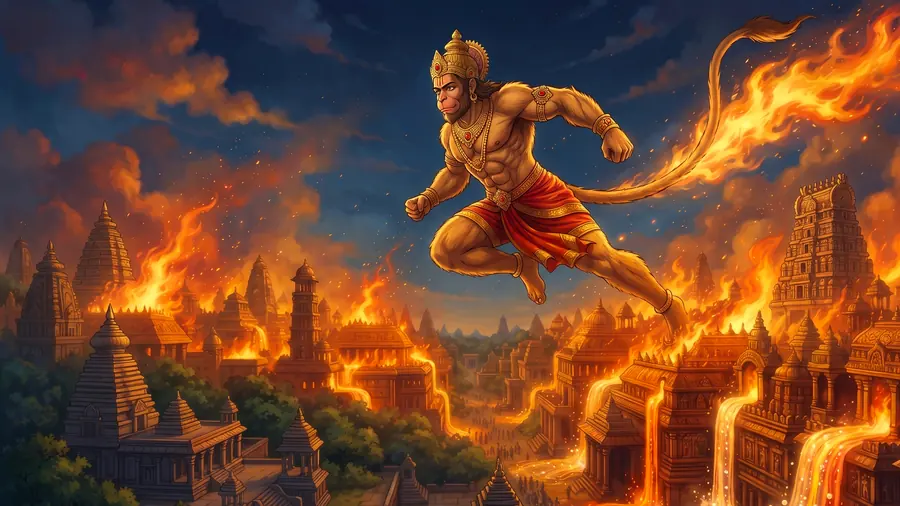 Lanka Dahan · Sundara KandaThe day Lanka burnedOne vanara wrecks Ravana’s grove, lets Indrajit bind him, sets Lanka ablaze with his own tail, and carries Sita’s jewel home to Rama.
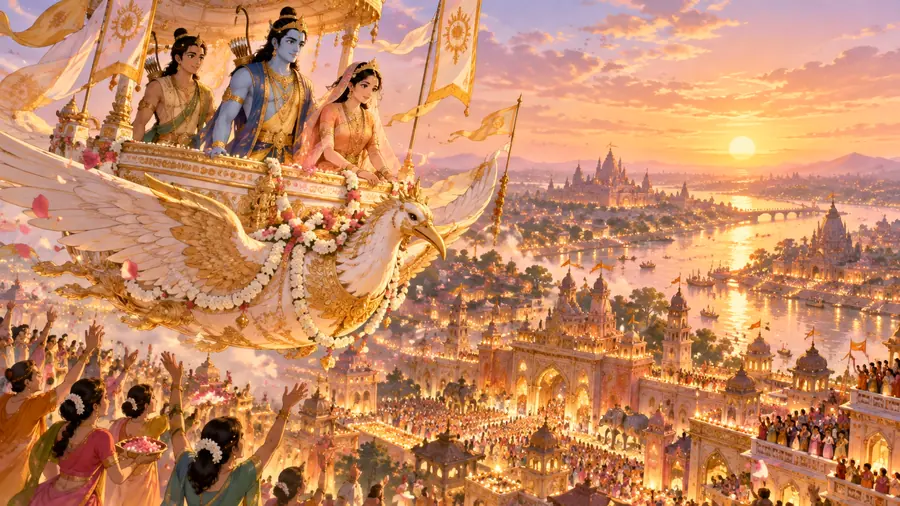
About this text
The verses are the Ramcharitmanas of Goswami Tulsidas (16th century), in the original Awadhi. The text was compared word by word across three digital editions. Two of them (WirelessAlien and DharmicData) both name the IIT Kanpur Ramcharitmanas project as their source, so GRETIL is the only separate check. Where they disagreed, the reading two editions share was kept, and nothing was corrected from memory. The closing verses of the Ayodhya, Aranya and Lanka Kands are found in GRETIL alone, where the other two editions stop early. The text has not yet been checked against a printed edition.
- WirelessAlien, Ramcharitmanas in JSON (Unlicense): the main text.
- Bhavy Khatri, DharmicData, from the IIT Kanpur Ramcharitmanas project (ODbL 1.0): second edition, and the opening shlokas.
- GRETIL, Göttingen, input by a group of volunteers at Ratlam: independent third edition, used to confirm the text and the only source for those closing verses.
The roman transliteration is generated from the Devanagari in the scholarly convention GRETIL uses. Episode titles and summaries are this site’s own short retellings and are not part of the text. Paintings are illustrations made for this site.
The meanings shown with the verses are this site’s own plain renderings, written for this page; no published translation was used, and no named editorial review has been recorded yet. They are not part of the text; the verses remain the text.