Spritual
Spritual
Hanuman

Ramayana

Hanuman

हनुमान

Pavanaputra · Bajrangbali

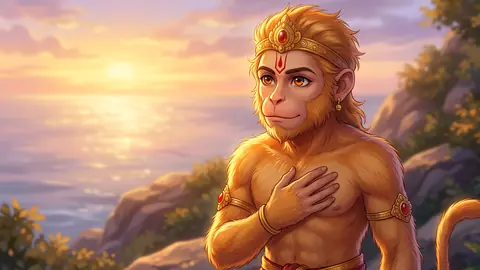
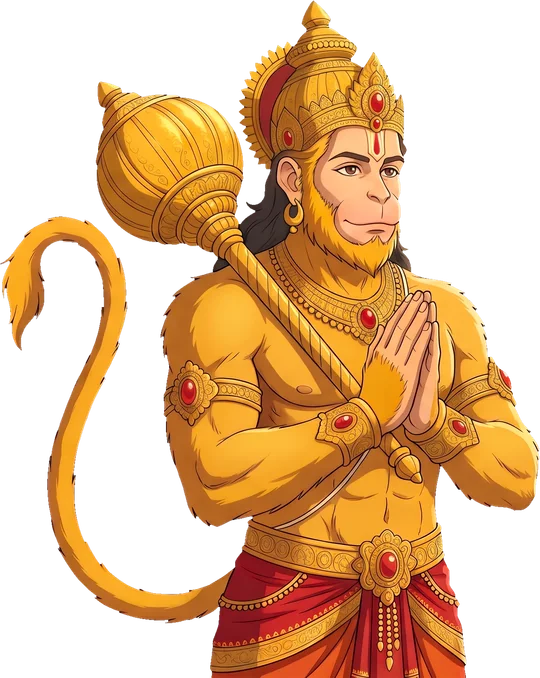
Hanuman, son of Anjana and of Vayu the Wind, is revered for strength, wisdom, humility and devotion to Rama. Hearing him first, Rama said only a master of the Vedas could speak so.

Read more

He leapt the ocean, found Sita, told her none in Sugriva’s host was lesser than he, and set Lanka ablaze; in the war he brought a mountain of healing herbs to revive the fallen. Of Rama he asked one boon: unwavering devotion, and life for as long as Rama’s story is told; granting it, Rama said his own life could not repay all Hanuman had done.

  • 7 stories
  • 68 scenes
  • 63 min read

Follow this path

Hanuman, in reading order through the Valmiki Ramayana.

Stories with Hanuman

RamayanaKishkindha Kanda

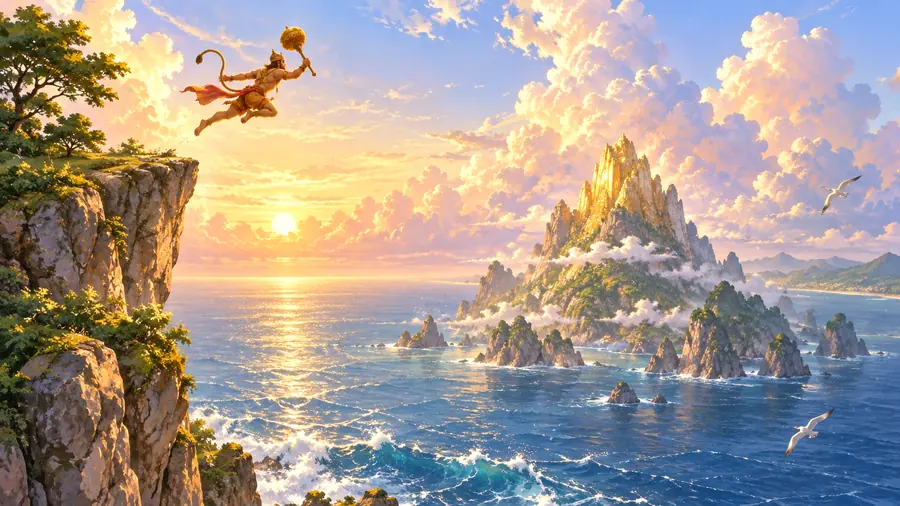
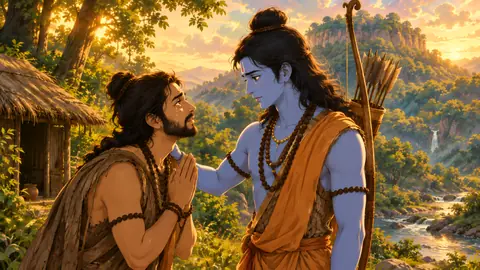
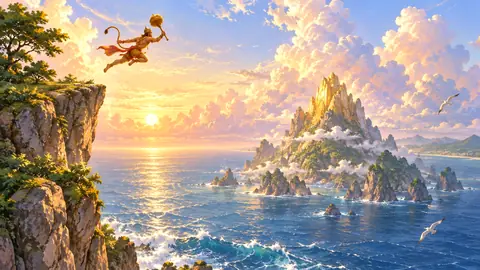
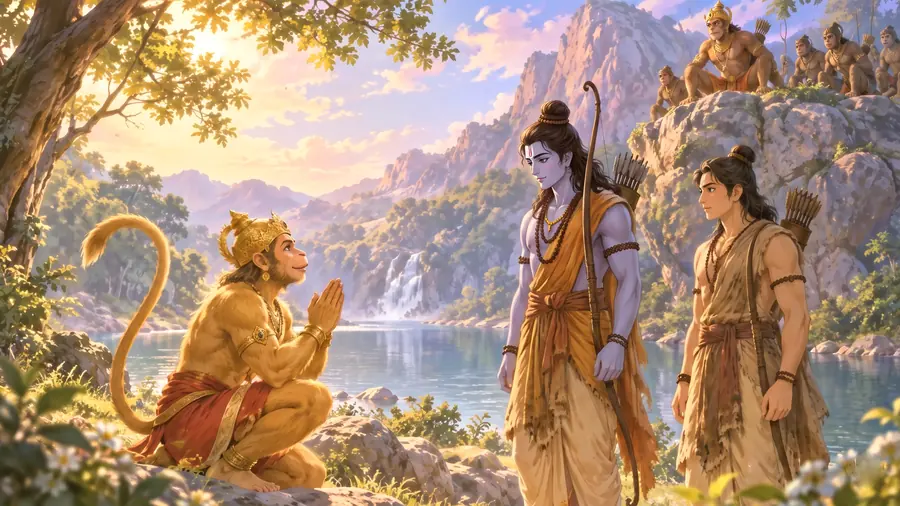
Hanuman meets Rama: The leap begins here

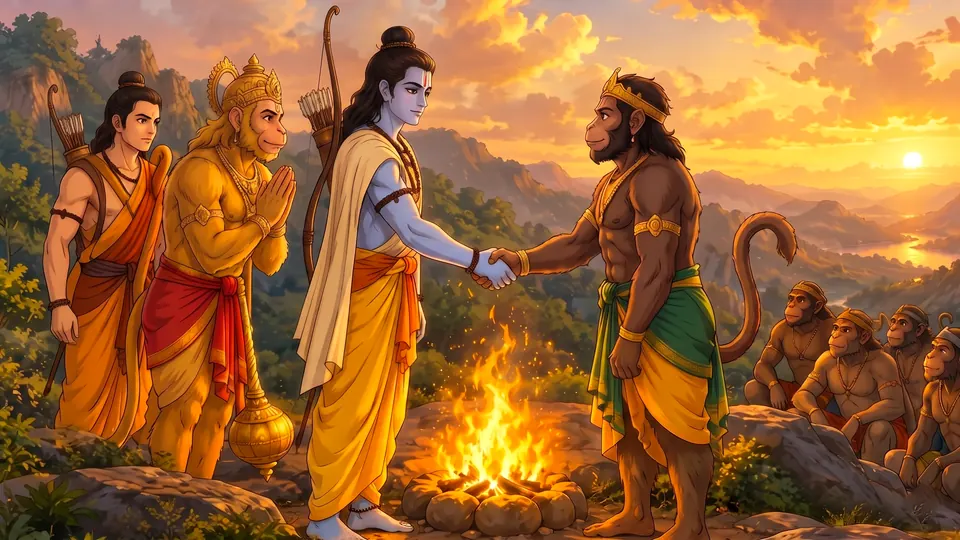
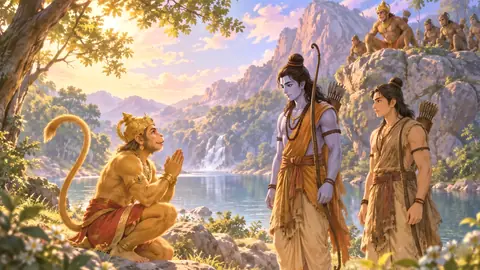
A disguised Hanuman meets two armed strangers by Pampa, a friendship is sworn around fire, an arrow brings down Vali, and at the ocean’s edge the son of the Wind remembers his strength.
  • 7 min
  • Communication
  • Trust

RamayanaKishkindha Kanda

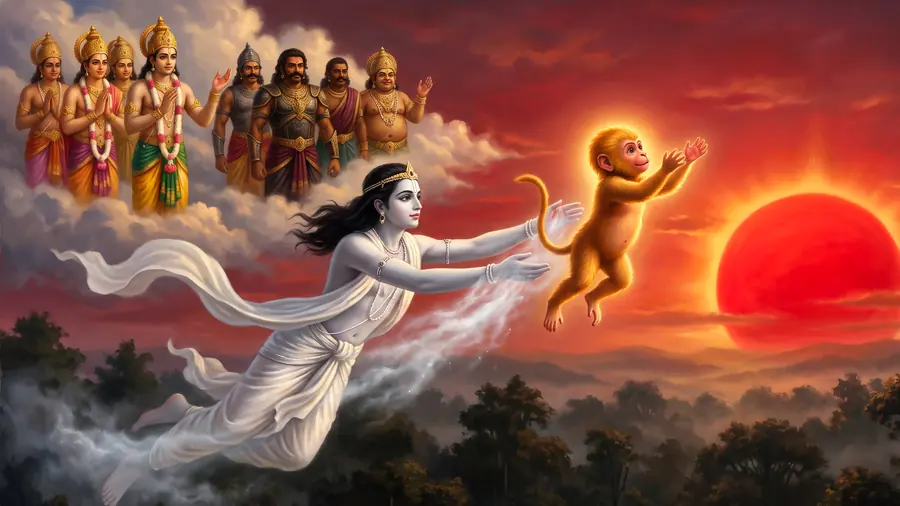
Hanuman and the sun: Hanuman reaches for the sun

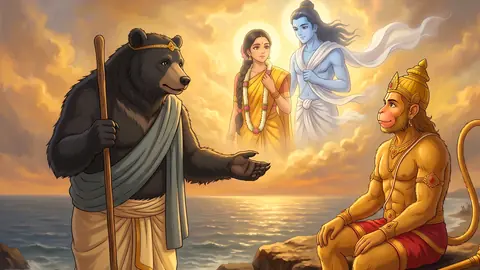
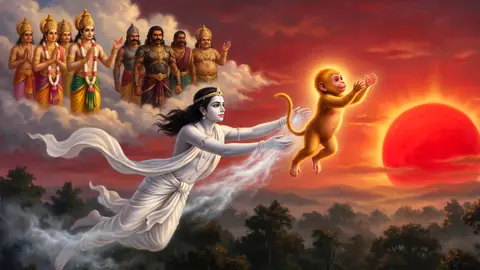
A newborn sees the rising sun, takes it for a fruit, and leaps. Years later, on a hopeless shore, old Jambavan reminds him who he is.

  • 8 min
  • Fearlessness
  • Hope

RamayanaSundara Kanda

Hanuman crosses the sea: Across the sea, a ring

Hanuman leaps a hundred yojanas of ocean, outwits the jaws of Surasa, forces the gate of Lanka and finds Sita under the Ashoka trees, defying Ravana with a blade of grass. Then, from a branch above her, he begins to speak of Rama.

  • 8 min
  • Courage
  • Persistence

RamayanaSundara Kanda

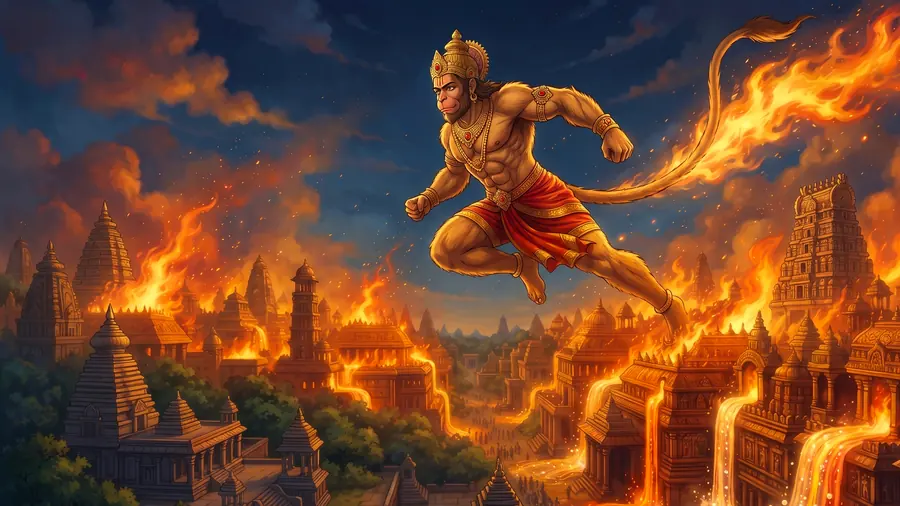
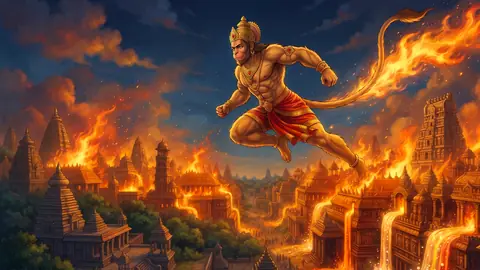
Lanka Dahan: The day Lanka burned

One vanara wrecks Ravana’s grove, lets Indrajit bind him, sets Lanka ablaze with his own tail, and carries Sita’s jewel home to Rama.

  • 9 min
  • Courage
  • Service

RamayanaYuddha Kanda

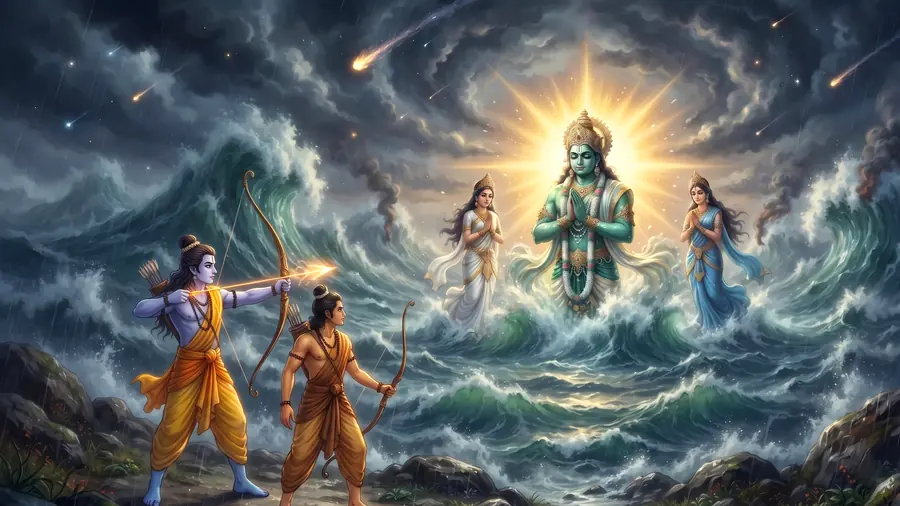
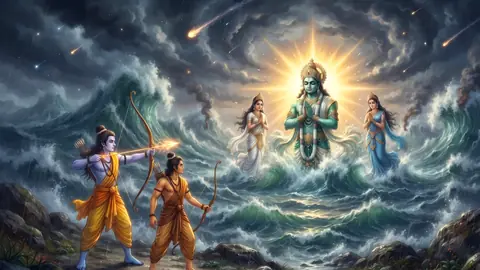
Ram Setu: The bridge across the sea

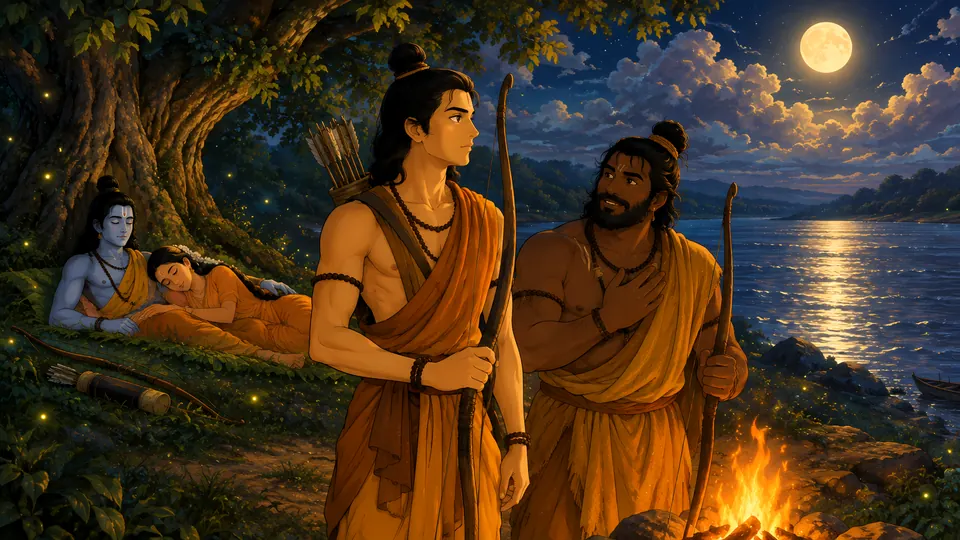
A brother cast out of Lanka, three nights on kusha grass, an arrow that shook the sea, and a bridge built in five days.

  • 9 min
  • Compassion
  • Resolve

RamayanaYuddha Kanda

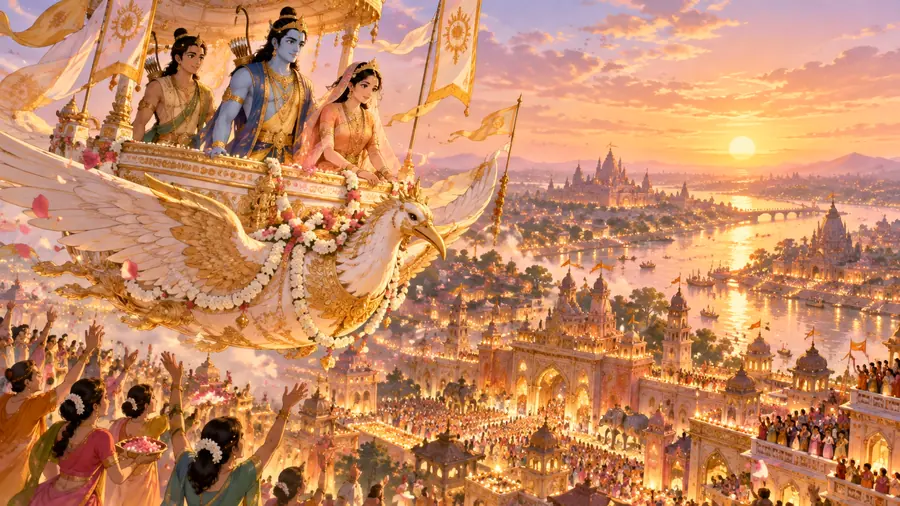
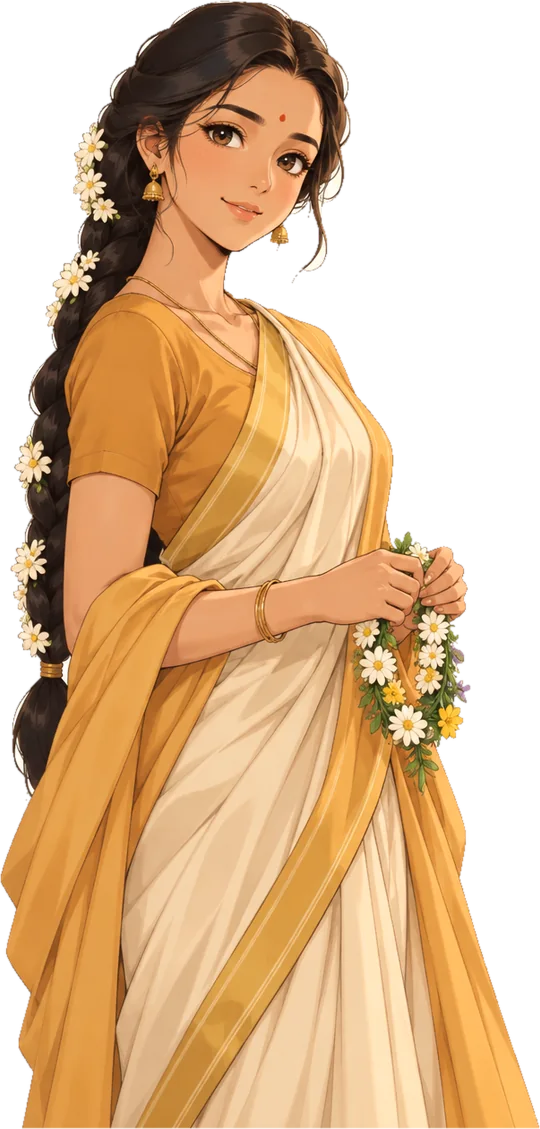
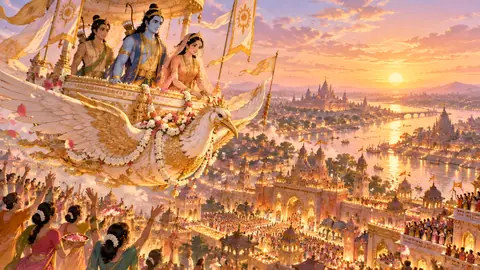
Sita’s Agni Pariksha: Through fire to Ayodhya

Ravana is dead. Sita walks out of the Ashoka grove, through Rama’s harsh words and into the fire; then the swan-car carries them north, to a brother who has kept a pair of sandals on a throne for fourteen years.

  • 10 min
  • Responsibility
  • Service

RamayanaUttara, Aranya, Sundara and Yuddha Kanda

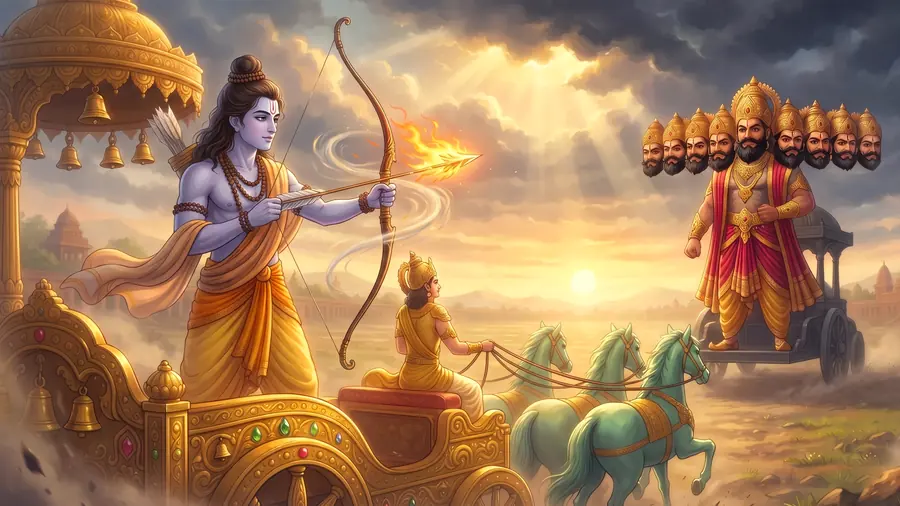
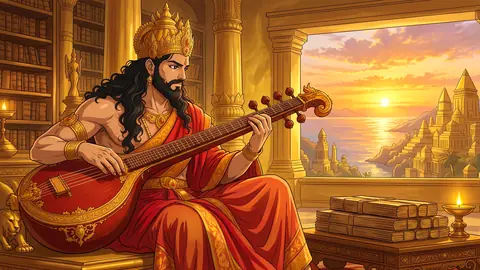
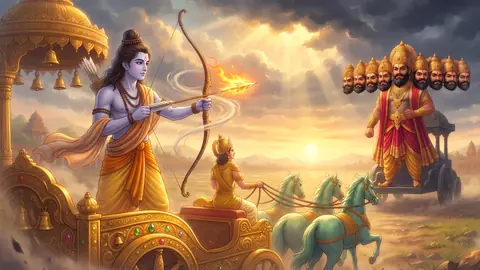
Ravana’s story: The fall of Lanka’s king

Nine heads given to the fire, a mountain lifted, a name from Shiva, and a king who would not give Sita back.

  • 12 min
  • Discernment
  • Loyalty

Names

Hanuman. Also known as: Pavanaputra, Bajrangbali.

Where this comes from

What this page about Hanuman was checked against: each point, and where it is found.

  1. Born of Anjana, wife of Kesari, and the wind-god; leapt at the rising sun as a child; Indra’s thunderbolt broke his jaw (hanu), hence “Hanuman”; boons from Brahma and Indra Valmiki Ramayana, Kishkindha Kanda, Sarga 66, verses 8–29
  2. A true son of the Wind, with a body hard as the thunderbolt and the speed of Garuda Valmiki Ramayana, Bala Kanda, Sarga 17, verse 16
  3. Rama on his speech: no one who had not mastered the Rig, Yajur and Sama Vedas could speak so Valmiki Ramayana, Kishkindha Kanda, Sarga 3, verses 28–33
  4. Leaps from Mount Mahendra across the ocean Valmiki Ramayana, Sundara Kanda, Sarga 1, verses 38–44 (the leap) and 84–135 (the flight and Mainaka)
  5. Finds Sita in the Ashoka grove Valmiki Ramayana, Sundara Kanda, Sarga 15, verses 18–26
  6. Receives Sita’s crest-jewel Valmiki Ramayana, Sundara Kanda, Sarga 38, verses 69–71
  7. Sets fire to Lanka, sparing Vibhishana’s house Valmiki Ramayana, Sundara Kanda, Sarga 54, verses 11–20
  8. Tells Rama he has seen Sita and gives him the jewel Valmiki Ramayana, Sundara Kanda, Sarga 65, verses 8–27
  9. Rama: no one else on earth could have done this; he embraces him Valmiki Ramayana, Yuddha Kanda, Sarga 1, verses 1–14
  10. Rama to Agastya: heroism, strength, patience, wisdom, learning and prowess are all found together in Hanuman; Agastya retells his birth and childhood leap at the sun Valmiki Ramayana, Uttara Kanda, Section XL, tr. M. N. Dutt (Calcutta, 1894)
  11. Asks Rama for unshaken devotion and for life as long as Rama’s story is told on earth; Rama grants it Valmiki Ramayana, Uttara Kanda, Section L, tr. M. N. Dutt (Calcutta, 1894); Rama repeats it in Section CXXI
  12. “Bajrangbali” as his name Tradition, not the cited text: the popular name, from vajranga, “with limbs like the thunderbolt”; compare Bala Kanda 17.16.
  13. To Sita in the Ashoka grove: among the vanaras some are greater than I and some equal; none in Sugriva’s company is lesser than I; the great ones are not sent on errands, others are Valmiki Ramayana, Sundara Kanda, Sarga 39, verses 38–39 (mad-vishishtash cha tulyash cha santi tatra vanaukasah | mattah pratyavarah kashchin nasti sugriva-sannidhau)
  14. His cry in Lanka before the fight in the grove: Victory to Rama, to Lakshmana, to King Sugriva; I am Hanuman, son of the Wind, the servant of Rama, king of Kosala Valmiki Ramayana, Sundara Kanda, Sarga 42, verses 33–34 (dāso’haṃ kosalendrasya rāmasyākliṣṭakarmaṇaḥ)
  15. After granting the boon, Rama embraces him and speaks of his debt to him. Dutt renders it: “I cannot, even at the sacrifice of my life, release myself from the debts of one good service out of the many, thou hast done for me”. The Sanskrit verse as quoted elsewhere (ekaikasyopakarasya pranan dasyami te kape …) says rather that for each single service he would give his life, and for the rest remain in debt. The retelling is worded to hold under both readings: his own life could not repay all Hanuman had done. Valmiki Ramayana, Uttara Kanda, tr. M. N. Dutt (Calcutta, 1894), p. 1712: the same passage as Hanuman’s boon
  16. Strength, wisdom, humility and devotion to Rama as what he is revered for Built from the cited text, not a quotation: Rama to Agastya, heroism, strength, patience, intellect and prowess together in Hanuman (Uttara Kanda, Section XL, Dutt); his learning (Kishkindha Kanda 3.28–33); his humility (Sundara Kanda 39.38–39); his devotion and boon (Uttara Kanda, Dutt p. 1712). Worded as “revered for”.
  17. Jambavan sends him over the sea to the Himalaya for the four great herbs on the mountain of herbs; he brings the whole peak; at its scent Rama and Lakshmana are healed, and the fallen vanaras, even the slain, rise as if from sleep Valmiki Ramayana, Yuddha Kanda, Sarga 74, verses 26–34 and 69–74 (Sanskrit text)
About these sources
  • Section L is printed “XLX” in the scanned Dutt edition.
  • Dutt’s section for this passage is L, printed “XLX”; the scan’s text reads the heading as “XLIX”. The Sanskrit first line was checked only in the Maha-subhashita-samgraha, no. 7699 (wisdomlib.org/sanskrit/quote/mss/subhashita-7699), not in a printed Uttara Kanda.

Reading comfort

Text size
Colour

Colour waits while Night Lamp is on.

Motion

Light mode keeps the paintings still, with one slow drift and no depth effect. Easier on older phones and batteries.

Night Lamp

Warm amber text on near-black. Paintings fade slowly and hold still.

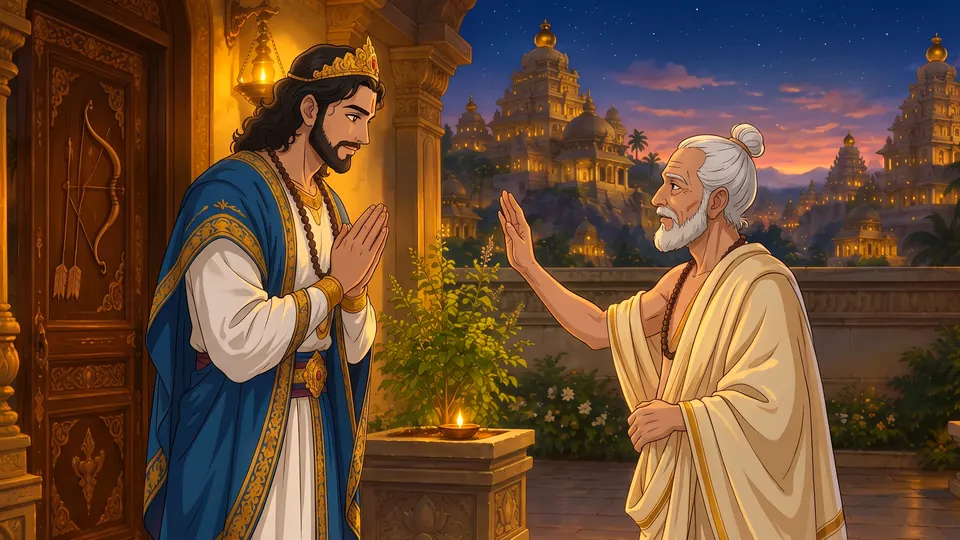
Rama turned to his teacher and asked for the knowledge of withdrawal.

Saved on this device.